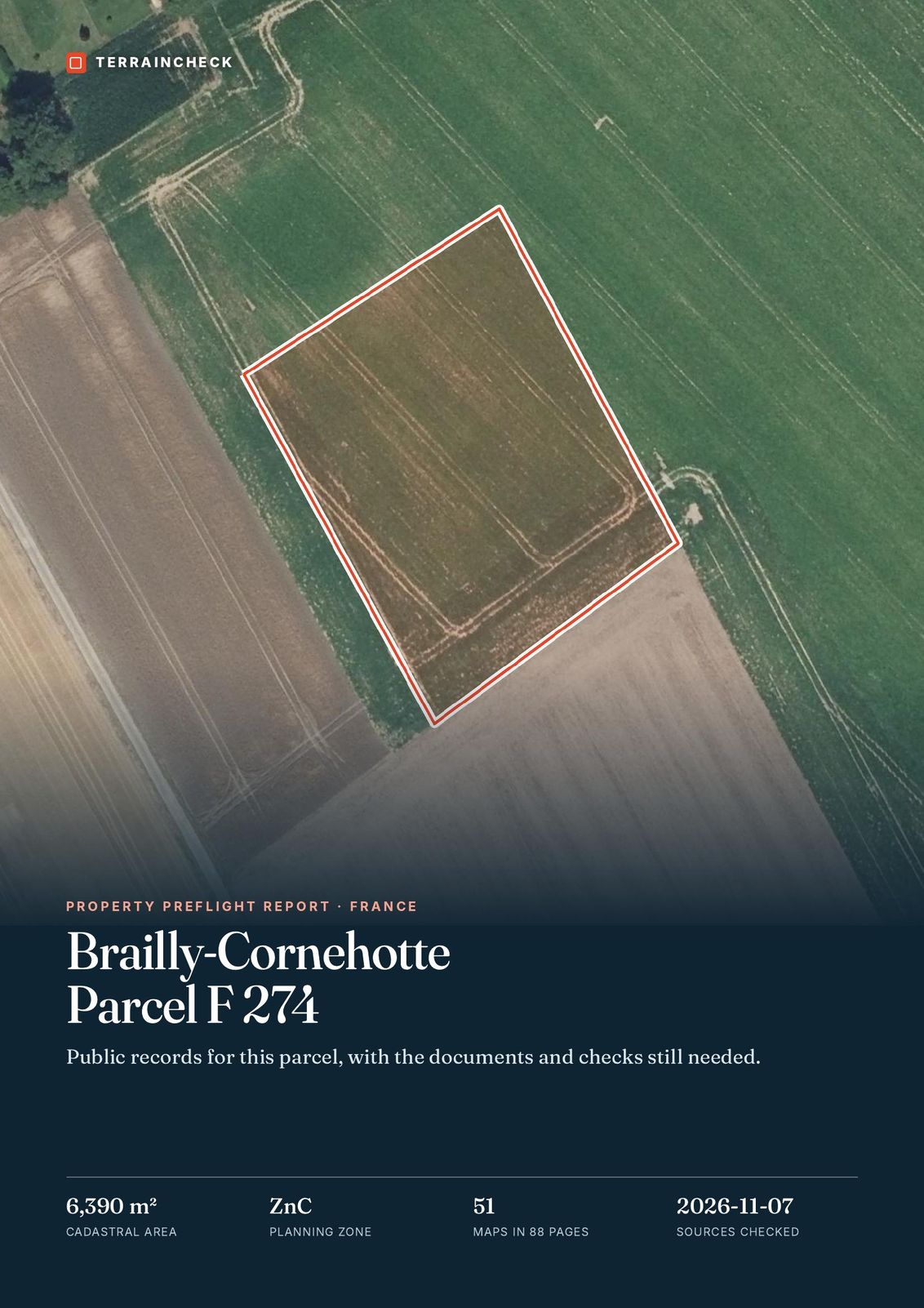
Pillar: Buying building land in France
Buying land at auction in France: court and notarial sales, steps, costs and risks
In France outside Bas-Rhin, Haut-Rhin and Moselle, a forced sale of seized land is held at auction before the enforcement judge of the local civil court: you can only bid through a lawyer from that court’s bar, with a guarantee of 10% of the reserve price (at least €3,000). First step: read the conditions of sale at the court office or the creditor’s lawyer’s office as soon as the notice appears, one to two months before the hearing.
In brief
- Two kinds of auction. A court sale follows a saisie immobilière (a creditor’s seizure of the property) and takes place before the enforcement judge; a voluntary notarial sale is chosen by the owner and run by a notaire, the public officer who handles property sales.
- A bid binds you. In court, bids are “pures et simples” (unconditional) and bidding closes after 90 seconds without a new bid, so arrange the loan beforehand.
- Nothing is final for ten days. Anyone may overbid by at least one tenth of the price within ten days of the award.
- On top of the price: the court-assessed costs of the proceedings (frais taxés, costs whose amount the judge fixes), announced before bidding starts, and transfer duties, paid within two months of the final award.
On this page
Court sale or notarial sale
A court sale happens when a creditor has the debtor’s property seized: the Code of civil enforcement procedures sets out every step, and the enforcement judge (juge de l’exécution) of the tribunal judiciaire, the local civil court, makes the award. For Bas-Rhin, Haut-Rhin and Moselle (Alsace-Moselle), the Code states that its book on these procedures leaves the provisions applying there unchanged: this guide does not cover the procedure in those three départements.
A voluntary notarial sale, also called a candle auction (vente à la bougie), is the owner’s choice. According to the notaires, the reserve price is set with the owner after a valuation and the notaire writes the terms of sale. The notarial rules below are those the notaires of France publish; the terms of each sale prevail.
| Point | Court sale | Notarial sale |
|---|---|---|
| Run by | The creditor, before the enforcement judge | The notaire, for the owner |
| Key document | Cahier des conditions de vente, filed at the court | Cahier des charges written by the notaire |
| To bid | A lawyer from that court’s bar; guarantee of 10% of the reserve, at least €3,000 | ID and a banker’s draft or certified cheque for the deposit shown in the advertising (20% of the reserve, per the notaires) |
| End of bidding | 90 seconds without a new bid | Two 30-second flames go out with no bid |
| Overbid | 10 days, at least 1/10 of the main price, through a lawyer | 10 days, at least 10%, anyone except the winning bidder |
| Paying the price | 2 months from the final award | 45 days if there is no overbid |
Court sale rules come from the Code; notarial sale rules from the notaires of France’s own description. Sources: Code of civil enforcement procedures, Art. R322-26 to R322-63 (sale by auction); Notaires de France (immobilier.notaires.fr): notarial auctions. Accessed 12 November 2026.
Finding the sale and reading the terms
For a court sale, notice is given one to two months before the hearing, posted at the court office and published in a legal announcements newspaper: reserve price, date and place of the hearing, and where to read the cahier des conditions de vente (the conditions of sale): the enforcement judge’s office or the creditor’s lawyer’s office. A shorter notice is posted on the property and published in two local or regional newspapers.
The conditions of sale contain the description of the property, its chain of ownership, the easements (servitudes) that burden it, any leases granted and the description report (procès-verbal de description). That report, drawn up on site, describes the land, its area, how it is occupied and who the occupiers are.
Before the hearing, in order
- Read the conditions of sale at the court office or the creditor’s lawyer’s office: description, easements, leases, description report. No charge is set by the texts cited. Time: half a day (TerrainCheck estimate), longer with a translator.
- Ask the mairie (town hall) for an information planning certificate: planning status is not among the items the conditions must contain, so check whether the land is buildable as for any plot. The application is free; the mairie has 1 month from the acknowledgement of receipt to reply. File it as soon as the notice appears.
- View the land under the arrangements set by the judge. Occupation or a tenancy shows up on site.
- Instruct a lawyer (avocat) registered at the bar of the court handling the sale. A lawyer can act for only one bidder. Fees are freely agreed in a fee agreement (convention d’honoraires), required except in an emergency or force majeure; the fee on the sale itself follows a regulated scale. Time: none set by the texts cited, allow a few days (TerrainCheck estimate).
- Line up the guarantee and the money: bank guarantee or banker’s draft, and a loan approved for your top price.
Sources: Code of civil enforcement procedures, Art. R322-10 (conditions of sale); Code of civil enforcement procedures, Art. R322-1 and R322-2 (description report); Service-Public: planning certificate; Service-Public: how is a lawyer paid?. Accessed 12 November 2026.
On the day of the hearing
Before bidding, your lawyer takes from you an irrevocable bank guarantee or a banker’s draft, payable to the escrow holder or the Caisse des dépôts et consignations, for 10% of the reserve price, at least €3,000. It is returned at the end of the hearing if you are not declared the buyer. The debtor, the legal professionals involved in the case and the judges of that court may not bid.
Bidding starts from the reserve price set by the creditor, and each bid must top the one before; bidding closes when 90 seconds have passed since the last bid, and the last bid wins. If nobody bids, the creditor is declared the buyer at the reserve price; if the judge has changed the reserve, the land is first offered again at successively lower prices. Before the hearing ends, the winning lawyer gives the clerk the client’s identity.
At a notarial sale, according to the notaires, the sale is declared when two 30-second flames burn out without a new bid, and the other bidders get their deposit cheques back.
Costs on top of the price
The costs of the proceedings are assessed by the judge and announced in open court before bidding starts; nothing beyond that amount can be charged. These costs, any overbid costs and the transfer duties are paid by the buyer on top of the price, with proof filed at the court office within two months of the final award. Transfer duties are worked out as for a private sale: see notary fees on land.
Part of these costs follows a regulated scale. On a sale after seizure, the lawyers receive the fee set in point 1 of Article A444-102 of the Commercial Code: three quarters to the creditor’s lawyer, one quarter to the buyer’s lawyer. Worked example for land knocked down at €50,000:
- €0 to €6,500: 6,500 × 7.256% = €471.64;
- €6,500 to €17,000: 10,500 × 2.993% = €314.27;
- €17,000 to €50,000: 33,000 × 1.995% = €658.35;
- total €1,444.26 before VAT, about €1,083 to the creditor’s lawyer and €361 to yours.
The scale says nothing about VAT, and lawyers’ services are subject to VAT at the standard rate, set at 20% in mainland France and Corsica (other rules apply in Guadeloupe, Martinique and Réunion). The example assumes the lawyer charges VAT and the scale gives a figure before VAT. Adding 1,444.26 × 20% = €288.85 gives about €1,733.11 including VAT. Your lawyer confirms the exact amount; it is not the total cost of buying.
This is only part of the court-assessed costs, which also cover the other steps of the case. After an overbid or a re-auction, the fee is shared differently (Article A444-191, II and III). Your lawyer’s fees outside the scale follow your fee agreement. With a reserve price of €20,000 the guarantee is €3,000, because 10% would be €2,000, below the floor.
Sources: Code of civil enforcement procedures, Art. R322-26 to R322-63 (sale by auction); Commercial Code, Art. A444-191 (lawyers’ regulated fees in property seizures); Commercial Code, Art. A444-102 (scale for court auction sales); BOFiP, BOI-TVA-LIQ-20-20, para. 420 (lawyers’ services at the standard VAT rate); BOFiP, BOI-TVA-LIQ-20, para. 1 (20% standard rate, CGI Art. 278); Service-Public: how is a lawyer paid?. Accessed 12 November 2026.
After the award: overbids and payment
For ten days after the award, anyone may overbid by at least one tenth of the main price, through a lawyer’s filing at the court office, backed by an irrevocable bank guarantee or banker’s draft for that tenth. The overbid cannot be withdrawn.
On €50,000 an overbid must be at least €5,000, so bidding restarts from the reserve raised by the overbid, at least €55,000, at a hearing set two to four months after the overbid is filed; if the overbid is challenged, that period runs from the decision rejecting the challenge. If nobody tops it, the overbidder becomes the buyer, and no overbid is accepted on that second award.
The price is paid to the escrow holder or deposited with the Caisse des dépôts et consignations, the state deposit bank, within two months of the final award, failing which the land is put up for auction again; after that date it bears interest at the statutory rate until paid in full. The award judgment is an eviction order against the debtor. Another occupier can be evicted unless the conditions of sale keep them in place: the award gives you no more rights than the debtor had.
Sources: Code of civil enforcement procedures, Art. R322-26 to R322-63 (sale by auction); Code of civil enforcement procedures, Art. L322-5 to L322-13 (sale by auction); Service-Public: seizure of real estate; Notaires de France (immobilier.notaires.fr): notarial auctions. Accessed 12 November 2026.
In the report: what is still open
Before you bid: the list
- Conditions of sale read: description, easements, leases, description report.
- Occupation of the land known; the clause on any occupier noted.
- Information planning certificate requested as soon as the notice appears.
- Lawyer from the court’s bar instructed, fee agreement signed.
- Guarantee ready: 10% of the reserve price, at least €3,000.
- Top price set with court-assessed costs and transfer duties included, loan approved.
For the full order of checks on a plot, go back to buying building land in France.
Common questions
How much do I need on the day of the hearing?
For a court sale, an irrevocable bank guarantee or a banker’s draft for 10% of the reserve price, at least €3,000, handed to your lawyer. It is returned at the end of the hearing if you do not win.
What happens if nobody bids?
In a court sale, the creditor bringing the case is declared the buyer at the reserve price it set. If the judge has changed the reserve, the land is first offered again at successively lower prices, down to the original reserve if need be.
Can I still lose the land after winning?
Yes, for ten days: anyone may overbid by at least one tenth of the main price, and a new hearing is held two to four months after the overbid is filed or, if it is challenged, after the decision rejecting the challenge. You also lose it if you do not pay the price and costs within two months of the final award.
Keep reading
Land coming up at auction? Do the homework before the hearing
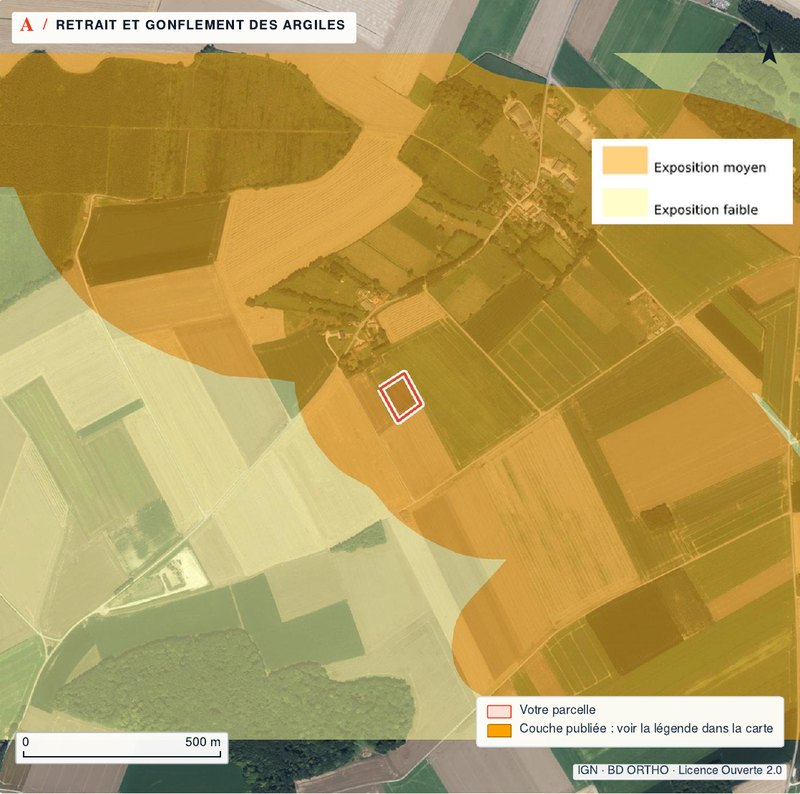
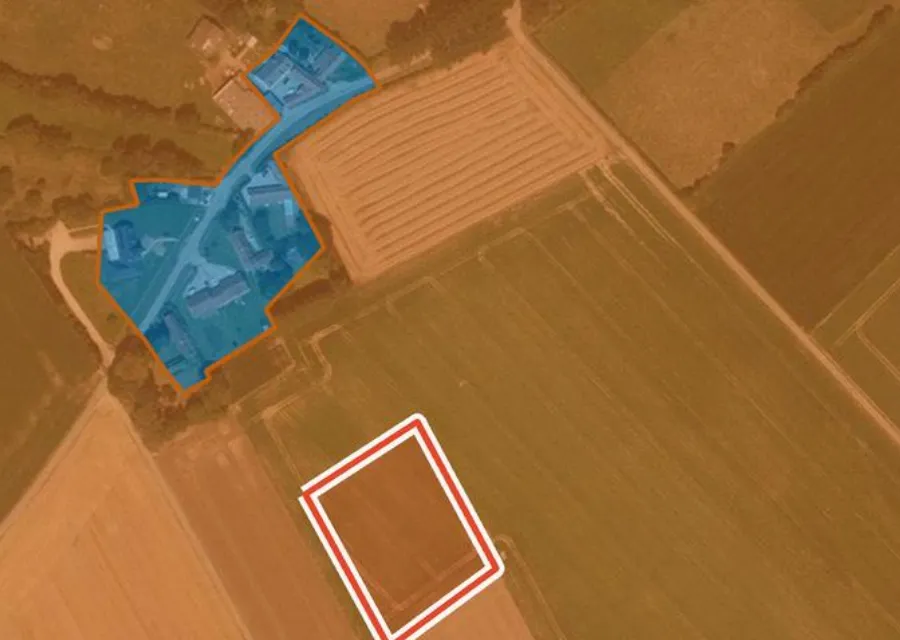
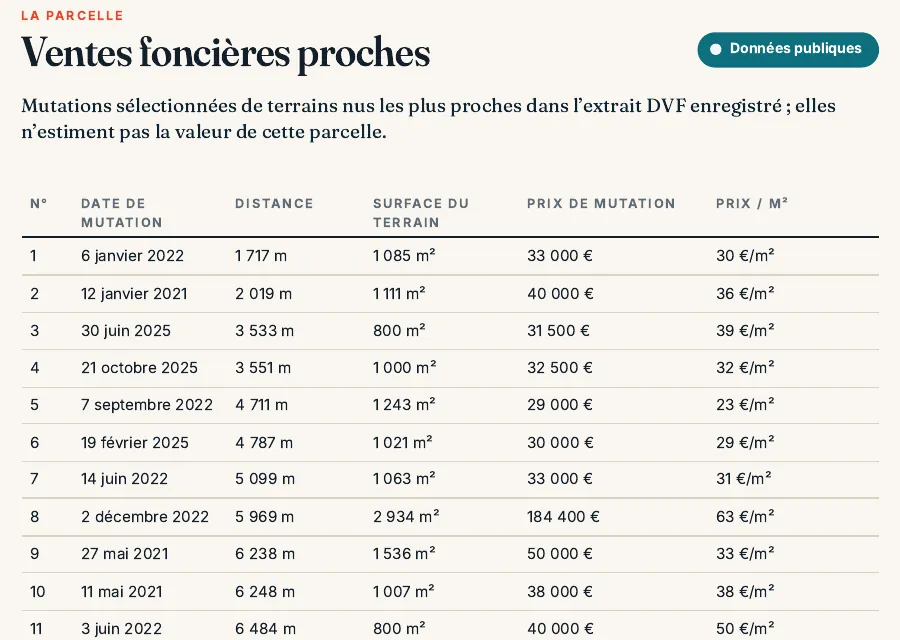
The time between the notice and the hearing is short. Pick the parcel on the map: the report brings together the PLU zone, natural hazards, clay soils, Natura 2000 and recent sales nearby, each with its source and date and explained in English, and it lists what it could not check. It does not replace the conditions of sale or your lawyer. Free check, PDF report for €29 (€39 in French and English).