Buying building land in France: checks before signing · TerrainCheck
Boundaries, PLU zone, certificat d’urbanisme, easements, risk statement, soil study, SAFER: the order of checks before a French preliminary contract, with the law.
TerrainCheck · France
Take time to understand the documents.
Boundaries, PLU zone, certificat d’urbanisme, easements, risk statement, soil study, SAFER: the order of checks before a French preliminary contract, with the law.
Buying land in France: who gets a ten-day cooling-off, which conditions to write into the compromis de vente, the deposit and the legal deadlines.
Boundary stones, access, slope, trees near the line, utilities and neighbours: what to check when viewing land in France, what to bring and what to ask.
The final deed for land in France: what the notaire checks, pre-emption periods, power of attorney, bank transfer, registration within a month, the title.
You may keep buildable land empty in France: the commune may add up to €3 per m² to the land-tax base, rezoning risk, upkeep duties and tax on resale.
Detaching a lot to sell in France: PLU check, prior declaration or permit, surveyor, access and networks, notaire and capital gains. Time limits and costs.
Bare land in France needs no asbestos survey or energy rating, but a risk statement in listed zones and a soil study in clay zones. What the seller owes.
Promesse unilatérale or compromis for land in France: who is bound, the holding fee, registration within 10 days (€125) and when you can withdraw.
No 10-day cooling-off for a French building plot, bar a few cases: when the compromis falls away without a penalty, refused loans, and what refusing costs.
Loan condition of at least a month, permit granted or cleared, soil study, easements: what to write into a French land contract, and how long to allow.
CCMI with plan and buying the land in France: promise to sell first, conditions, 10-day cooling-off, 3% deposit cap and the guarantees to insist on.
Co-ownership (indivision) or an SCI to buy French land with others: shares in the deed, two-thirds rule, unanimity to sell, ways out and 2026 setup costs.
Public or private domain, declassification, State valuation, council vote, signing and challenges: how buying land from a French commune works in practice.
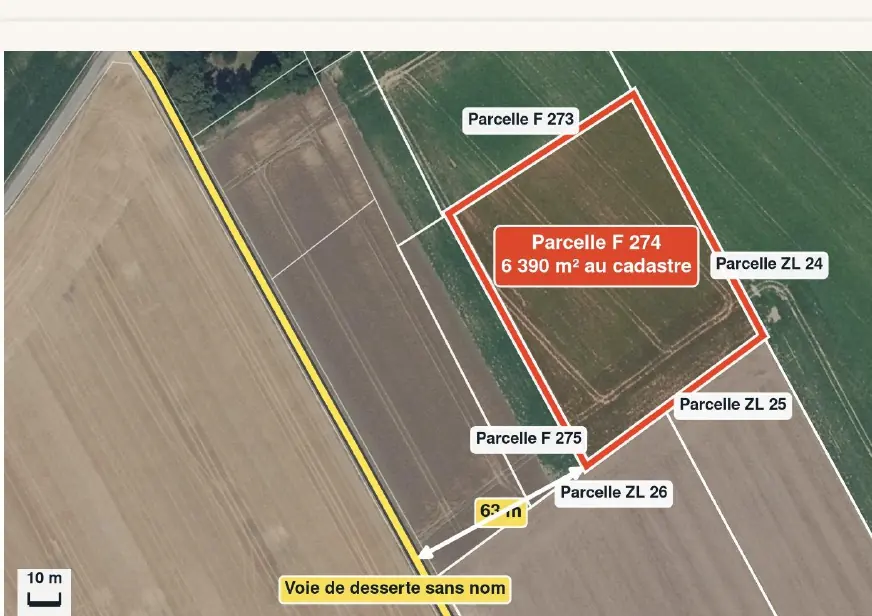
Section and parcel number: where to find a French cadastral reference for free, how to read it, and what it does not tell a foreign buyer about the land.
French cadastral maps show no names. Get a free ownership extract, or a €12-per-property land registry search (separate register in Alsace-Moselle).
French boundary surveys: no official price, fees agreed on a géomètre-expert’s quote, costs shared between neighbours, and when one is compulsory.
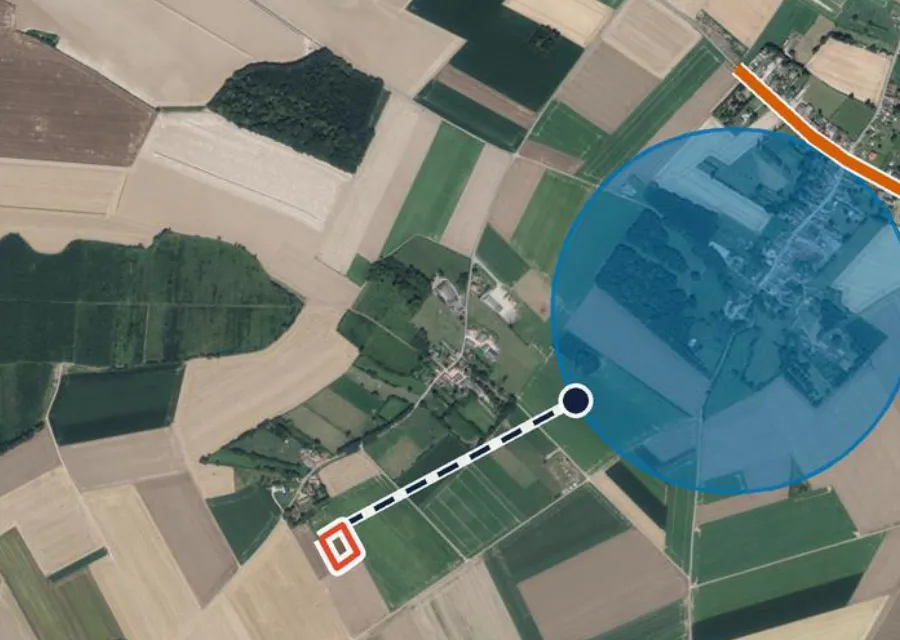
Title deed, land registry or Livre foncier, PLU annexes, the Géoportail and the mairie: where to find each easement on French land before buying.
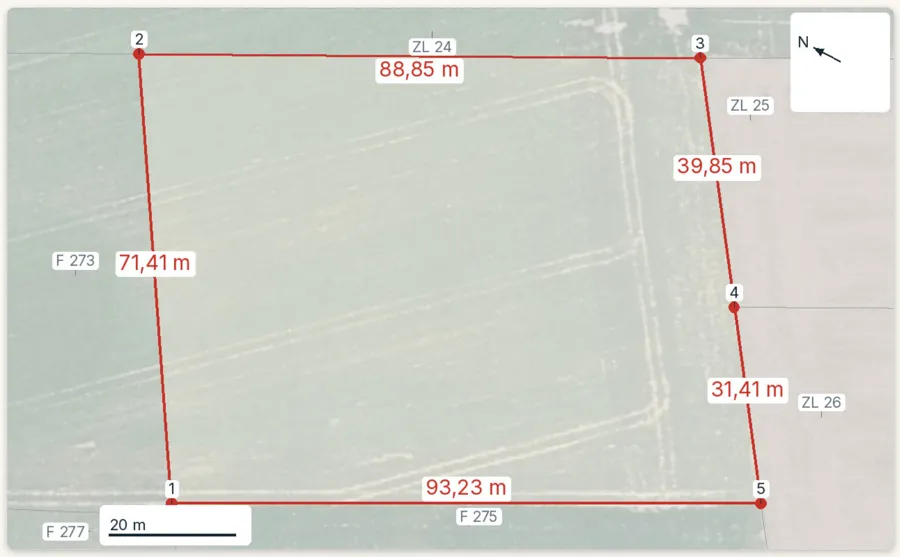
Enter the commune, then an address or a prefix, section and number: search on cadastre.gouv.fr, what cartes.gouv.fr (ex-Géoportail) adds, and the limits.
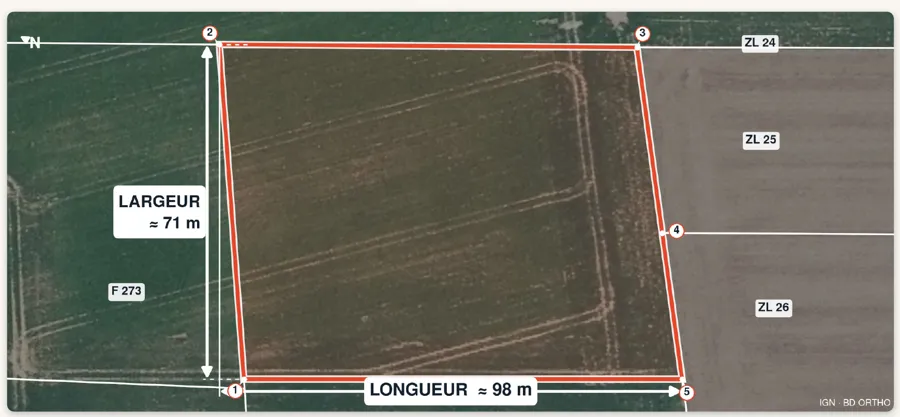
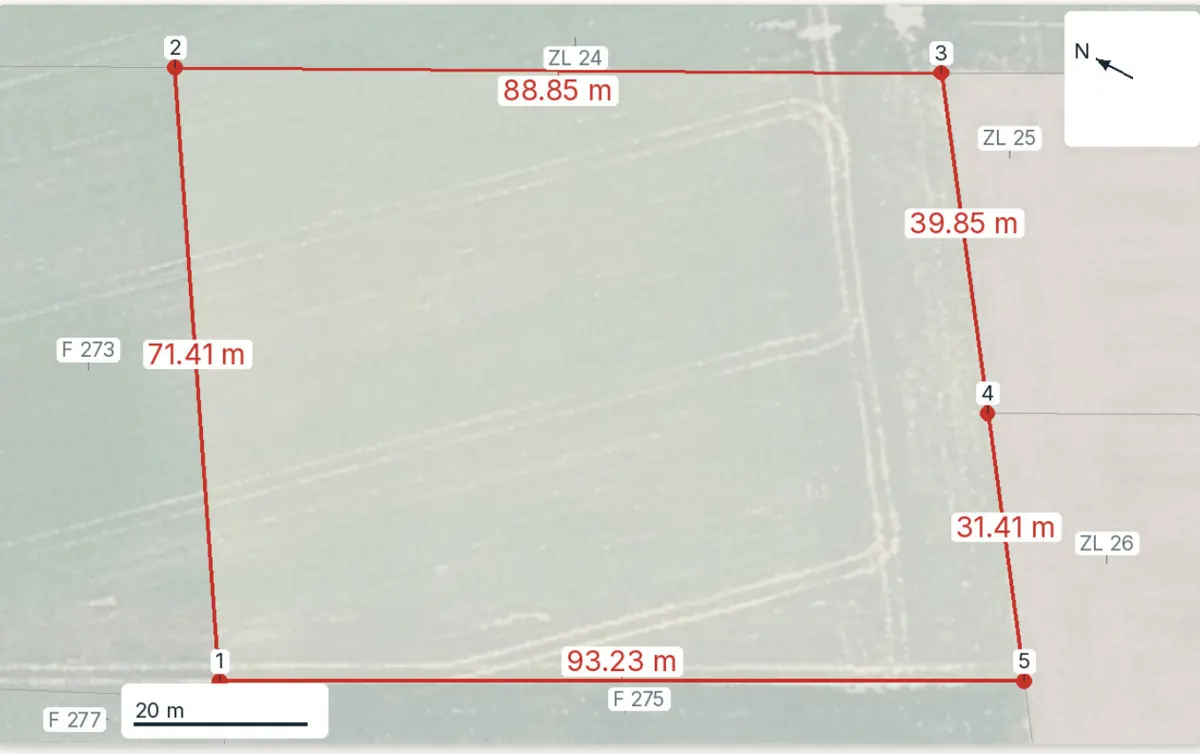
The French cadastral area is not a survey: gaps across 781 parcels, the Civil Code one-twentieth rule, the one-year limit and checks before the compromis.
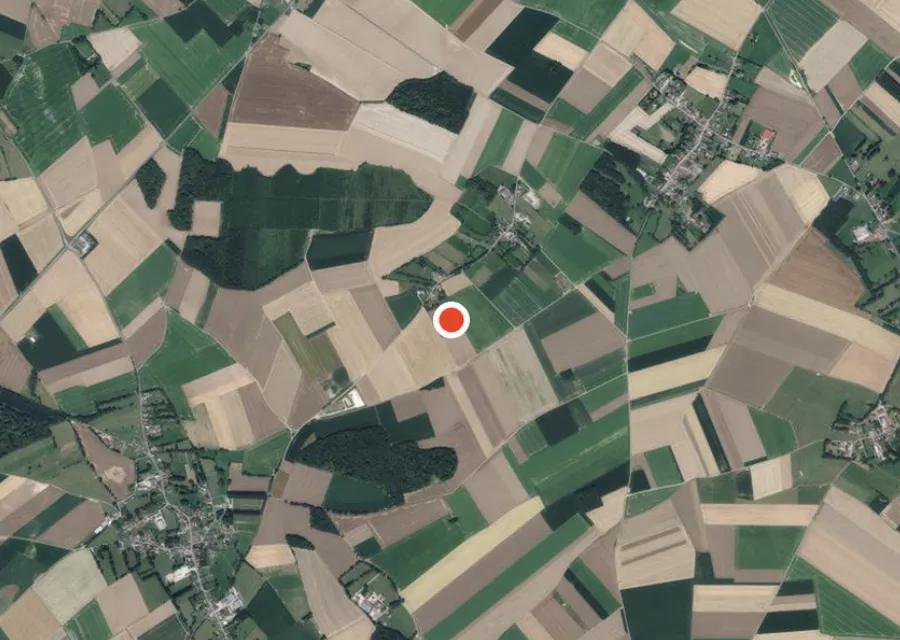
How a French plot gets its address: the mayor’s numbering order, the national address base, the certificat de numérotage, and what utilities ask for.
French right of way (servitude de passage): who maintains and pays for the track (Civil Code, art. 697 to 699), permitted use, width and how it ends.
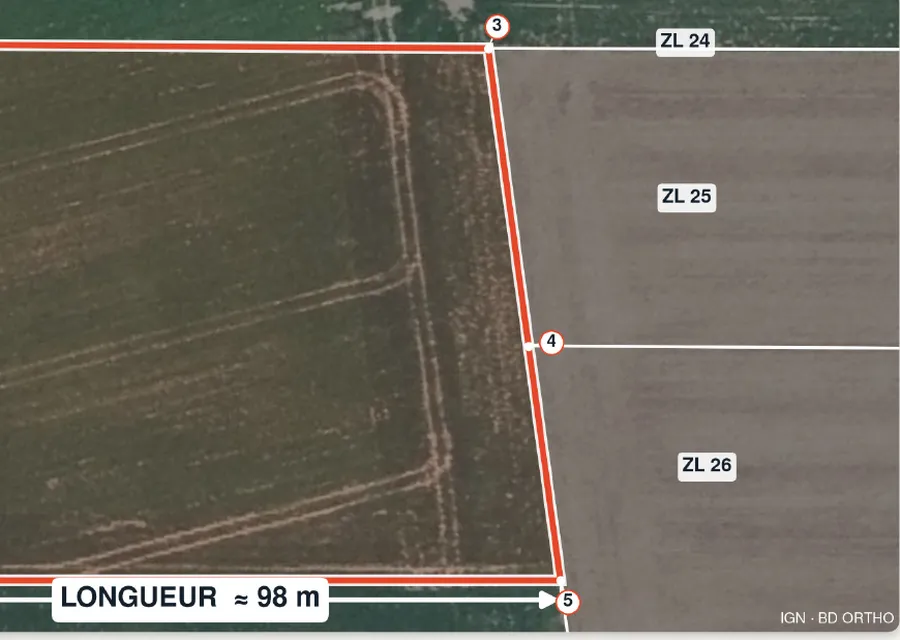
Buying part of a plot in France? The surveyor’s document d’arpentage, checked by the cadastre before the deed, gives the new parcel numbers. Steps, timing.
French certificat d’alignement: who issues it, how to apply for free, and when an alignment plan moves part of a plot into the public road network.
Getting a copy of the title to a French plot: seller, notaire or land registry (form 3236-SD, €15), what to read in it, cadastre and 30-year prescription.
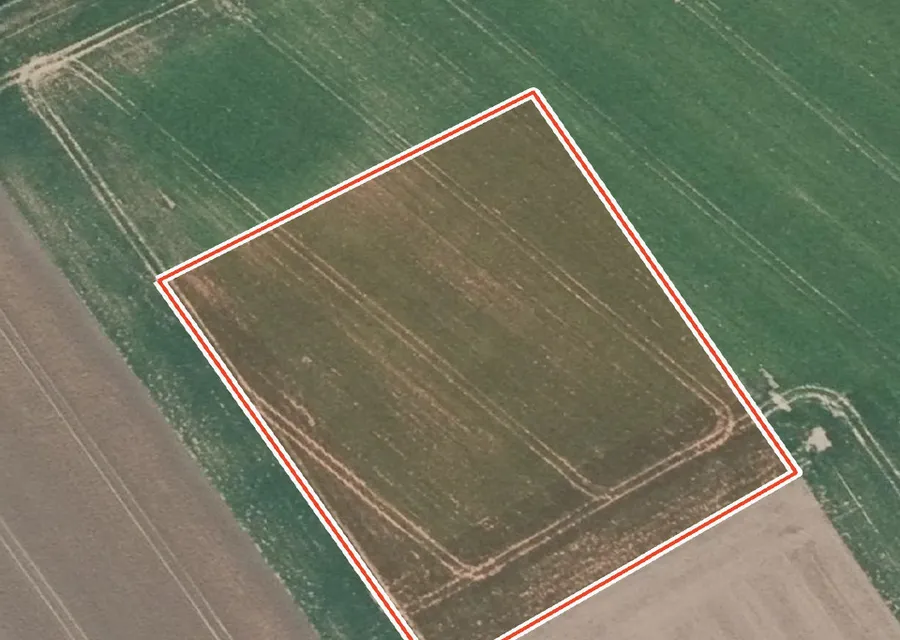
Address, lieu-dit or vague listing: how to get from a point in France’s national address base to the right cadastral parcel, not the neighbour’s.
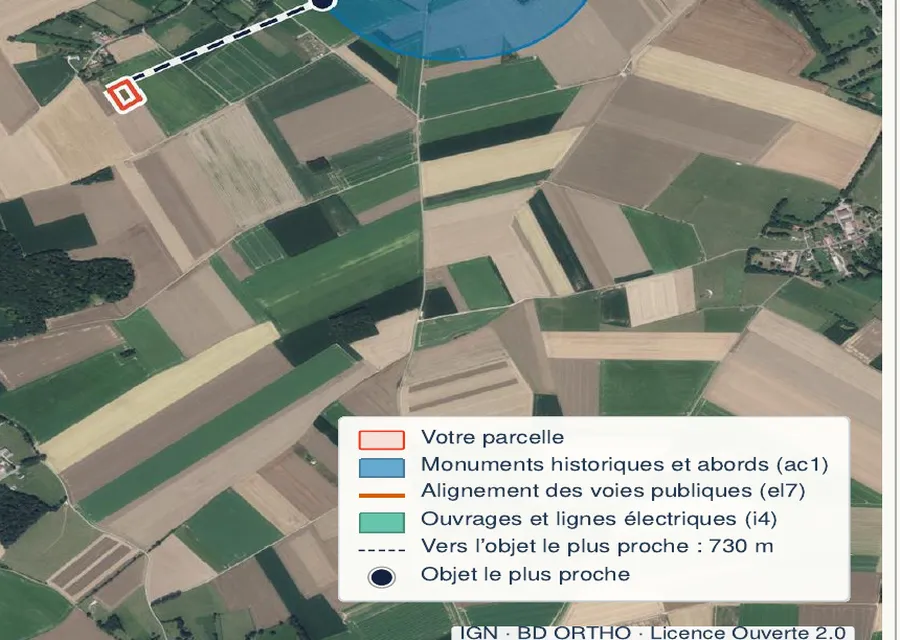
Water, sewer and gas pipes crossing French land: strip widths, what you cannot build, compensation, and where to find the easement before you buy.
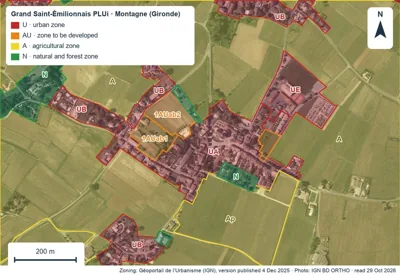
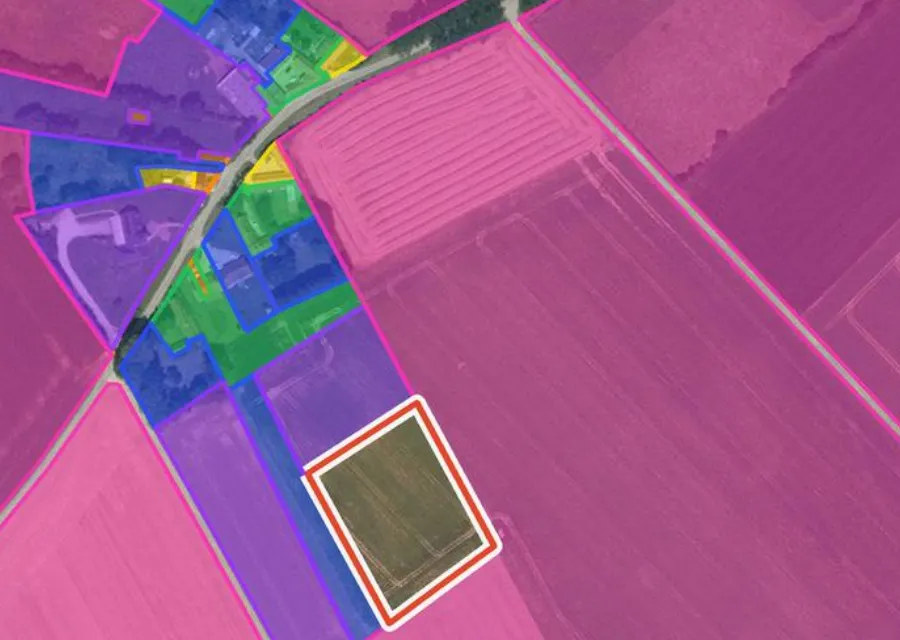
Parts of the PLU, zones U, AU, A and N, the written rules, OAP, easements, pending changes and postponed decisions: how to read a plot’s local plan before signing.
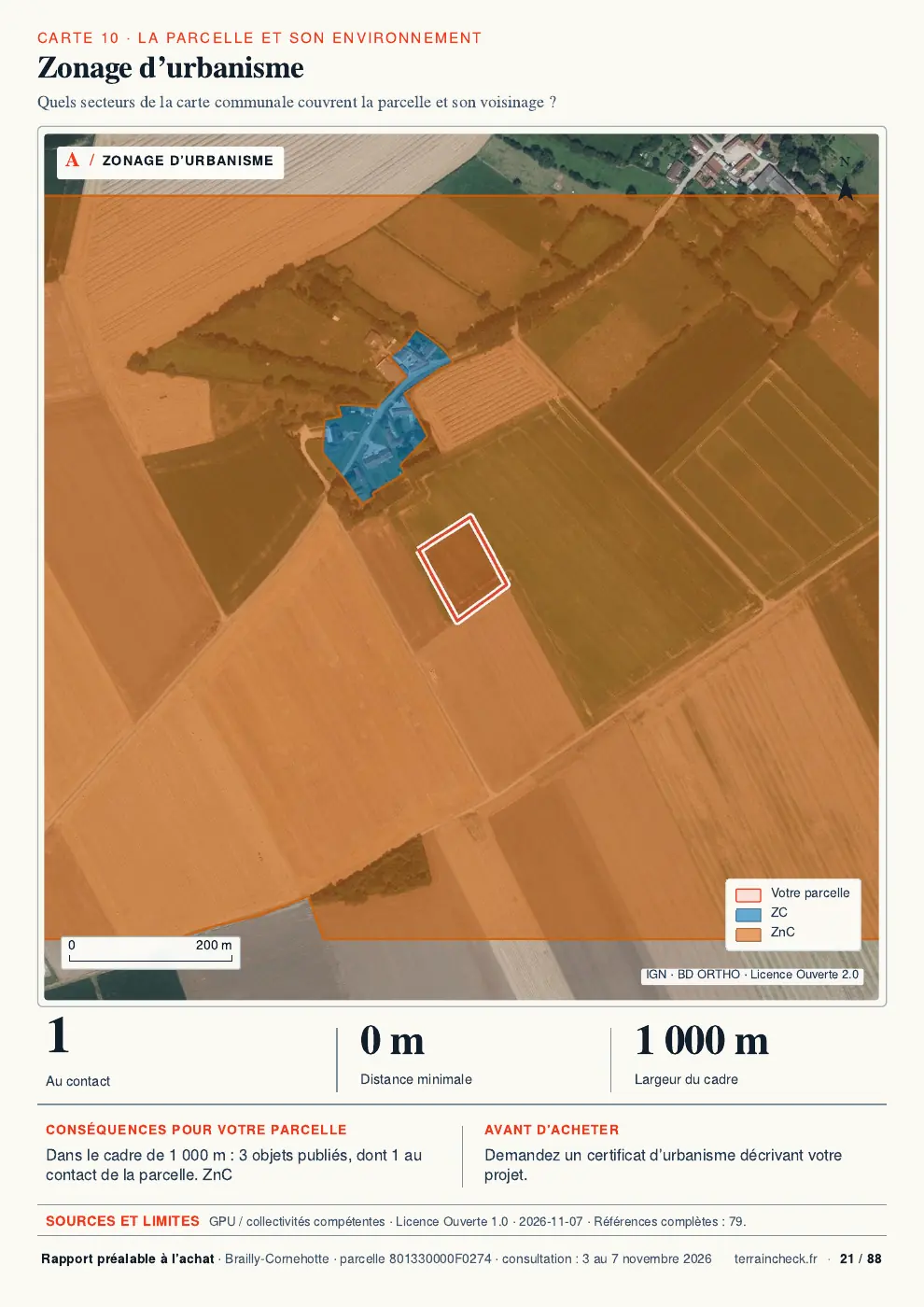
Compare French information and operational planning certificates, their response times and limits, and learn how to apply before buying land.
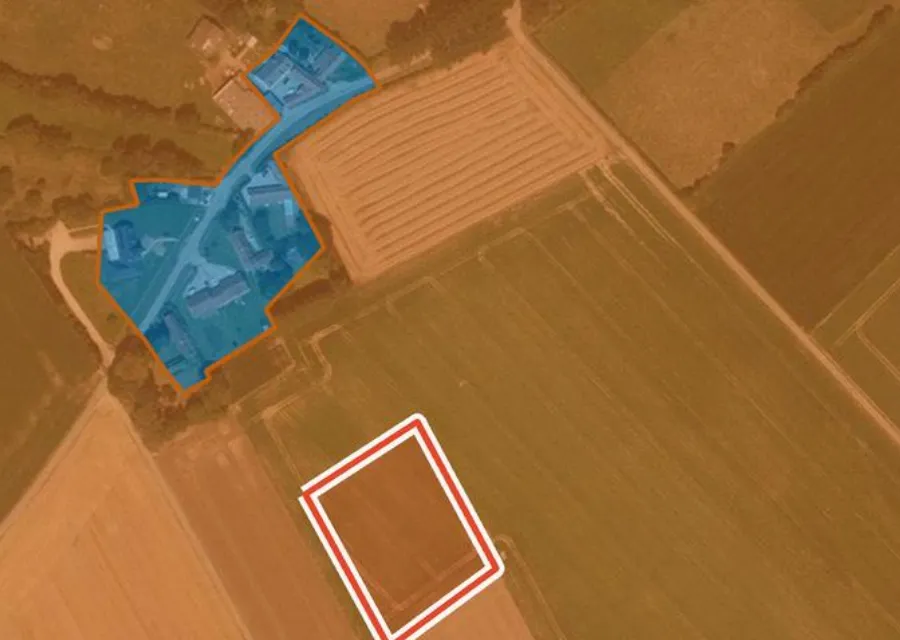
Local plan zone, carte communale or national rules, utilities, access, hazards, then a free planning certificate: how to check French land is buildable.
Dividing land in France: when nothing is needed, when to file a prior declaration (cerfa 16703*03, one month) or a development permit, and the 2026 change.
French building permits: 2 months for a house, 1 for a prior declaration, extensions, missing documents, when silence means no, appeals and validity.
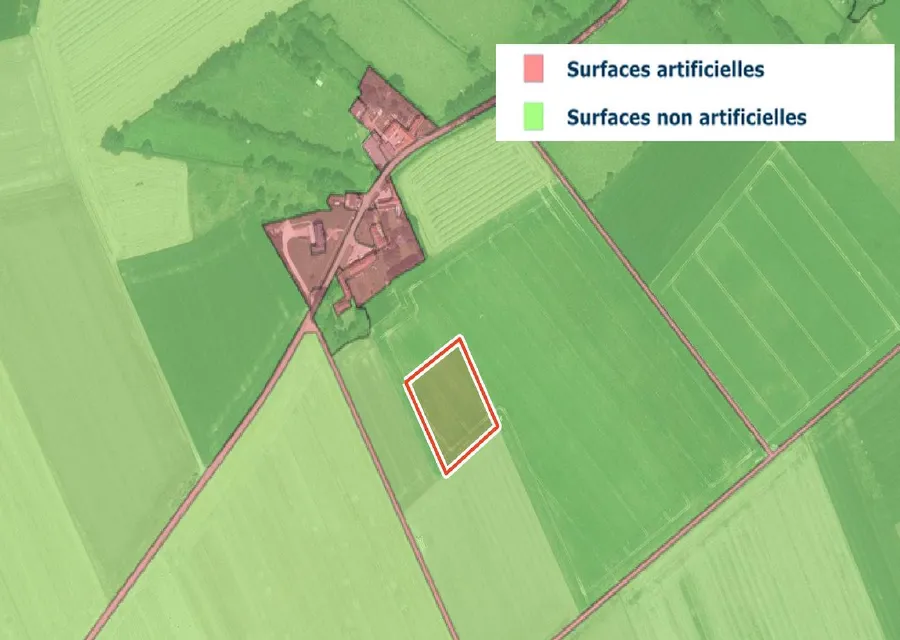
France’s ZAN rules: local plans must cut land consumption by 22 February 2028. Why AU zones are exposed, PLU revisions and planning certificates.
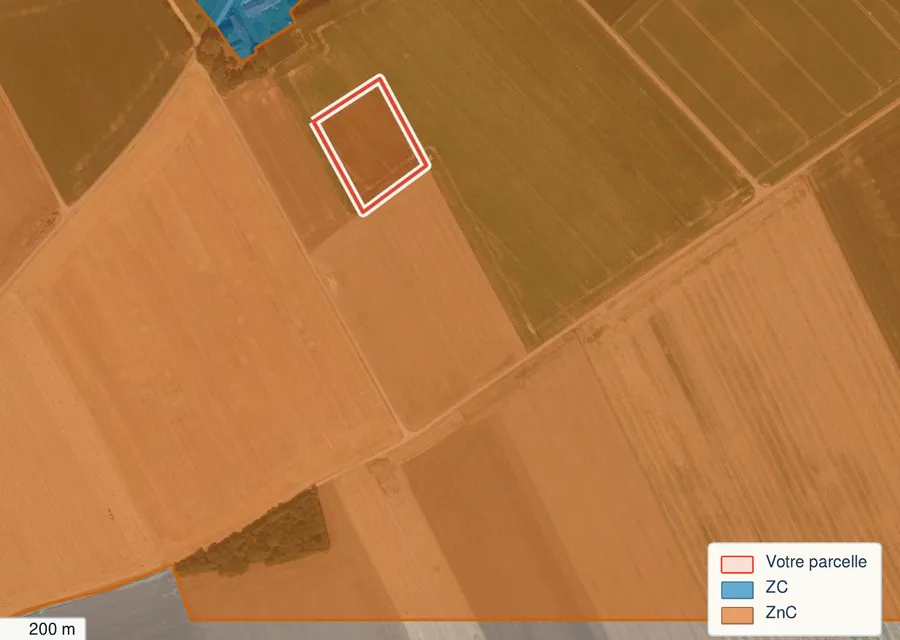
How French farmland gets rezoned: PLU revision or amendment, carte communale, public inquiry, real timescales and the taxes the seller pays on sale.
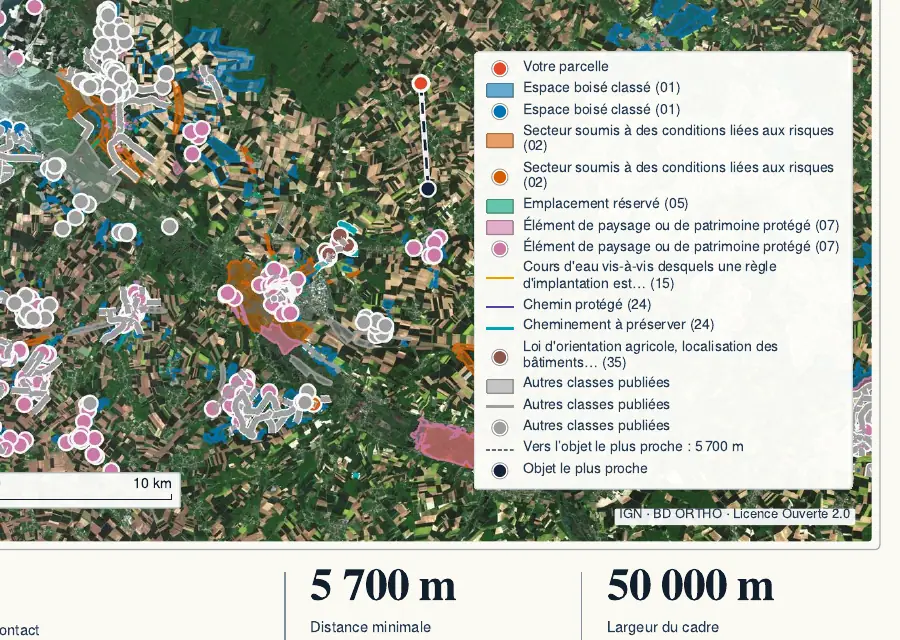
What a reserved site in a French PLU blocks, how to spot it before buying, and how an owner can force the public body to buy within strict time limits.
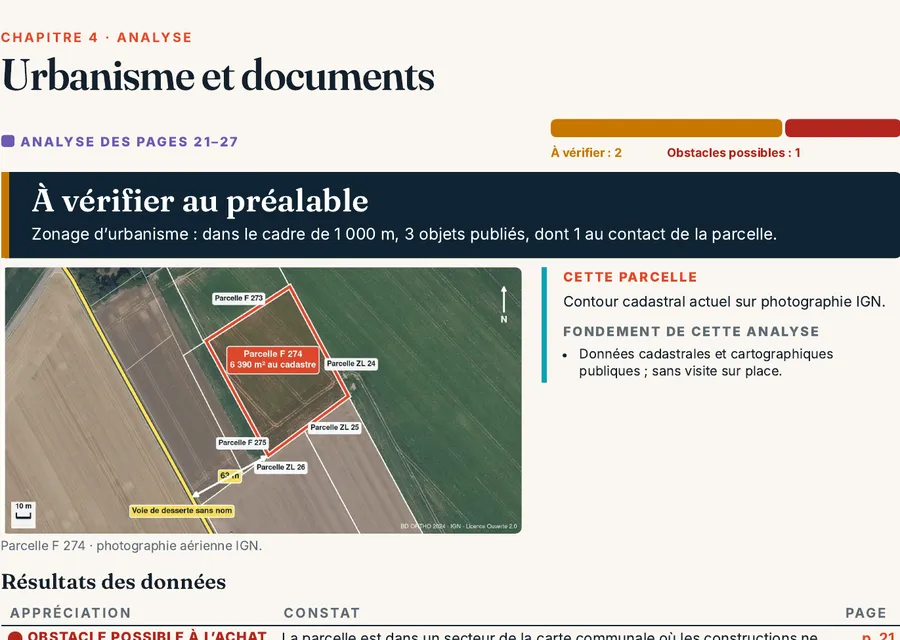
No reply to a French planning certificate after 1 or 2 months: what a tacit CU guarantees, 18 months of frozen rules, what it leaves out, how to prove it.
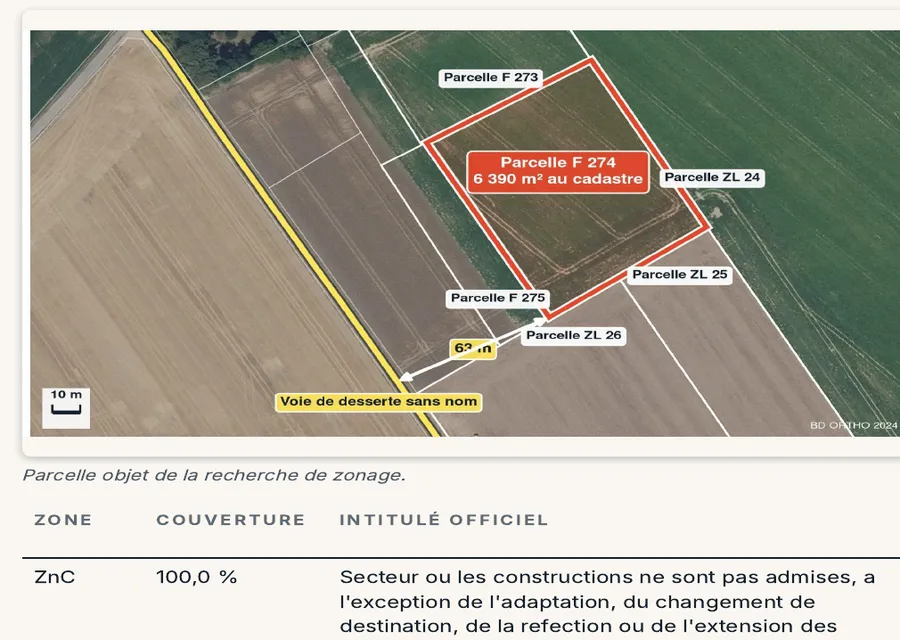
When a French zoning line cuts through a plot: where the house can go, what the rest of the land allows, and how to judge the price before you sign.
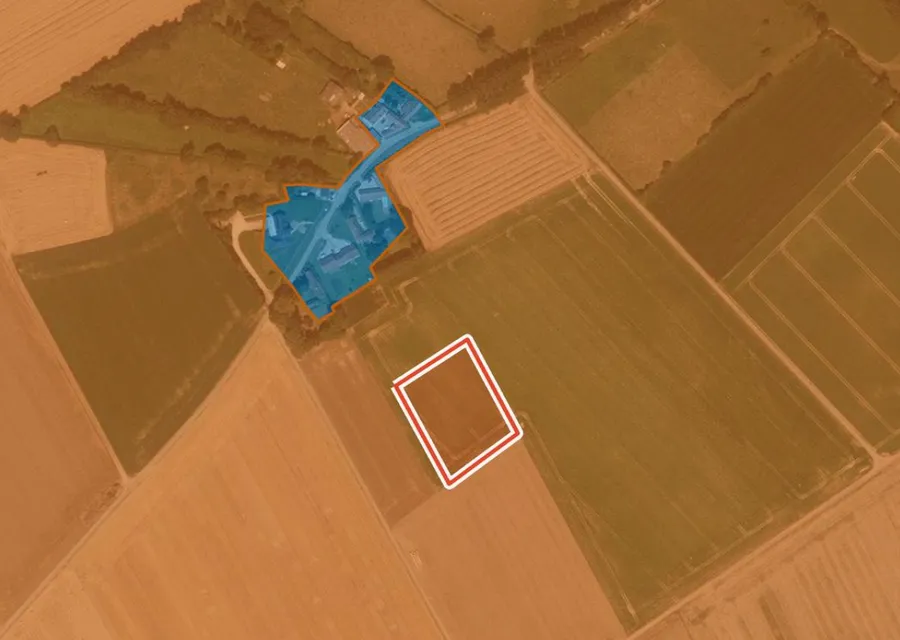
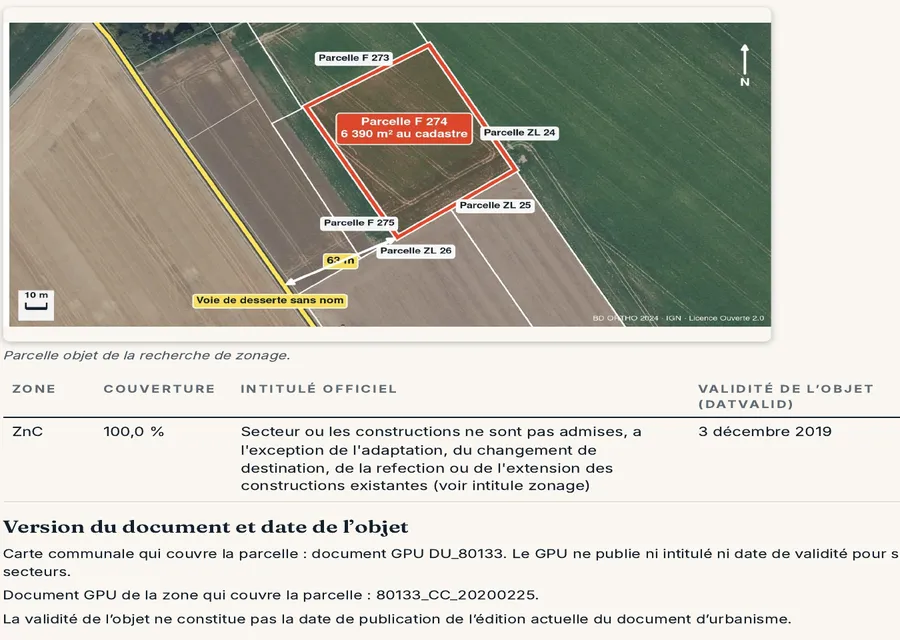
ZC, ZCa and ZnC sectors, exceptions in law, the national RNU rules and PLUi plans in progress: what a plot under a carte communale lets you build.
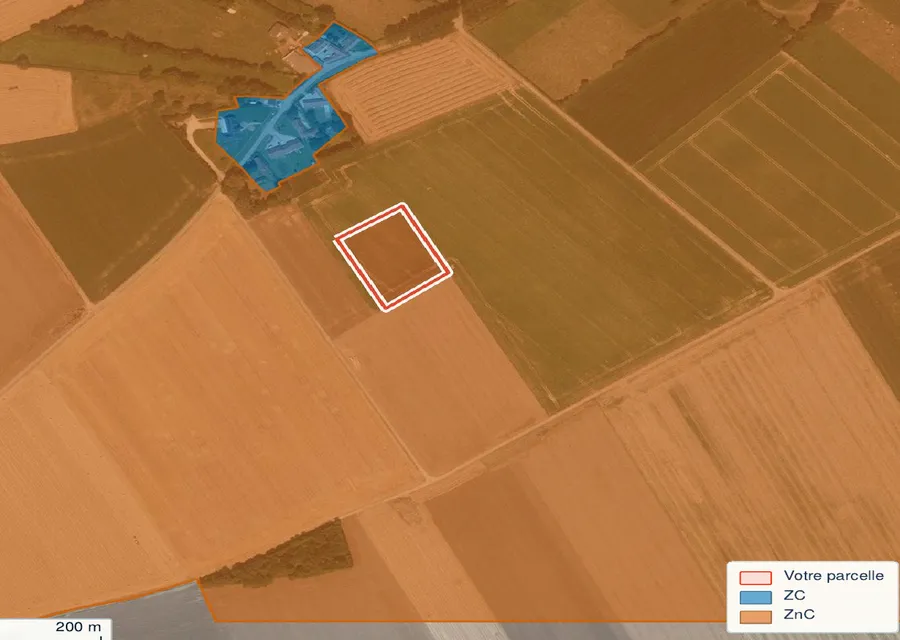
No PLU or carte communale? The RNU limits building to the built-up parts of the commune. The L111-4 exceptions, setbacks, who decides and the steps.
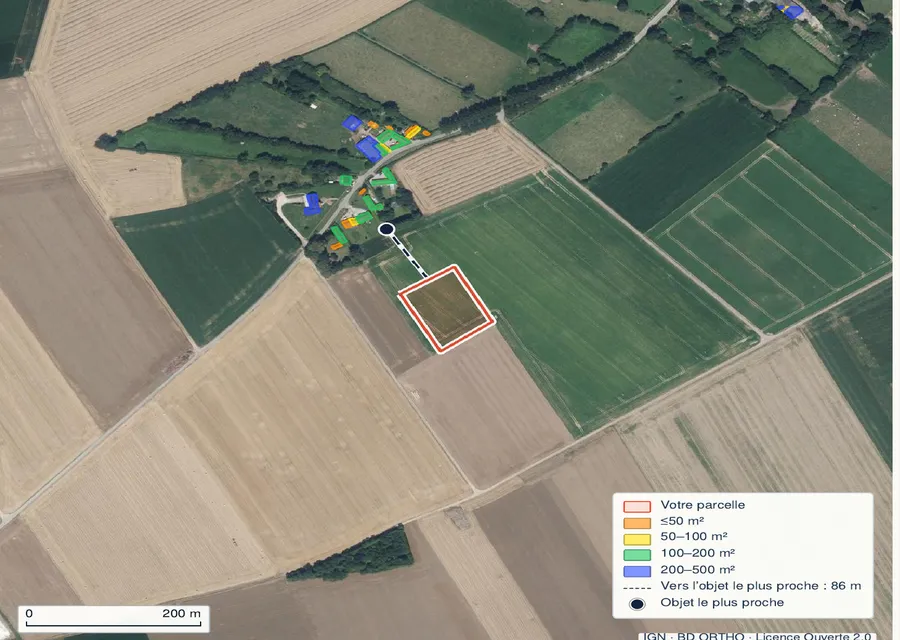
How far a house must stand from the neighbour and the road in France: where the PLU sets it, the RNU half-height and 3 m side rule, exemptions, measuring.
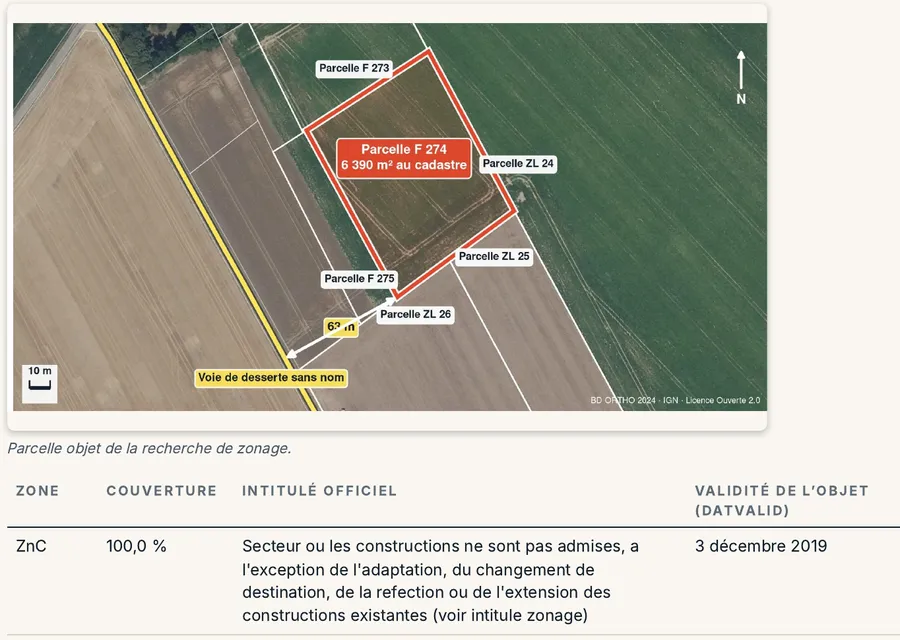
Buying a French plot with a building permit already granted: transfer to your name (Cerfa 16701*03, 2 months), 3- or 5-year validity, extensions and taxes.
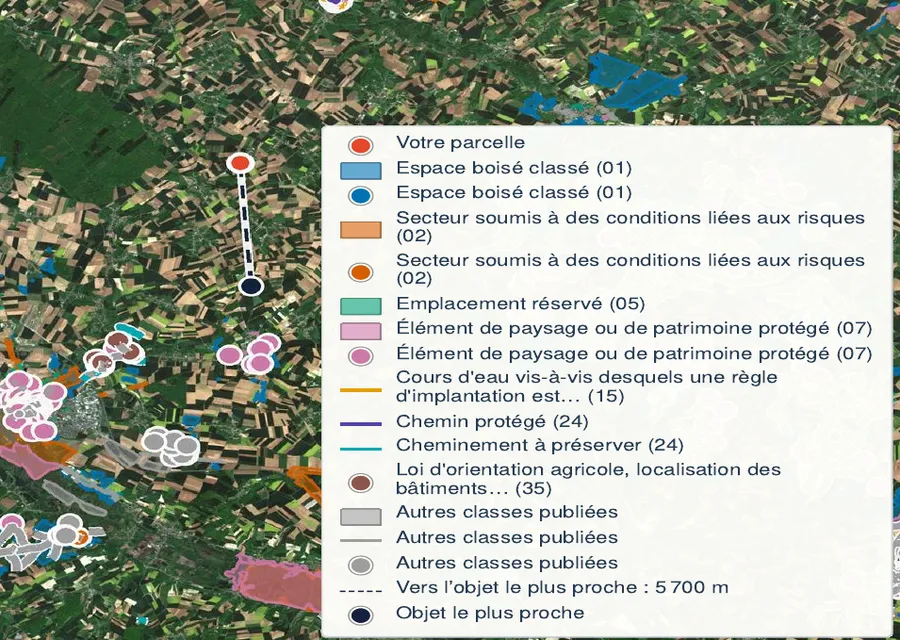
Footprint, floor area and unsealed ground in a French PLU: where to read the rules, how to work out what a plot allows, and how to have it confirmed.
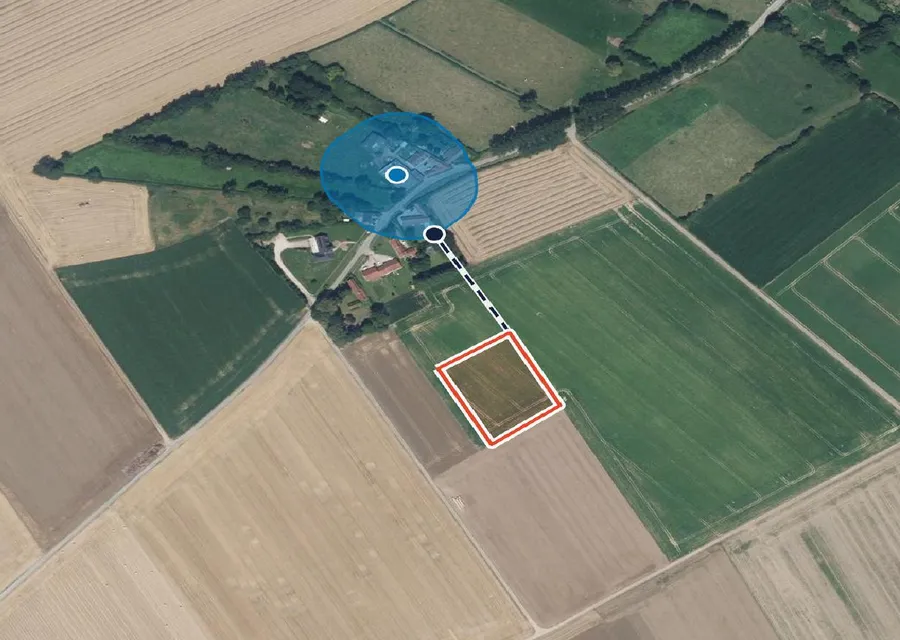
Plot moved into zone A or N by a French PLU review: the public inquiry, the two-month court deadline, compensation under L105-1, what protects a project.
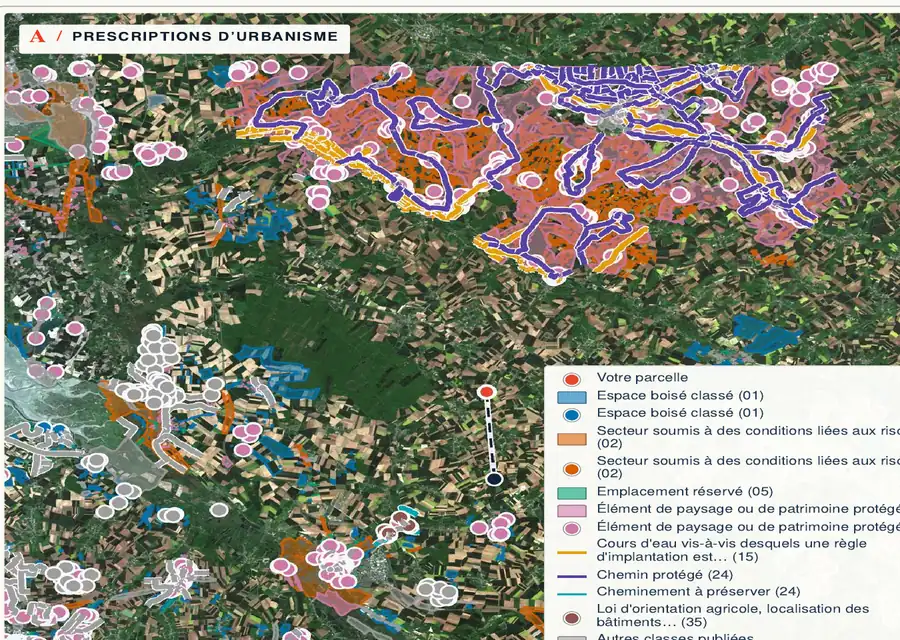
Zone A or N, carte communale, RNU: extensions, outbuildings, change of use and farm buildings that French planning law allows, and the conditions for each.
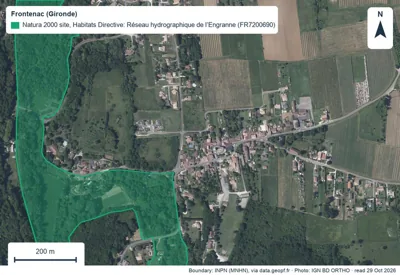
A Natura 2000 site on or near a plot: reading the map, whether an impact assessment is required, charter, contract, land tax and protected species.
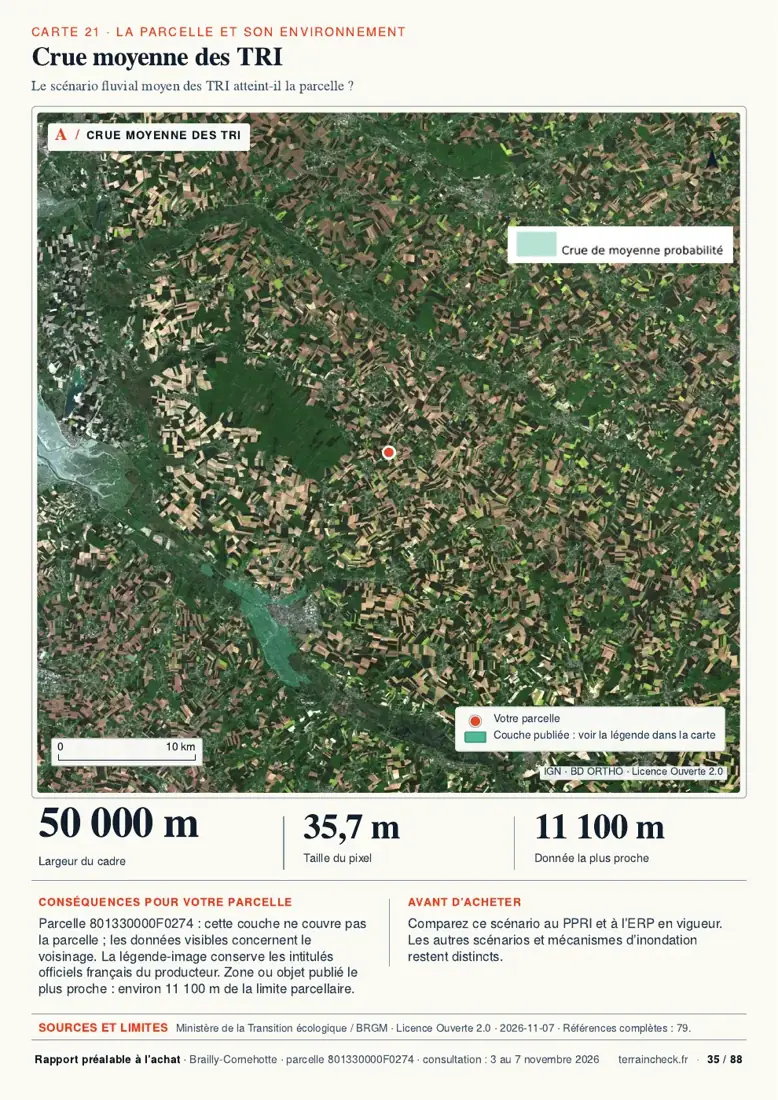
Check Géorisques, the local PPRI and the risk statement before buying land in France, and understand what flood maps and records cannot establish.
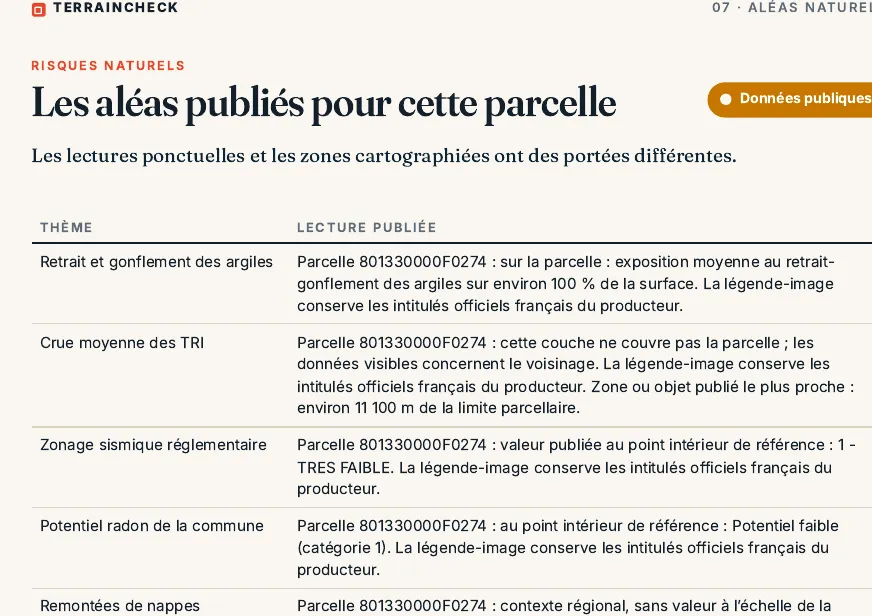
Search Géorisques by parcel and download the free report: what Existant, Inconnu and Concerné mean, and why it is not the seller’s risk statement (ERP).
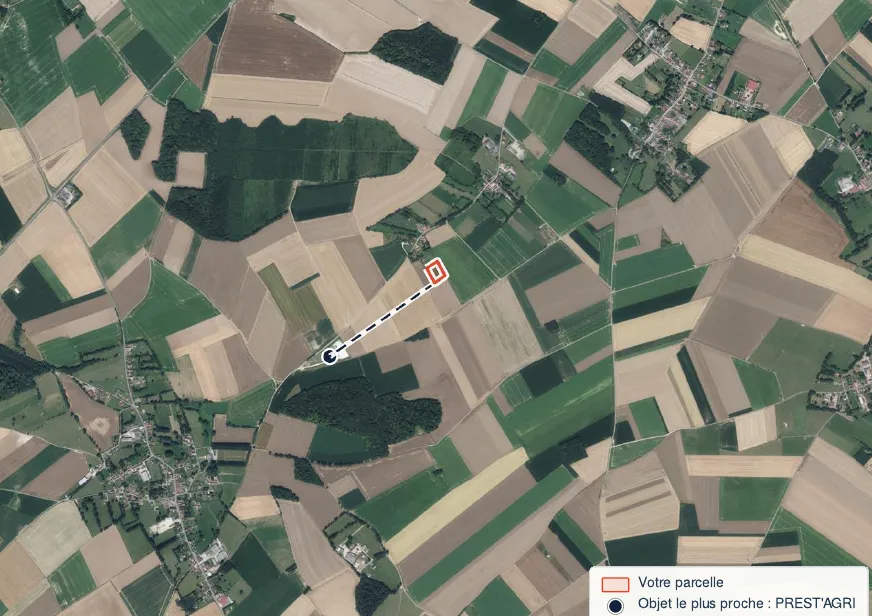
Géorisques database, regimes D, E and A, Seveso status, the 100 m rule around livestock farms: spotting classified sites near a French plot before buying.
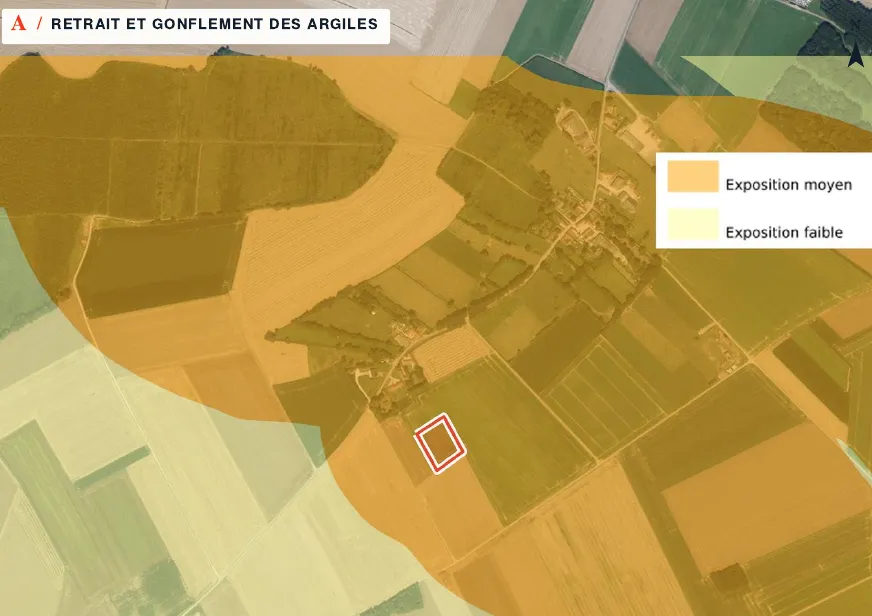
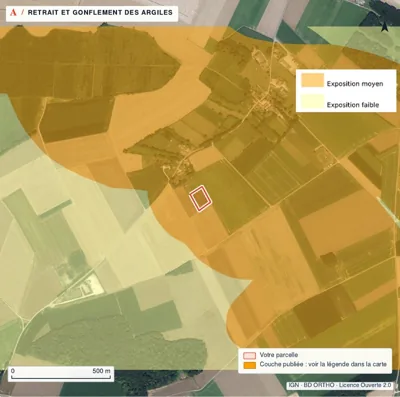
The Géorisques clay map, the soil study a seller owes in medium or high zones, and the builder’s two routes: what a clay zone means for building in France.
French preliminary soil study (G1 presumed compliant) due from the seller in medium or high clay zones, valid 30 years if ground untouched; quoted price.
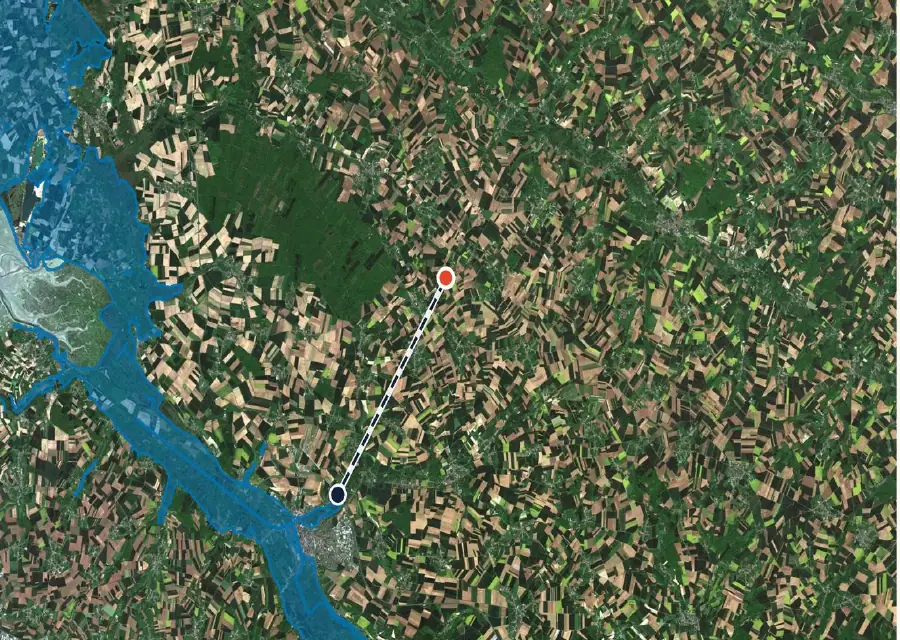
The French seller’s risk statement for land: which areas trigger it, the six-month rule, what article R125-24 requires, remedies and what it leaves out.
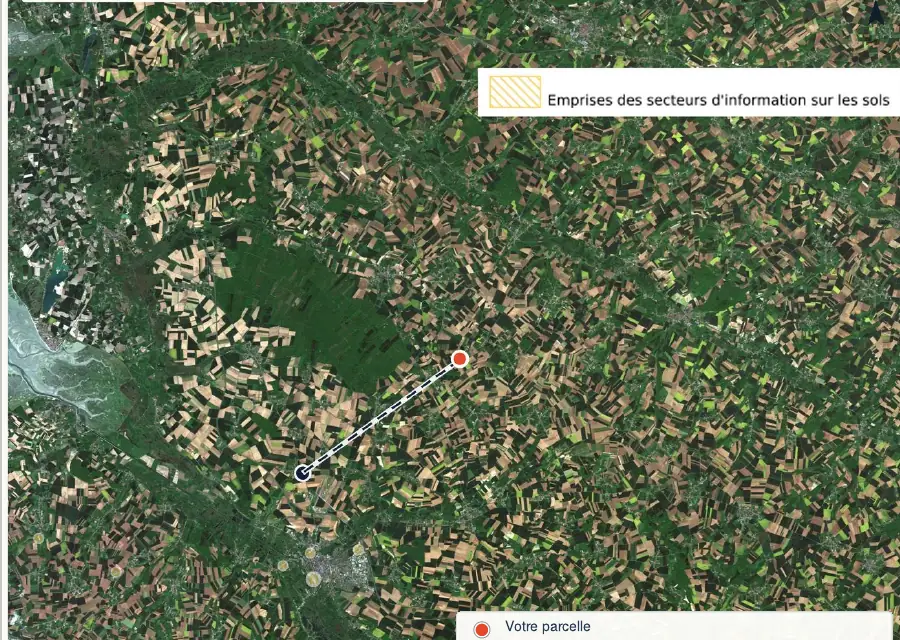
SIS, CASIAS (ex-Basias) and ex-Basol records: how to check a French plot’s industrial past, what the seller must disclose and what building there requires.
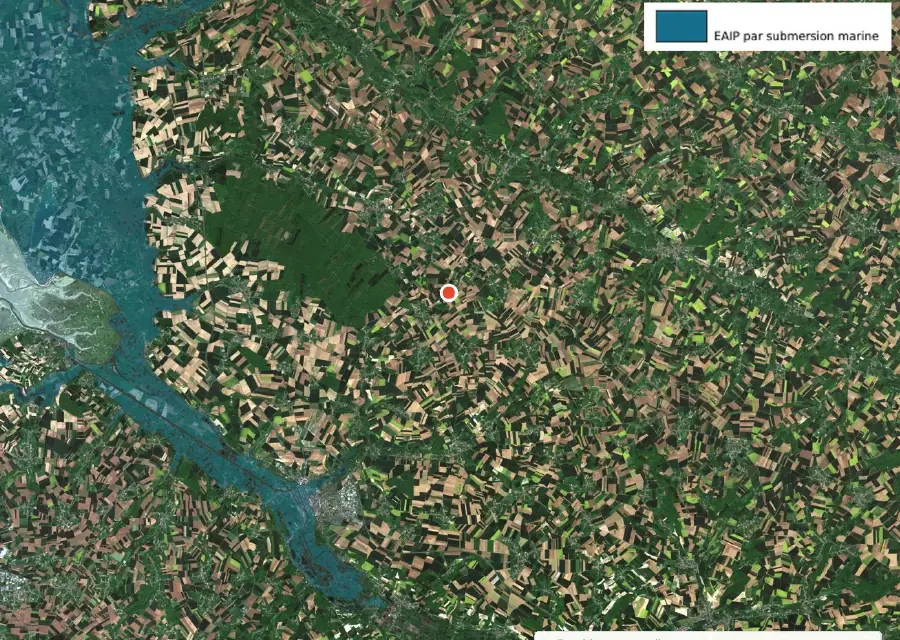
371 listed communes, 30- and 100-year retreat zones, demolition deposits, the commune’s right of first refusal and coastal flood plans: what to check.
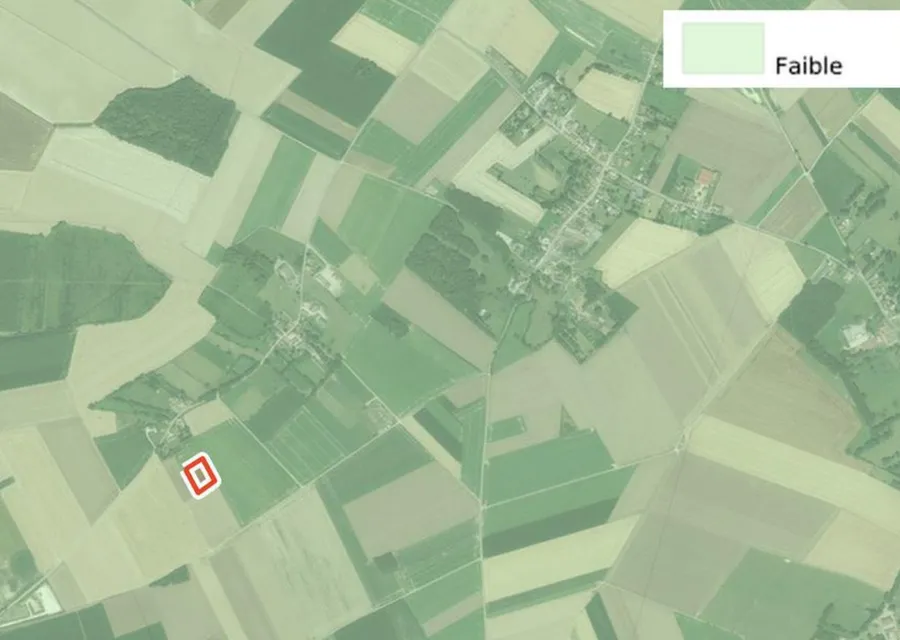
Radon zone 1, 2 or 3 of a French commune: where to look it up, what zone 3 changes for a sale, the 300 Bq/m³ reference level and how to build in zone 3.
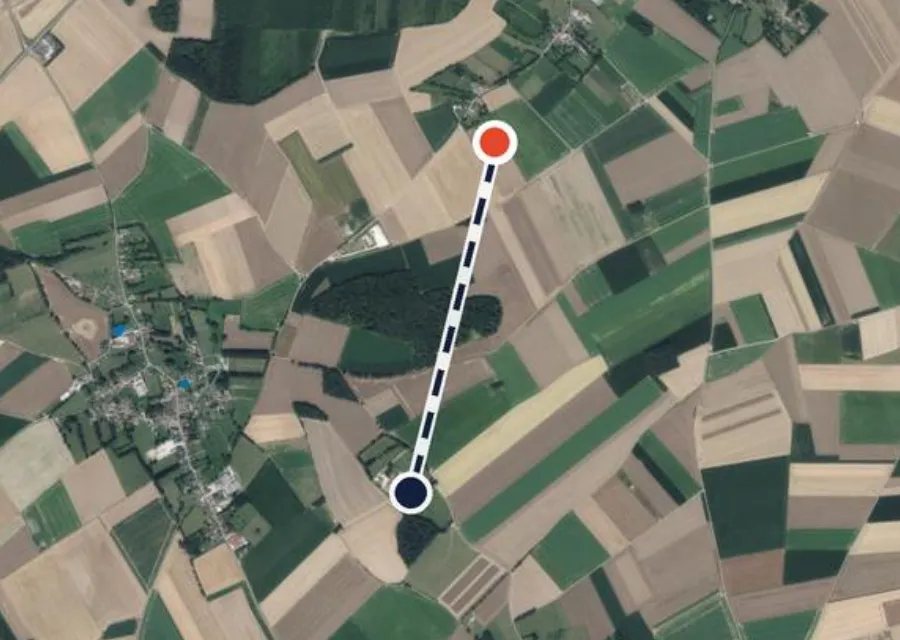
Wetland on a French plot: the legal test, maps to check, the 0.1 ha and 1 ha thresholds for filling, the 2-month wait and the penalties, before you buy.
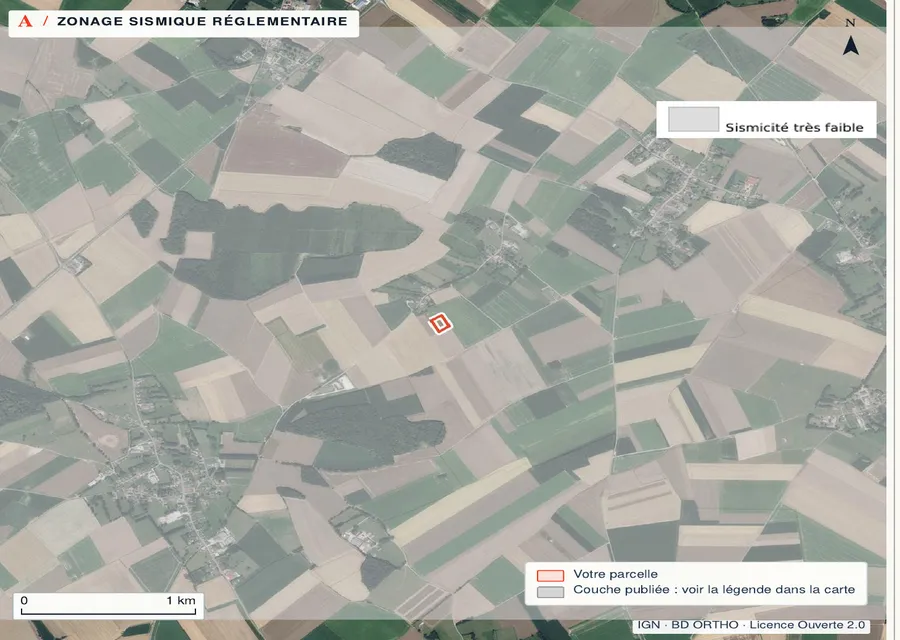
France’s five seismic zones: how to find your commune’s zone, which rules a new single-family house must meet, and when a seismic certificate is needed.
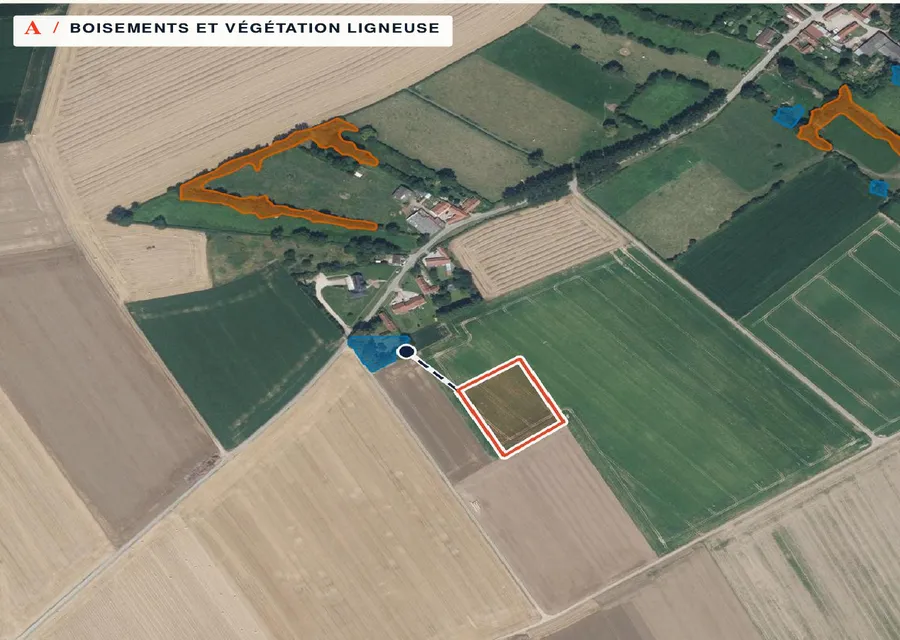
Brush-clearing duty near woodland in France: which départements, 50 or 100 m around buildings, a neighbour’s land, penalties and what changes at sale.
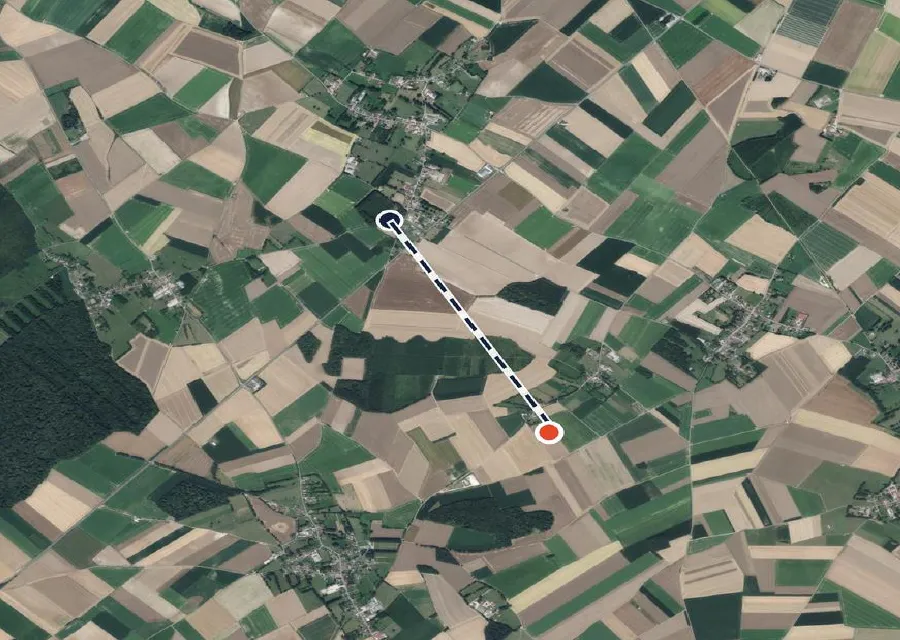
Chalk pits, quarries, cellars, war tunnels: where to check known cavities near a French plot, what the law says, insurance, and surveys before you buy.
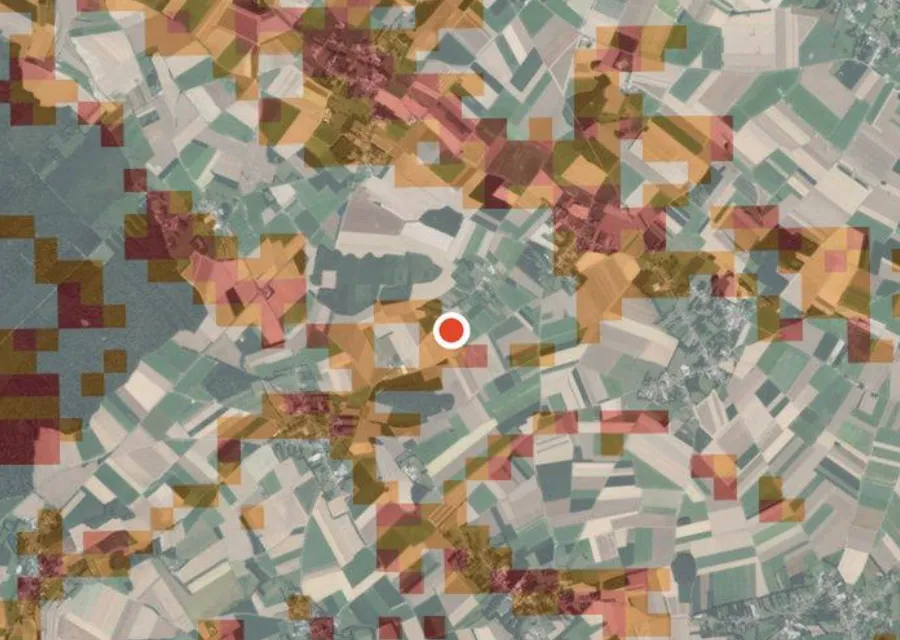
Groundwater flooding in France: how to read the BRGM map on Géorisques, its classes and limits, what a local hazard plan and insurance say about a plot.
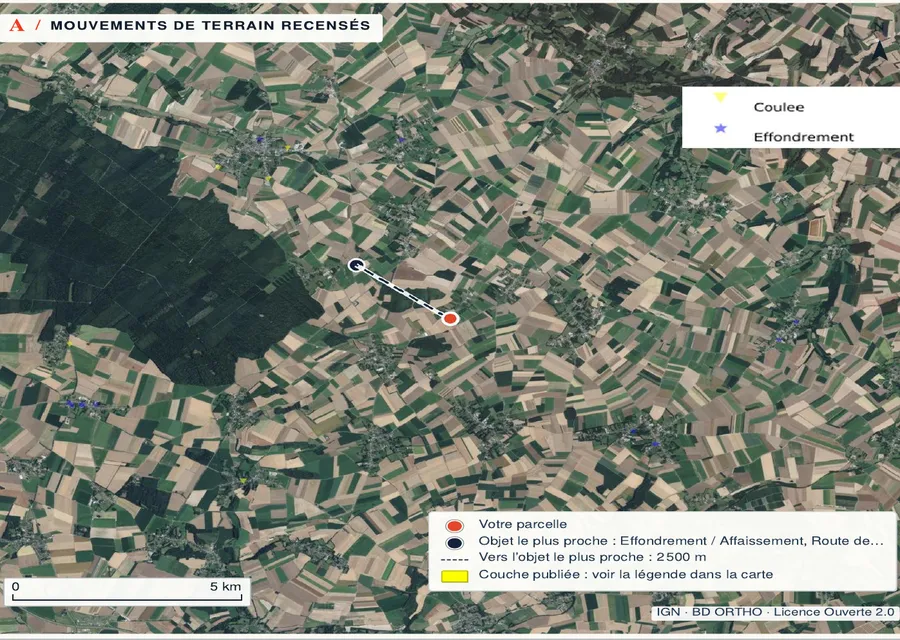
Landslides, rockfalls, mudflows: read the BDMvt records on Géorisques, spot the signs on site, check the PPR and insurance before buying land in France.
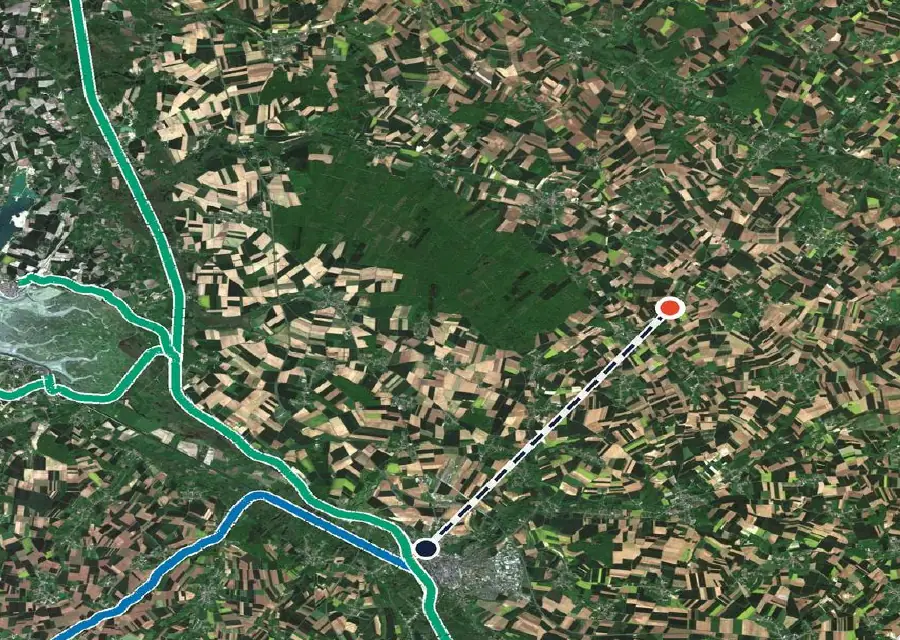
Roads and railways graded 1 to 5 by the préfet, noise sectors up to 10 to 300 m wide, façade insulation of at least 30 dB: check a French plot first.
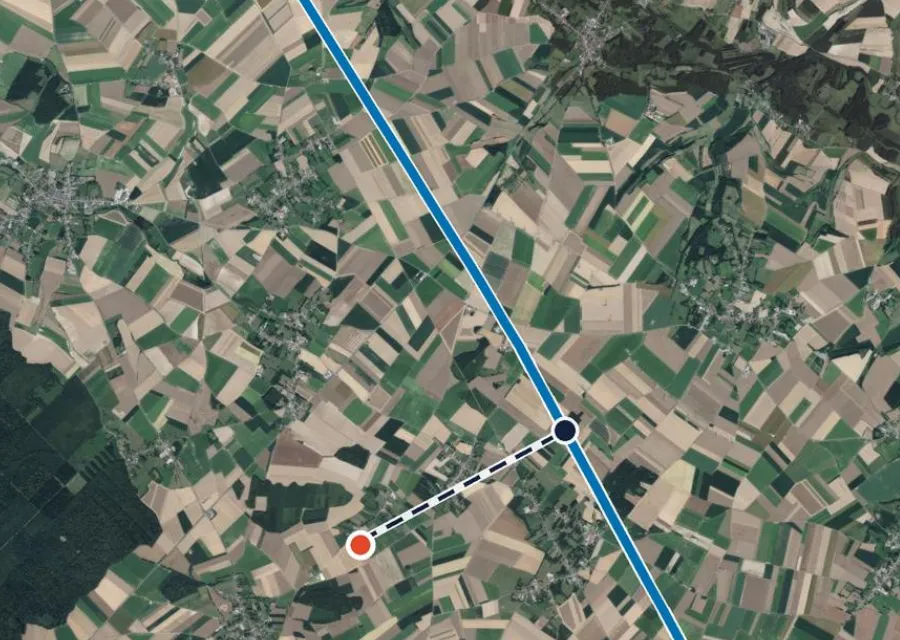
RTE and Enedis easements, the distances in the French technical order and the 5 kV/m and 100 µT field limits: what applies to land near a power line.
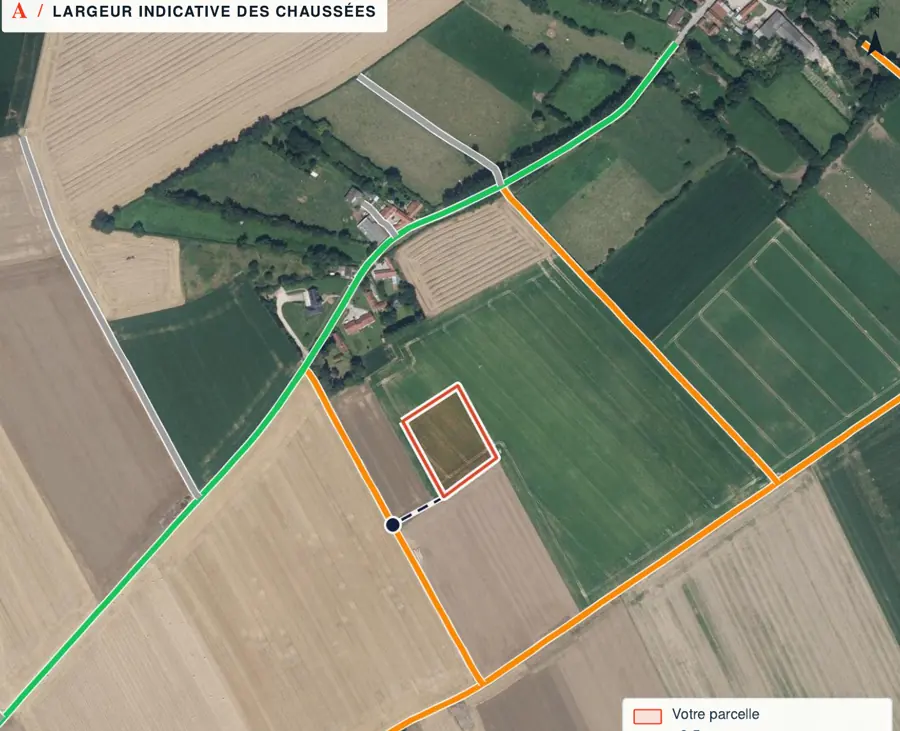
Enedis averages up to 36 kVA (€490 or €1,910), a sewer charge capped at 80%, 2 to 6 months to wait: what servicing a French plot costs, step by step.
What “viabilisé”, “desservi” and “raccordable” mean in a French land listing, how to check utilities at the mairie and who pays for the connections.
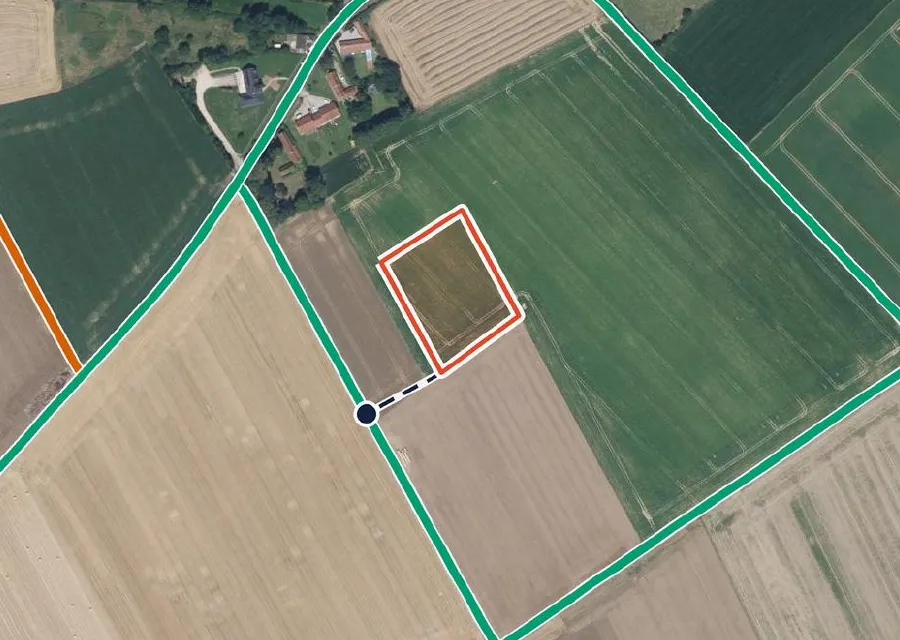
A French plot with no road access: the legal right of way (Civil Code, art. 682), compensation, rural and farm tracks, and what access a permit needs.
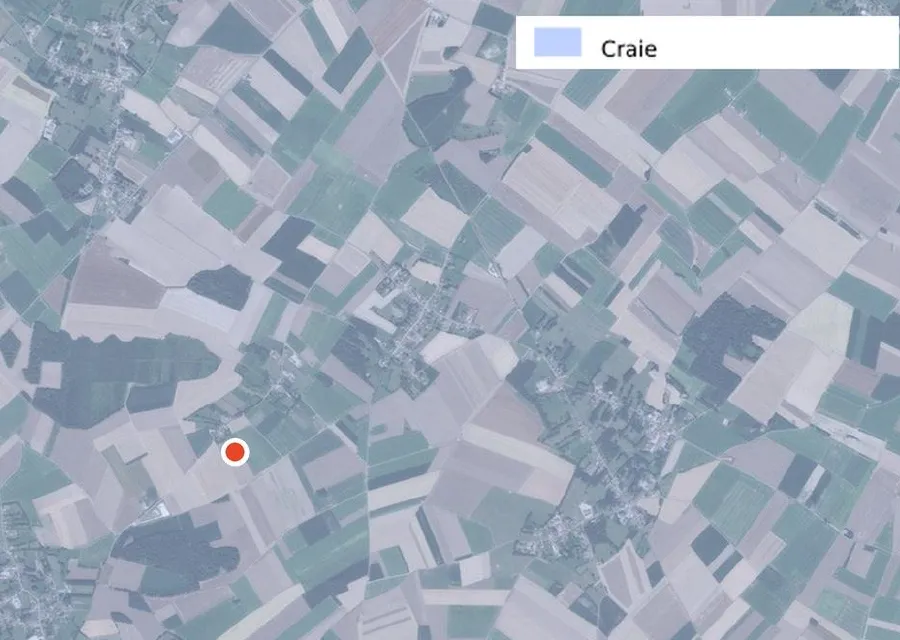
No mains sewer on a French plot? Read the zoning map, check the soil and get the Spanc certificate for the building permit, with charges and timings.
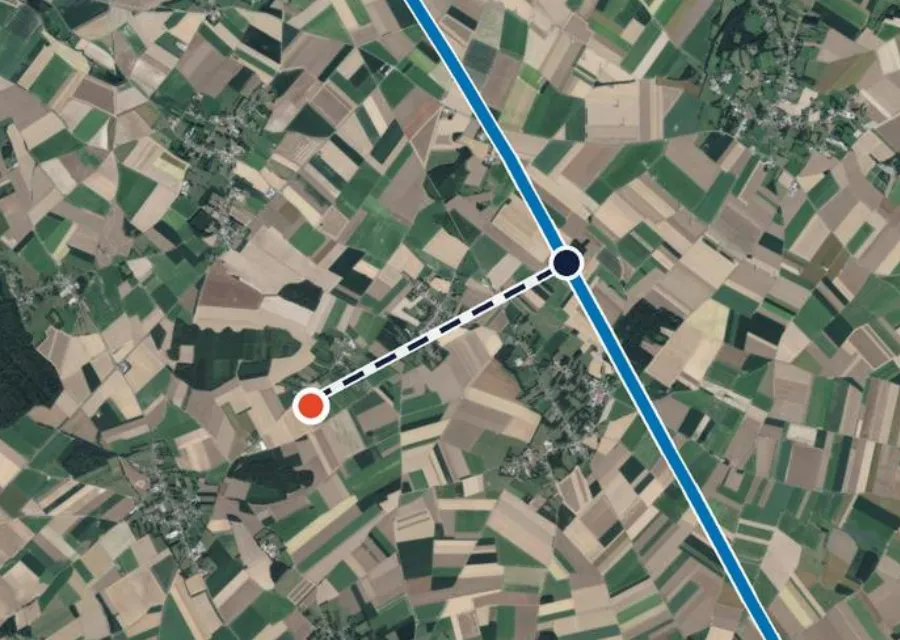
Enedis connection at €1,903.68 incl. VAT, extension per metre, offer within three months, trenching at your expense: how a bare plot gets power, 2026.
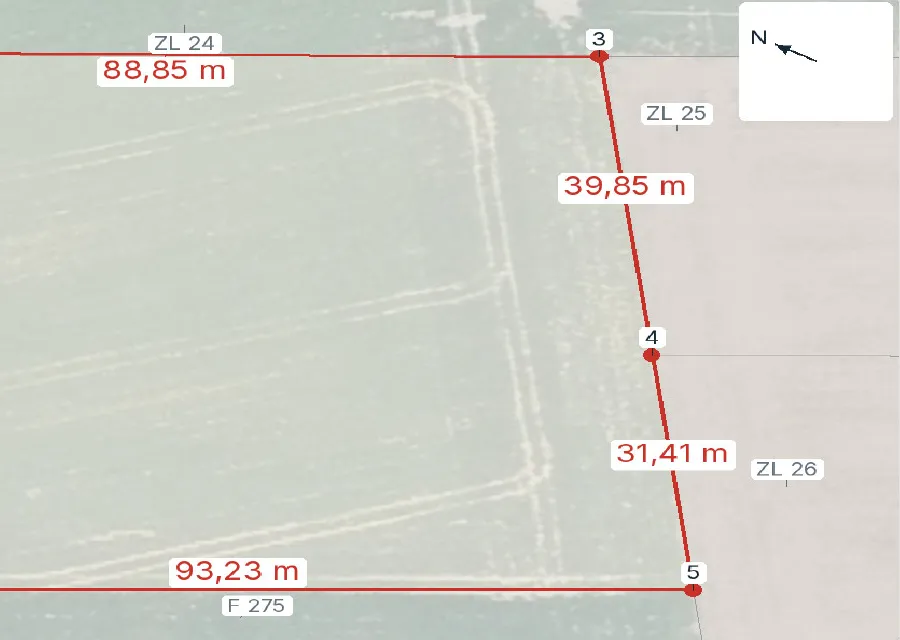
Sanitation zoning, 2 years to connect once a sewer comes into service, the PFAC capped at 80%, and who pays for each part of the connection in France.
Who supplies water, what the planning certificate shows, who pays for connection and extension, a worked cost example, timescales, wells and boreholes.
The 200 m hydrant rule is not national in France: departmental regulations, how distance is measured, the permit, water tanks and who pays for them.
All-waste tank, sand filter or micro-station: what the soil allows under French rules, the SPANC’s role and what drives the cost of a quote in France.
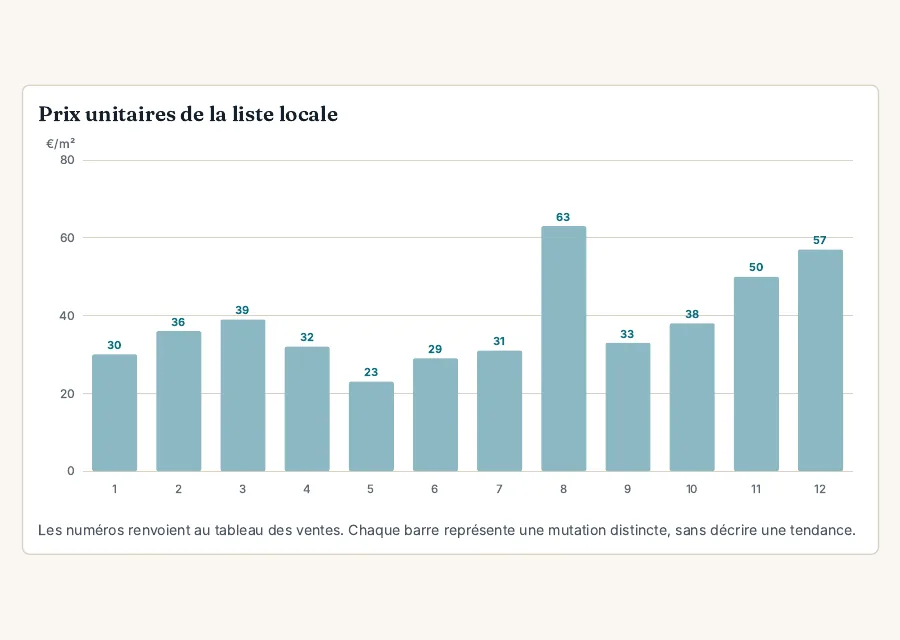
Average price per m² of plots bought to build a house in France: €102 in 2024, from €55 to €227 by region. Official SDES figures and their limits.
Notaire’s fees on a French plot: transfer duty by département on 1 June 2026, the regulated fee scale, the land-registry charge and worked examples.
France’s taxe d’aménagement in 2026: €892 or €1,011 per m², local rates, a worked example for a 120 m² house, and when the two tax bills arrive.
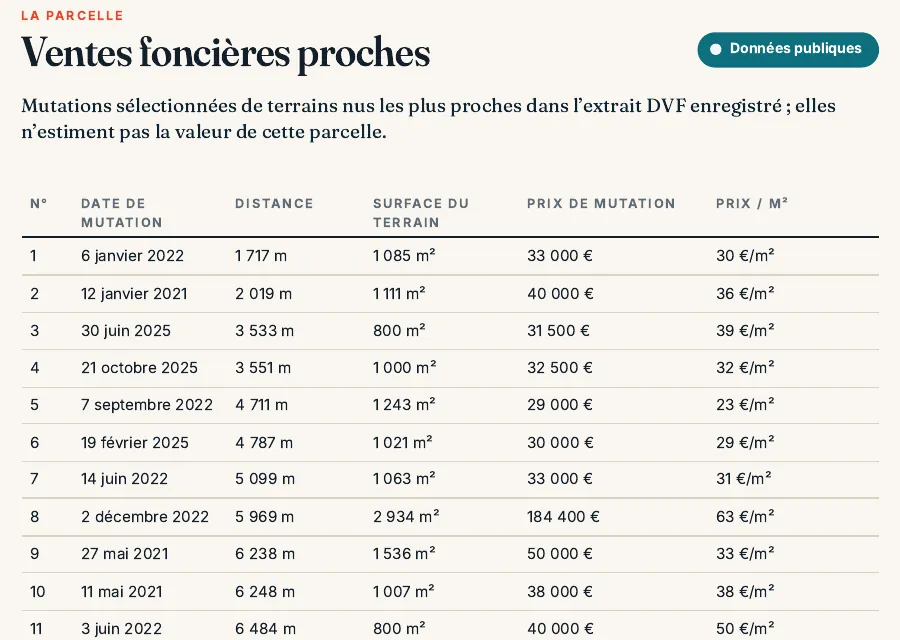
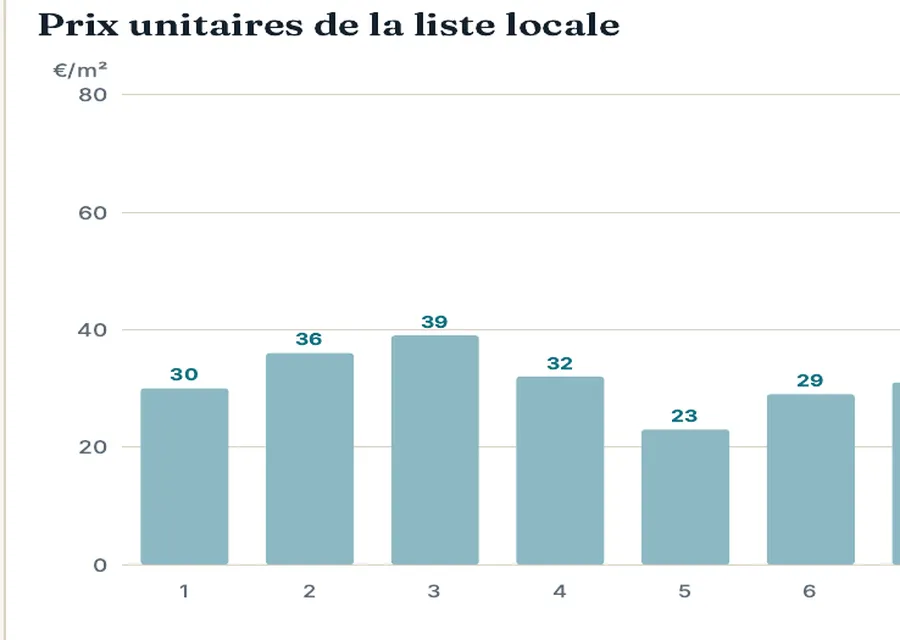
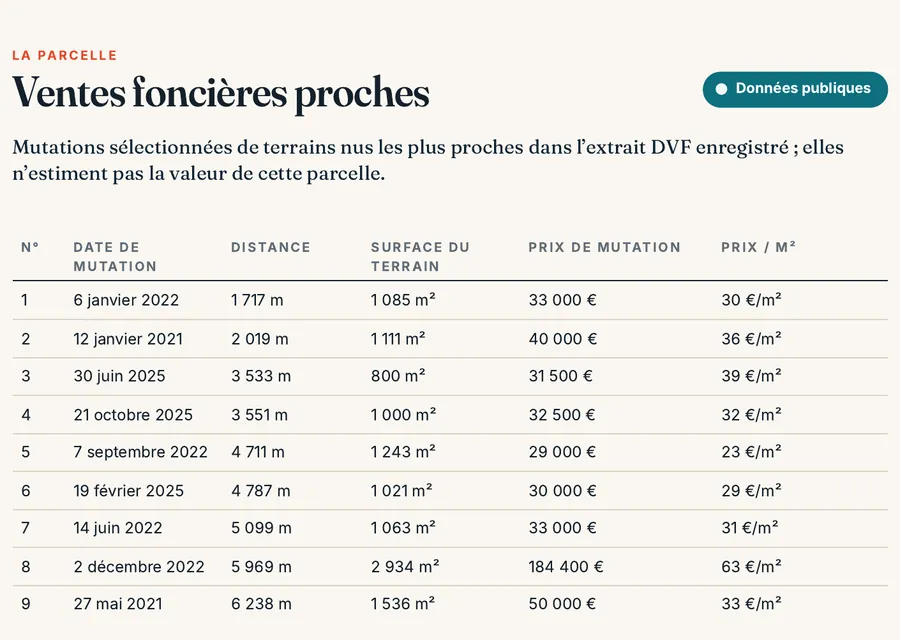
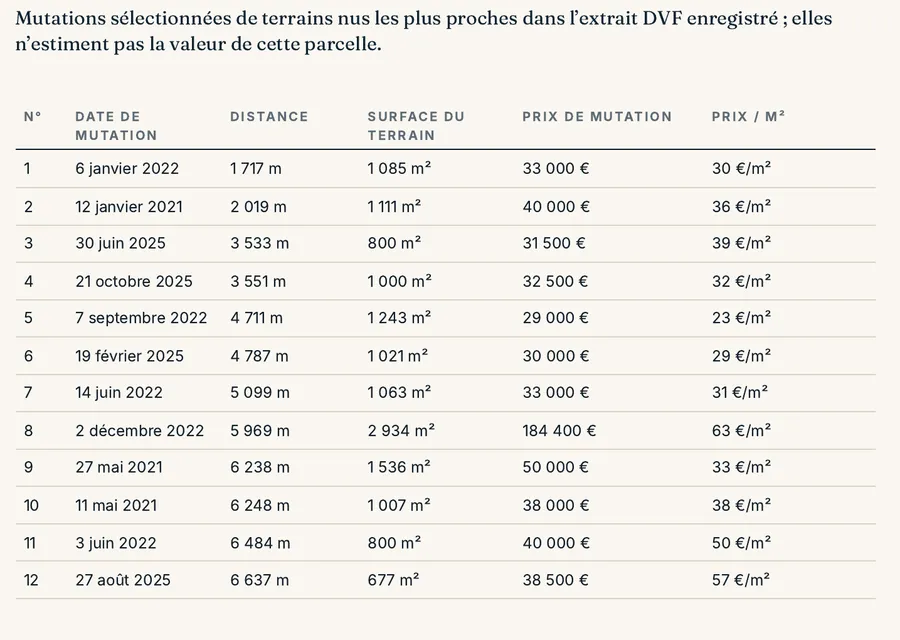
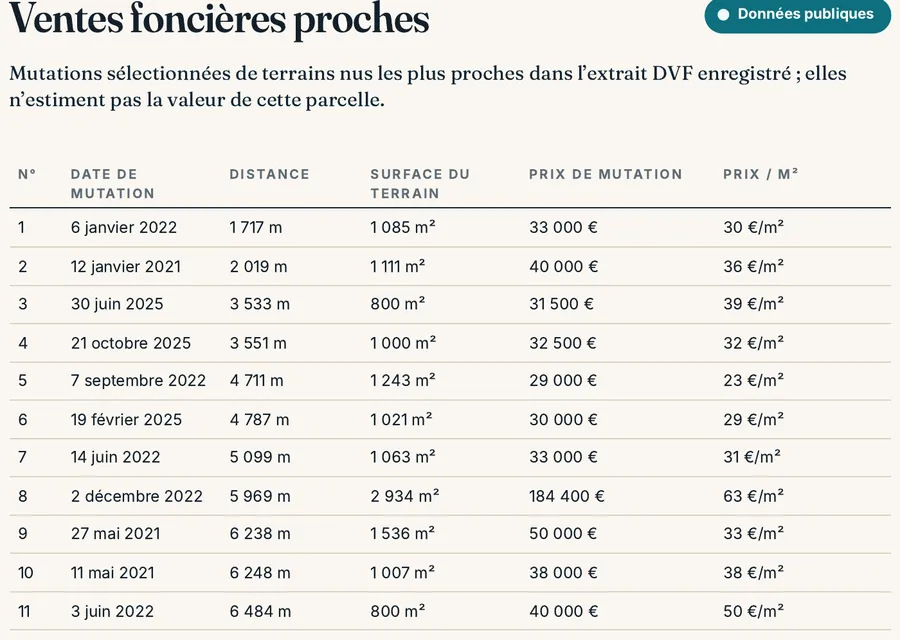
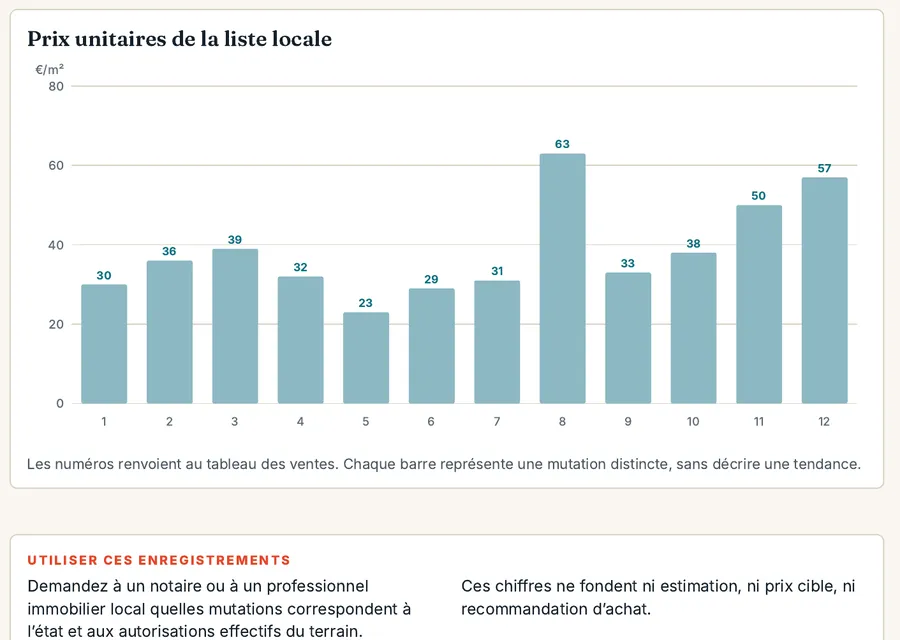
France’s DVF sales files: coverage, how to filter building-land sales, the multi-parcel trap and a worked example on 43 sales in one commune.
French property tax on bare land: who pays on 1 January, how the TFPNB is worked out, farmland versus building land, and a worked example on 2025 rates.
French building land sold by a private owner or a developer: VAT on the full price, on the margin or transfer duties, with a worked example for €100,000.
Transfer duty, notaire’s fee, development tax, connections: every item in the budget for a French building plot, a worked example and when each is paid.
Selling building land in France: deductible costs, allowances over 22 and 30 years, 19% tax plus 17.2% social charges, exemptions and a worked example.
France’s 2026 development tax: €251 per m² of pool, €892 per m² of shed or conservatory outside Île-de-France, €2,928 per parking space, worked examples.
A and N zones, sheds, caravans and farmland prices (€6,460 a hectare in 2025): what non-buildable land in France allows, and how to check before you buy.
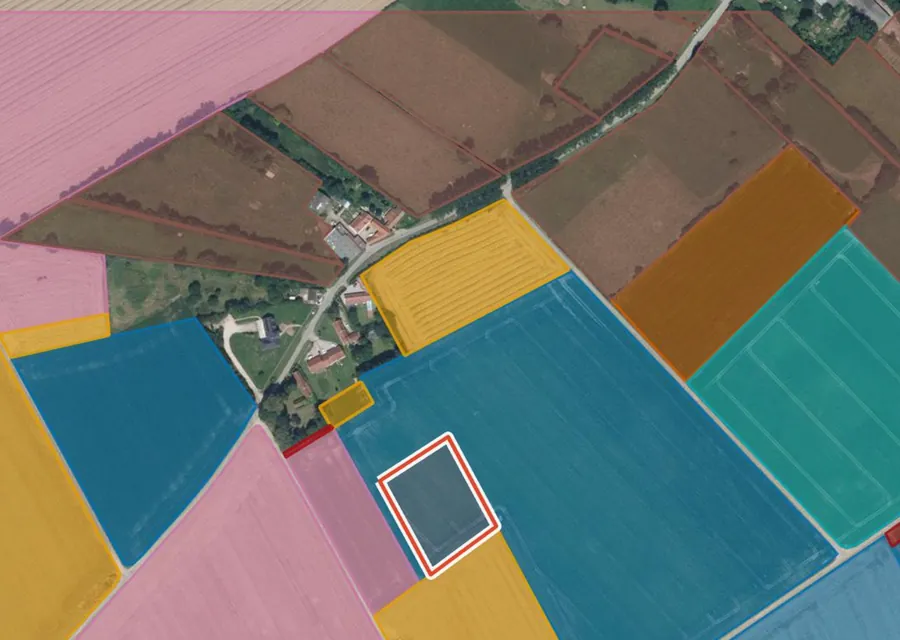
What farmland costs in France: the official 2025 scale by small farming region, averages by département, free or leased land, and the price per m².
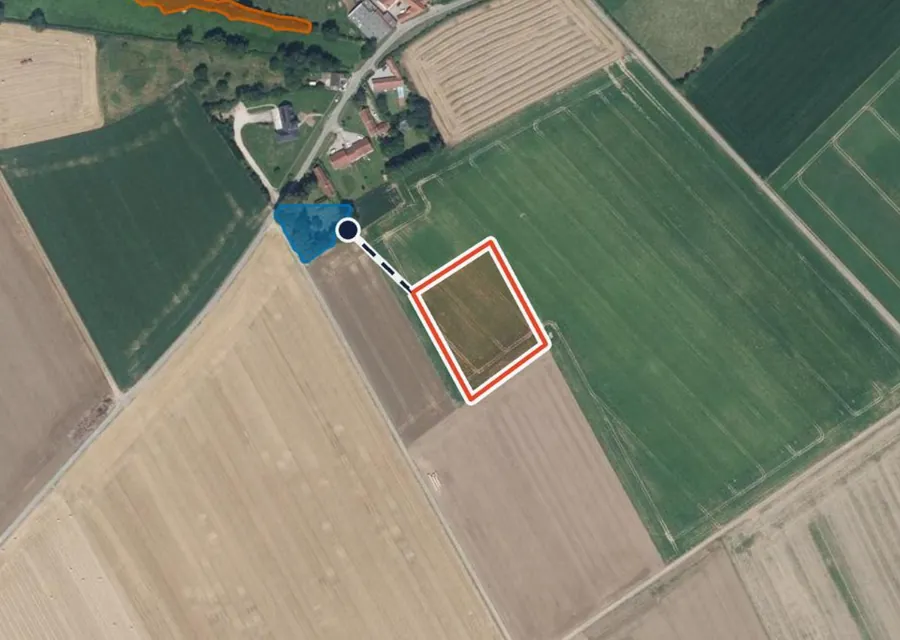
Terrain de loisirs in France: caravans beyond 3 months a year, mobile homes, cabins, hosting campers. The Planning Code thresholds to check before you buy.
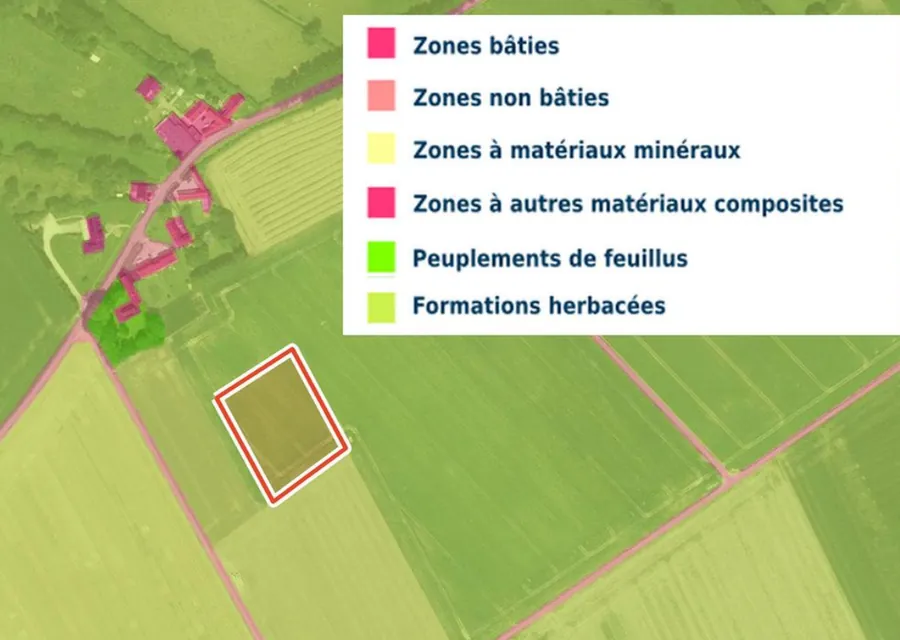
A private buyer can purchase French farmland, but the Safer has two months to pre-empt, a tenant farmer may come first and farming it may need a permit.
A zone of a PLU, carte communale or national rules: when a house is allowed on French farmland, farmers’ homes, barn conversions, STECAL and the CDPENAF.
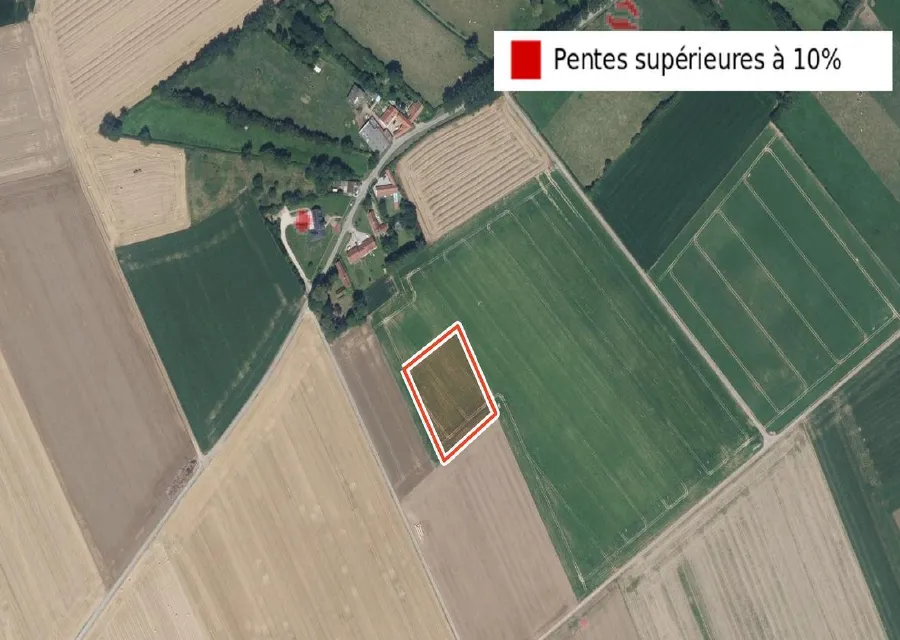
Building on a sloping plot in France: measuring the slope, the 2 m and 100 m² earthwork thresholds, PLU height rules, runoff and when a soil study is due.
Court or notarial land auction in France: a local lawyer, a 10% guarantee (€3,000 min.), 90-second close, 10-day overbid, payment in 2 months, costs.
Woodland under 4 ha in France: neighbours’ and commune’s preference, clearance permission, management plans and 2025 Safer prices by region.
Buying farmland in France: the notaire’s notice to the Safer, its two-month window, exemptions, revised-price offers and what each means for your purchase.
Sheds, cabins and mobile homes in zones A and N in France: what the local rules allow, the 5 and 20 m² thresholds, existing cabins, penalties and fixes.
Plot in a French lotissement: the developer’s promise after the development permit, 10-day cooling-off, holding fee of 5% at most, rules and covenants.
Metropolitan France: a foreign or non-resident buyer can purchase land. The notaire, remote power of attorney, bank transfer and land tax, step by step.
Impartial public officer, one or two notaries at no extra fee, a deed in French with an interpreter: what a French notary checks and what is left to you.
Signing a French land deed without travelling: remote notarial power of attorney by video, consulate or local notary, apostille, translation and fees.
Steps, costs and deadlines for foreign buyers in France: notary costs of about 7.5–8.5%, the 10-day withdrawal rule, plot checks and the final deed.
Which communes are covered, the 100 m strip and its exceptions, areas close to the shore and infill rules: what France’s Loi Littoral allows on a plot.
France’s Loi Montagne for plot buyers: which municipalities it covers, the rule to build next to a hamlet (amended 2026), exceptions, lakes and chalets.
Bas-Rhin, Haut-Rhin and Moselle register land in the Livre foncier: who keeps it, who may search it, €7 copies and a six-month deadline for the final deed.
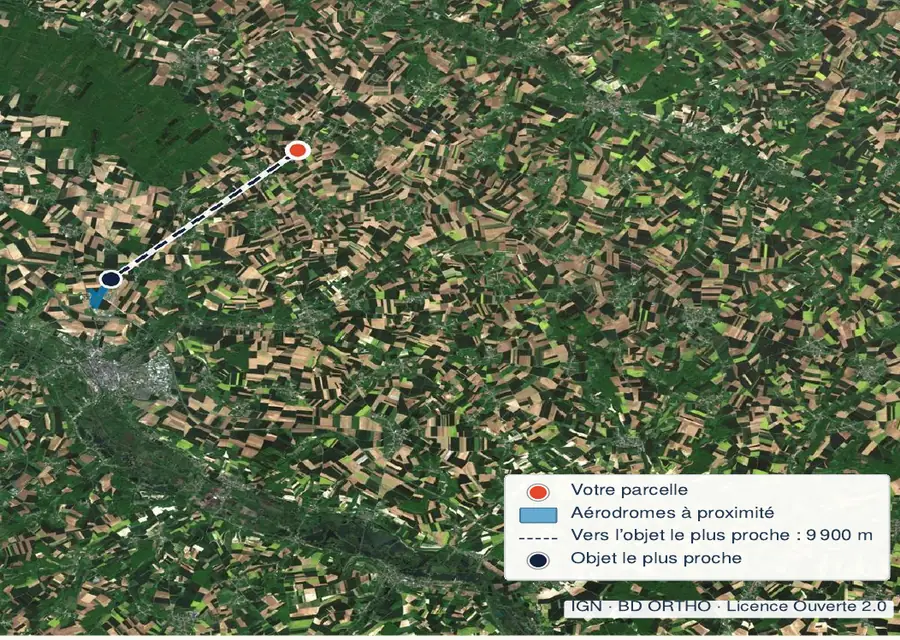
Land near a French airport: noise zones A to D, when a house is allowed in zone C, insulation, where to view the plan and what the seller must give you.
With consent: Google Ads cookies measure ads and purchases. Privacy