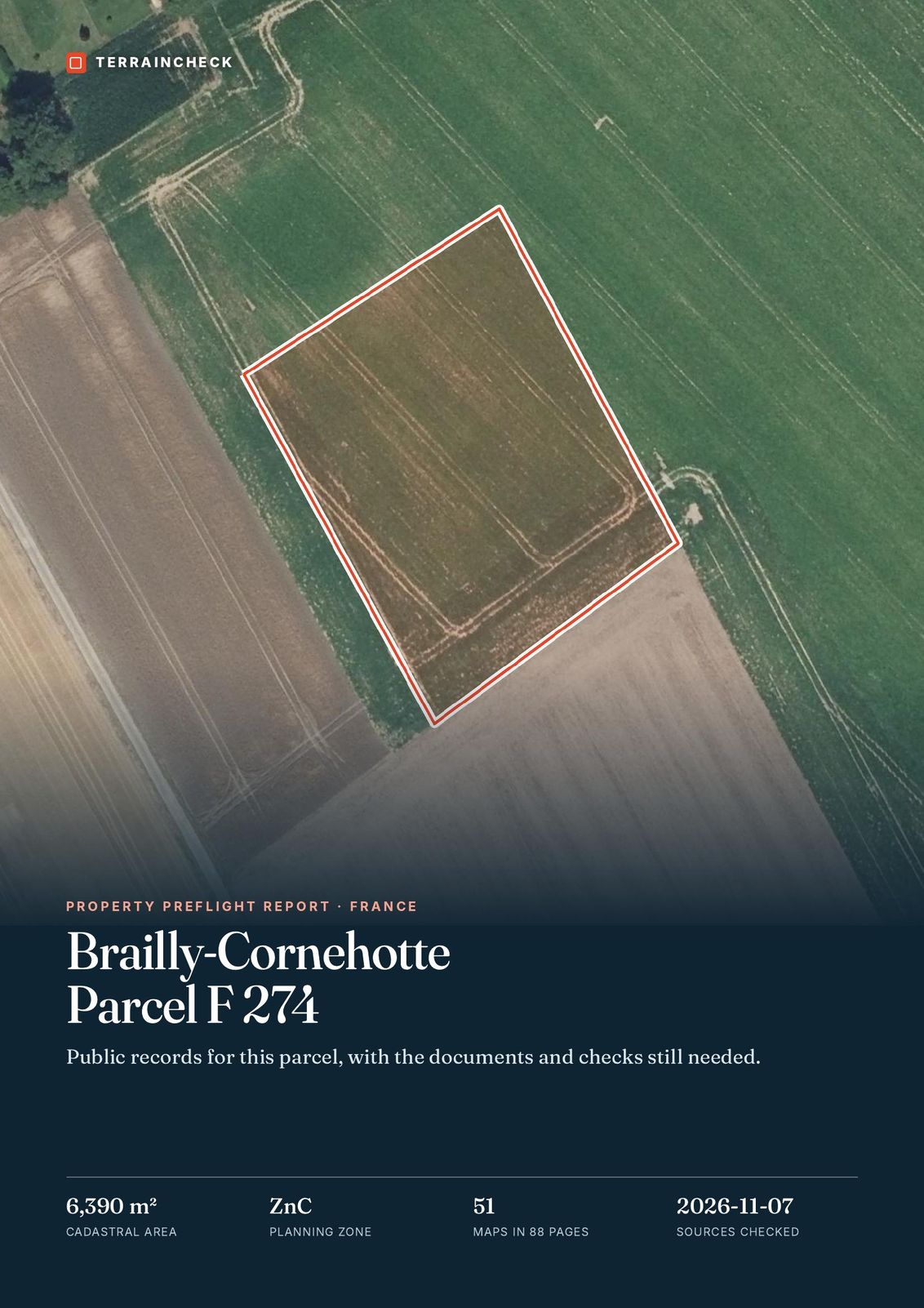
Pillar: Buying building land in France
Pipe and utility easements on land in France: what they forbid and how to find them
In France, a public water or sewer main laid under the Rural Code’s administrative easement (A5) can burden undeveloped land over a strip of 3 metres at most; one laid under an agreement follows that agreement. A gas transmission pipeline declared of public utility rules out any permanent building in a narrow strip of 5 to 20 metres. First step before signing: ask the town hall for the public easements on the parcel, and the notaire (public notary) for those in the seller’s deed.
In brief
- Drinking water, waste water, storm water (category A5): the public body or its concession holder lays its main after a public inquiry and an order from the préfet (the State’s representative in the département), and pays compensation. Its staff may enter the land and clear trees that get in the way within the strip.
- Gas, oil, chemicals (a transmission pipeline declared of public utility, category I3): in the narrow strip, no trees and no cultivation deeper than 0.60 m unless the declaration relaxes this; the wide strip, 40 m at most, gives access at any time.
- A neighbour’s pipe: a private easement. Buried with no outward sign, it can only be created by a deed: the title deed shows it, the maps do not.
- On the Géoportail de l’urbanisme, the national planning map, gas easements I1 and I3 disappear when you zoom in on the plot: ask the mairie (town hall) or the intercommunal body for its document.
On this page
Three regimes, depending on the pipe
The rule depends on who runs the pipe and what it carries: a municipal water main, a gas transmission pipeline and a neighbour’s drain fall under three different codes.
| Pipe | Law | Width | Owner may not | Compensation |
|---|---|---|---|---|
| Public drinking water, waste or storm water (A5) | Rural Code, L152-1, R152-1 to R152-15 | 3 m at most, set by the prefect | Do anything that harms the operation, upkeep or preservation of the main | Yes, under compulsory purchase rules |
| Gas, oil or chemical transmission declared of public utility (I3) | Environment Code, L555-27, L555-28, R555-34 | Narrow strip 5 to 20 m; wide strip 40 m at most | Narrow strip: permanent building, trees, cultivation deeper than 0.60 m (may be relaxed) | Yes, by agreement, otherwise under compulsory purchase rules |
| A neighbour’s private pipe | Civil Code, art. 686 to 691 | As in the deed | What the deed says | What the deed says |
Figures from the texts in force on 13 November 2026; the actual width is in the prefect’s order or the declaration of public utility. Sources: Rural and Maritime Fishing Code, Articles R152-1 to R152-15 (Légifrance); Environment Code, Articles R555-30 to R555-36 (Légifrance); Civil Code, Articles 686 to 689 (Légifrance). Accessed 13 November 2026.
Water and sewer mains: the Rural Code easement
Article L152-1 of the Rural Code gives public authorities, public agencies and public-service concession holders that lay drinking water, waste water or storm water mains the right to install buried pipes permanently in private land with no buildings on it. Yards and gardens next to homes are excluded by the text itself.
The applicant notifies each owner that the file has been lodged, stating the compensation offered; after a public inquiry in each commune (municipality), the prefect rules by an order that is posted at the town hall and sent to each owner by recorded delivery. Ask the seller for that letter.
The easement allows one or more pipes in a strip of 3 metres at most, with at least 0.60 m between the top of the pipe and the ground after the works. The holder may also clear trees in the strip that could harm the pipe, enter the land, and carry out any maintenance and repairs. The owner must not do anything that harms the operation, upkeep or preservation of the main.
Building, moving the main, compensation
The Code covers two building-permit cases. If a permit is refused because of the easement, the owner can require the body that owns the main to buy the whole parcel, by agreement or through compulsory purchase. If a permit is granted on condition that the pipes are moved, the easement holder pays for the move.
Compensation follows compulsory purchase rules and covers the permanent reduction in the owner’s rights. Before work on the main, the owner is told at least 8 days in advance; failing agreement, damage is assessed by the administrative court.
Gas and oil pipelines: the narrow and the wide strip
The Environment Code applies to the holder of the permit to build and run a transmission pipeline whose works have been declared of public utility. It gets two strips. In the narrow strip it buries the pipes, places boundary markers and structures under one square metre at the edge of the parcel, and may remove plantings. In the wide strip, which contains the narrow one, it may enter the land at any time.
In the narrow strip the owner may put up no permanent building, must not cultivate deeper than 0.60 m and must not plant trees or shrubs. Where the actual depth of the pipe allows, the declaration of public utility may raise that depth to 1 m and allow low-stemmed trees and shrubs of up to 2.70 m in hedges, vineyards and orchards it crosses. In both strips the owner must not do anything that harms building, running or maintaining the pipeline.
These easements apply from the declaration of public utility and are appended to the PLU (the local land-use plan) of each commune concerned. They carry compensation, agreed or else set under compulsory purchase rules. If they make normal use of the land impossible, the owner may ask the operator to buy it: the request covers at most the wide strip, unless the owner shows that the whole plot is unusable.
Around these pipelines the prefect also sets planning-control easements (category I1), which restrict buildings open to the public for more than 100 people and high-rise buildings.
A private pipe: it all comes down to the deed
Between private owners, easements can be created freely, attached to one piece of land for the benefit of another, and their use and extent are governed by the deed that creates them (Civil Code, Article 686). The Code expressly lists water pipes and sewers as continuous easements.
A buried pipe with no outward sign is a non-apparent easement. Continuous and non-apparent, it can only be created by a deed: not even possession since time immemorial is enough (Article 691). A continuous, apparent easement, one that shows through outside structures, can also be acquired by thirty years’ possession or by a former single owner’s layout, destination du père de famille (Articles 690 and 692).
In practice, read the “servitudes” clause in the seller’s title deed and its references to earlier deeds, and ask the notaire (the public notary who handles the sale) for the registered deeds. Landlocked land can claim a passage over neighbouring land sufficient to serve it fully, against compensation (Article 682): see landlocked plots. Sharing upkeep costs between neighbours is covered in right of way: maintenance and costs.
Sources: Civil Code, Articles 686 to 689 (Légifrance); Civil Code, Articles 690 to 692 (Légifrance); Civil Code, Article 682 (Légifrance). Accessed 13 November 2026.
Finding a pipe before you buy
- Town hall or intercommunal body. Ask for the list and plan of public utility easements affecting the parcel (appendices to the PLU, if there is one) and, for a water main, the prefect’s order. The Géoportail itself points to this route for gas easements. Agree on how you will see it: viewing on site and a copy by email are free, a paper copy costs at most €0.18 per A4 page. If there is no reply within a month of the request being received, it counts as refused.
- Géoportail de l’urbanisme. Look for categories A5 (water, sewer), I3 (transmission pipelines) and I1 (planning control). I1 and I3 stop showing when you zoom in beyond 1:25,000, and what appears depends on each easement’s manager uploading it. Cost: open to all. Time: about 15 minutes (TerrainCheck estimate).
- Seller and notaire. Title deed, easements clause, earlier deeds. The land registry office (service de la publicité foncière) supplies copies of registered deeds and answers in writing within 10 days; in the Moselle, Bas-Rhin and Haut-Rhin départements, a separate register, the Livre foncier, has its own procedure. Cost: the fee listed on Service-Public.
- On site. Look for manhole covers, markers and small structures along the boundary: a gas transmission operator may place boundary markers and structures under one square metre there. Time: during the viewing.
- Before any digging, once you own it. Whoever runs the project checks the free “Réseaux et canalisations” online service, then sends a works declaration (DT) to each network operator; the contractor then sends its notice of intent to start works (DICT). Operators reply within 9 calendar days for an online DT, 15 otherwise, public holidays excluded, plus 15 days if they need to measure on site.
Combustible gas pipes, both transmission and distribution, count as “sensitive” networks for safety; drinking water and sewer pipes are “non-sensitive” but must be declared too. The DT has to be redone if the works order is not signed within 3 months of checking the online service, subject to the stated exceptions.
Sources: Géoportail de l’urbanisme: FAQ (public utility easements); Service-Public: access to administrative documents (cost, time limit); Service-Public: information on a property from the land registry; Entreprendre.Service-Public: declaring works near networks (DT-DICT); “Réseaux et canalisations” online service (Ineris); Environment Code, Articles L555-25 to L555-30 (Légifrance). Accessed 13 November 2026.
In the report: parcel F 274
Before the compromis: six checks
- List and plan of public utility easements obtained from the town hall or intercommunal body.
- Categories A5, I1 and I3 searched; for I1 and I3, the town hall’s document consulted.
- Prefect’s order (water) or declaration of public utility (gas) read: actual strip width.
- House sited outside the narrow strip of any transmission pipeline.
- Easements clause of the seller’s deed and earlier deeds read with the notaire.
- Easements declared by the seller written into the compromis.
For the wider picture, see where to find easements before buying; for bringing water to the plot, water connection.
Common questions
Can the commune run a water main through my garden?
Not under the Rural Code easement: Article L152-1 covers private land with no buildings and excludes yards and gardens next to homes. On bare land the easement is possible after a public inquiry and a prefect’s order, with compensation.
Can I build over a gas pipeline?
Over a transmission pipeline declared of public utility, no permanent building is allowed in the narrow strip, which is 5 to 20 m wide depending on the declaration. Ask the town hall for that width before siting the house.
Who pays to move a public water main?
If the building permit is granted on condition that the main is moved, the easement holder pays. If the permit is refused because of the easement, the owner can require the body that owns the main to buy the whole parcel.
Keep reading
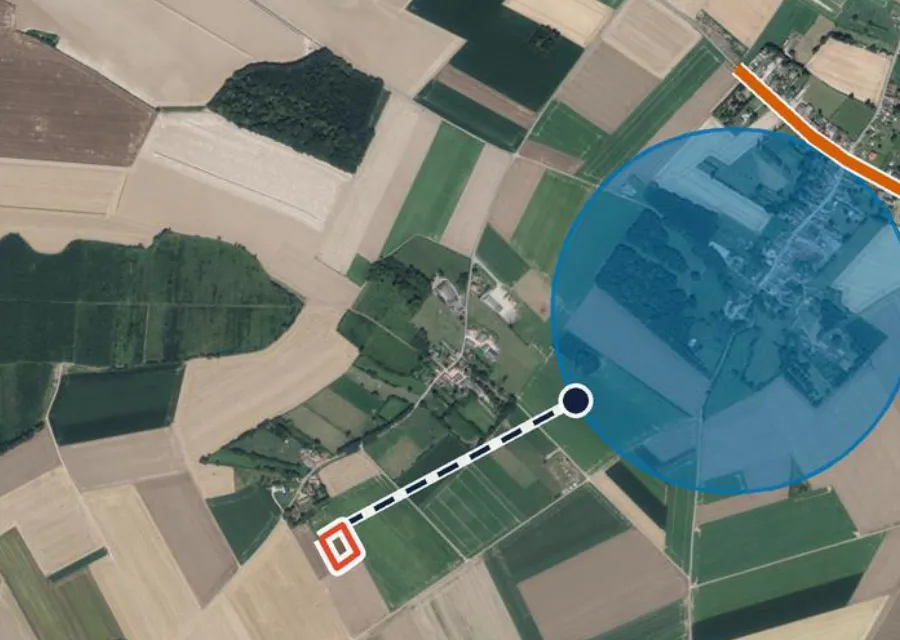
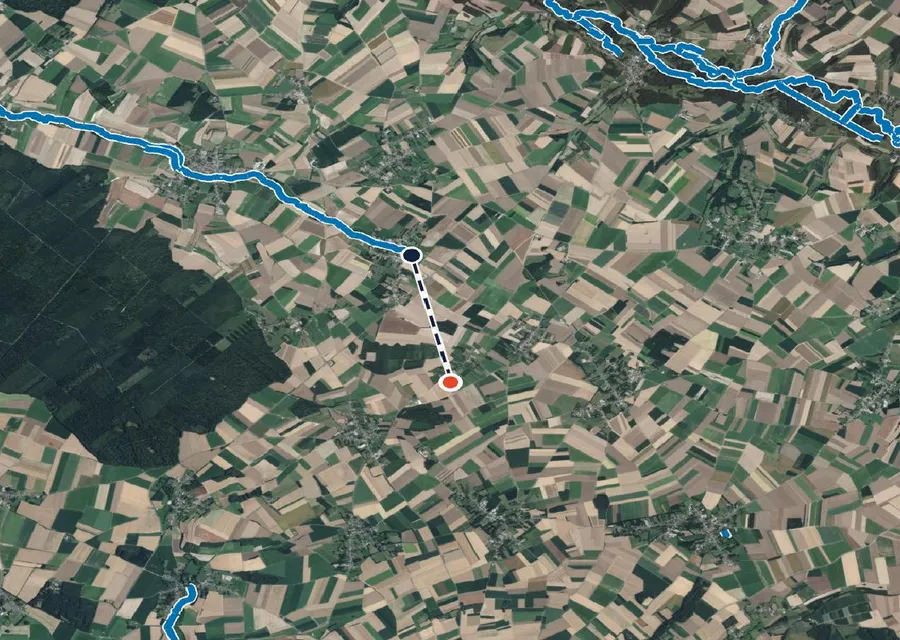
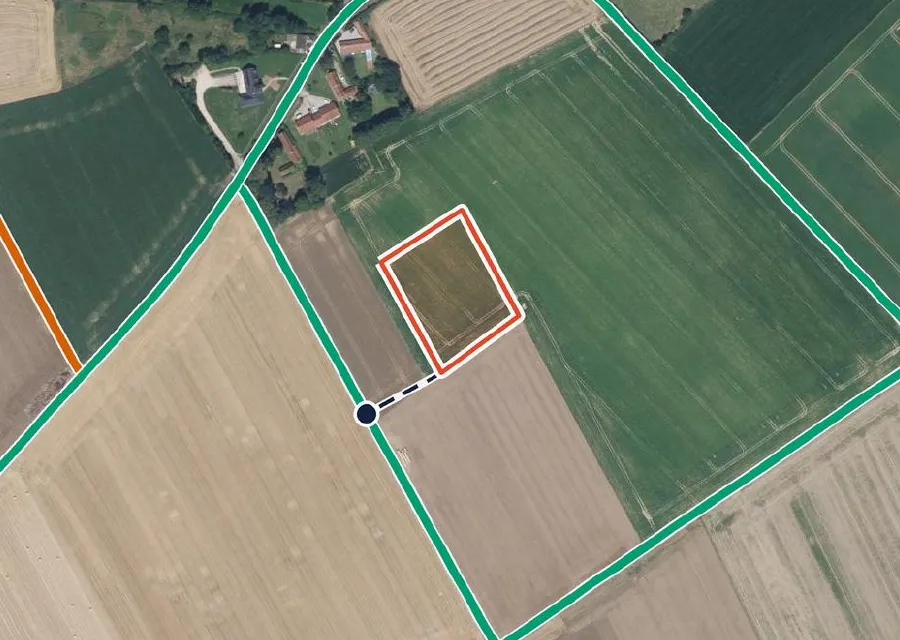
See the public easements mapped around a parcel
Pick the parcel on the map. The report plots the public utility easements published on the Géoportail de l’urbanisme within a 5 km frame, with the distance to the nearest, then the PLU zone and natural hazards, each with its source and date and explained in English. It does not read the title deed. Free check, PDF report for €29 (€39 in French and English).