Pillar: Buying building land in France
Right of way (servitude de passage) in France: who maintains the track, who pays and what each owner may do
In France, the works needed to use and preserve a right of way are paid for by the owner of the plot that benefits from it (the fonds dominant), unless the deed that created it says otherwise (Civil Code, art. 697 and 698). First step before buying: ask the notaire (the public notary who handles the sale) for that deed, which also sets the route and, where it states them, the width and permitted use.
In brief
- Upkeep: unless the deed says otherwise, the beneficiary pays for the works needed to use and preserve the passage (Civil Code, art. 697 and 698). If the deed charges the owner of the land crossed, that owner can opt out by giving up the burdened land (art. 699).
- Use: the beneficiary may use the passage only as the deed allows, without adding to the burden (art. 702); the owner of the land crossed may neither reduce its use nor move it unilaterally (art. 701).
- Width: no article sets a general width; it comes from the deed (art. 686). Landlocked plot with no deed: a passage “sufficient to provide full access” (art. 682).
- End: it depends on where the right comes from, which the notaire confirms. Easement created by a deed: thirty years without use (art. 706 and 707) or one owner for both plots (art. 705). Statutory passage for a landlocked plot: non-use does not end it (Cour de cassation, 11 February 1975); it ends with the landlocked status (art. 685-1).
- Checks: the seller’s title deed, then form 3233-SD to the service de publicité foncière, the land registry (€12 per property, answer within 10 days). In Moselle, Bas-Rhin and Haut-Rhin a separate register, the Livre foncier, has its own procedure.
On this page
Dominant and servient land: who is who
A servitude de passage is a right of way, an easement attached to land. French deeds call the plot that benefits the fonds dominant and the plot crossed the fonds servant; the assiette is the strip of ground the passage runs along.
It is imposed on land and for land, not on a person (art. 686), so it passes automatically to the buyer, whichever side you buy (Service-Public).
Discontinuous and apparent: why the labels matter
French law classes a right of way as discontinuous: it needs someone to act in order to be used (art. 688). It is apparent when external works show it, non-apparent otherwise (art. 689).
A discontinuous easement can only be created by a deed (titre); even possession “since time immemorial” is not enough (art. 691), so years of tolerated crossing do not create a right. Two caveats: dividing one property can stand in for a deed in some cases (see where to find easements), and a landlocked plot holds its right from the law, thirty years of continuous use fixing the route and manner of passage (art. 682 and 685, see landlocked plots).
If the original deed is lost, it can only be replaced by a deed of acknowledgement (titre récognitif) signed by the owner of the land crossed (art. 695).
Sources: Civil Code, art. 690 to 696 (how easements are established). Accessed 12 November 2026.
Upkeep and costs: the default rule and what the deed can change
The beneficiary is entitled to carry out all works needed to use and preserve the easement (art. 697). For a landlocked plot’s passage, Service-Public, the government’s information site, lists clearing vegetation and snow, cleaning and repairing damage caused by use.
These works are at the beneficiary’s expense “unless the deed establishing the easement says otherwise” (art. 698). If the deed makes the owner of the land crossed pay, that owner can always opt out by giving up the burdened land (art. 699).
| Situation | Who pays | Source |
|---|---|---|
| Deed silent on costs | The beneficiary, for works needed to use and preserve the passage | Art. 697 and 698 |
| Deed puts costs on the land crossed | Its owner, unless they give up the burdened land to the beneficiary | Art. 699 |
| Benefiting plot split into lots | As the deed or a written agreement says; each lot keeps the passage, along the same route | Art. 700 |
| Landlocked plot, passage used by both | Upkeep shared between them | Service-Public |
Civil Code, version in force on 12 November 2026. Sources: Civil Code, art. 697 to 702 (rights of the owner of the land that benefits); Civil Code, art. 682 to 685-1 (right of way for landlocked land); Service-Public: right of way over another owner’s land (checked 25 July 2025). Accessed 12 November 2026.
There is no official price list: a quote (devis) depends on the track’s length and width, surface, slope and drainage. If several houses use it, have the cost split written down before you sign.
What each owner may and may not do
The owner of the land crossed
They may do nothing that reduces the use of the easement or makes it less convenient, change the layout of the ground, or move the passage from where it was first set (art. 701).
One exception: if that route has become more burdensome for them, or stops them making worthwhile repairs, they may offer an equally convenient route, which the beneficiary cannot refuse (art. 701). Before putting up a gate or narrowing the track, agree it in writing.
The beneficiary
They may use the passage only as the deed allows, with no change on either plot that worsens the position of the land crossed (art. 702); they also have whatever is needed to use it (art. 696). Parking, construction machinery or pipes and cables under the track are uses to check in the deed, not to assume.
Width
The use and extent of an easement are set by the deed that creates it (art. 686): compare the width or plan in the deed with the actual track. For a landlocked plot with no deed, the passage must be sufficient for full access (art. 682); failing agreement, the tribunal judiciaire (civil court) can set its location and how it is used.
When a right of way comes to an end
An overgrown track does not mean the right has gone.
| Cause | Condition in the text | Article |
|---|---|---|
| Non-use (easement created by a deed) | Thirty years without use. For a discontinuous easement such as a right of way, they run from the day it stopped being used. | 706, 707 |
| Non-use (statutory passage for a landlocked plot) | The right is not lost through non-use while the plot stays landlocked; only the route (the assiette) can be. | Cass. 3e civ., 11 Feb. 1975 |
| Benefiting plot held jointly | Use by one co-owner preserves the right of all; so does a co-owner against whom time could not run, a minor for example. | 709, 710 |
| Manner of use | The manner of using the easement can be lost by prescription like the easement itself, and in the same way. | 708 |
| One owner | Both plots come into the same hands. | 705 |
| Use made impossible | The easement ceases; it revives if the ground is restored, unless thirty years have passed. | 703, 704 |
| Landlocked plot no longer landlocked | Legal right of way: the owner of the land crossed can claim extinction if access is provided as article 682 requires; without agreement, a court decision. | 685-1 |
Civil Code, version in force on 12 November 2026. Sources: Civil Code, art. 703 to 710 (how easements end); Civil Code, art. 682 to 685-1 (right of way for landlocked land); Cour de cassation, 3rd civil chamber, 11 February 1975, no. 73-13.974 (landlocked passage and non-use); Service-Public: right of way over another owner’s land (checked 25 July 2025). Accessed 12 November 2026.
The exception is the statutory passage of a landlocked plot: “unlike the route of the passage”, the right is not lost through non-use (Cour de cassation, 11 February 1975, no. 73-13.974). Before treating an access as lost or closing a track, ask the notaire where it comes from.
For a right of way created by agreement and unused for thirty years, the tribunal judiciaire can record that it has ended, on any evidence of non-use (Service-Public). A conciliateur de justice (court conciliator) is free; when a settlement attempt is required before court is explained in the guide to landlocked plots.
Buying the land crossed: until a written agreement or a judgment records the end, assume the easement still applies.
Before you buy: check the easement and write it into the contract
- With the seller’s notaire. Ask for the title deed and the deed that created the easement; read route, width, permitted use and costs. Cost: nothing. Time: no deadline set by the texts cited; ask before you make an offer.
- At the land registry for the area (service de publicité foncière). Form 3233-SD returns what documents recorded since 1 January 1956 say about the properties named; a copy of a deed is requested on form 3236-SD. Cost: €12 per property, €15 per deed copied. Example: the plot you buy and the plot crossed (2 × €12 = €24) plus a copy of the deed (€15) = €39, with a free reply by email; by post, €2 for the request and €2 per copy on top, so €43. Time: 10 days. In Moselle, Bas-Rhin and Haut-Rhin: a separate register, the Livre foncier, kept by land offices (bureaux fonciers).
- On site. Walk the passage with the plan from the deed: actual width, gate, ruts, ditch, other users. Cost: nothing. Time: the length of the visit (TerrainCheck estimate).
- In the compromis (the binding preliminary contract). Attach the deed and a plan of the strip, and write down who maintains it and in what share, what use is allowed and, if your project depends on it, a condition precedent. With no deed, sign a written agreement with the neighbour, private or before a notaire. Cost: notaire fees if you sign before one; ask for the amount first. Time: before signing.
Sources: Service-Public: information on a property from the land registry (checked 6 November 2026); DGFiP: notice 3241-NOT-SD, fees for land registry requests (02-2026); Livre foncier of Alsace-Moselle (EPELFI, Ministry of Justice). Accessed 12 November 2026.
In the report: what public maps cannot tell you
Before signing: the right of way in five checks
- A copy of the deed that created the easement, or a deed of acknowledgement signed by the owner of the land crossed.
- Route, width and permitted use (on foot, vehicles, pipes and cables) read in the deed and compared with the actual track.
- Cost clause found; if there is none, upkeep falls on the beneficiary (art. 698).
- Form 3233-SD sent (€12 per property, answer within 10 days); in Moselle, Bas-Rhin and Haut-Rhin, a request to the Livre foncier land office.
- Contract: deed and plan of the strip attached, cost split in writing, building project compatible with the permitted use.
Common questions
Does the owner of the land crossed have to maintain the track?
No, unless the deed says so. Necessary works fall on the beneficiary (art. 697 and 698). Even when the deed charges them to the owner of the land crossed, that owner can opt out by giving up the burdened land (art. 699).
Can I park on a right of way?
The Civil Code does not mention parking: the beneficiary may use the passage only as the deed allows, without adding to the burden (art. 702). If the deed only mentions passing, agree parking with the neighbour in writing.
Can the neighbour move the right of way?
Not unilaterally (art. 701). If the route has become more burdensome or prevents worthwhile repairs, they can offer an equally convenient one, which the beneficiary cannot refuse.
Does an unused right of way lapse?
That depends on where the right comes from. One created by a deed ends after thirty years without use (art. 706 and 707). The statutory passage of a landlocked plot is not lost through non-use (Cour de cassation, 11 February 1975) but ends with the landlocked status (art. 685-1). Without a written agreement, the tribunal judiciaire records the end.
Keep reading
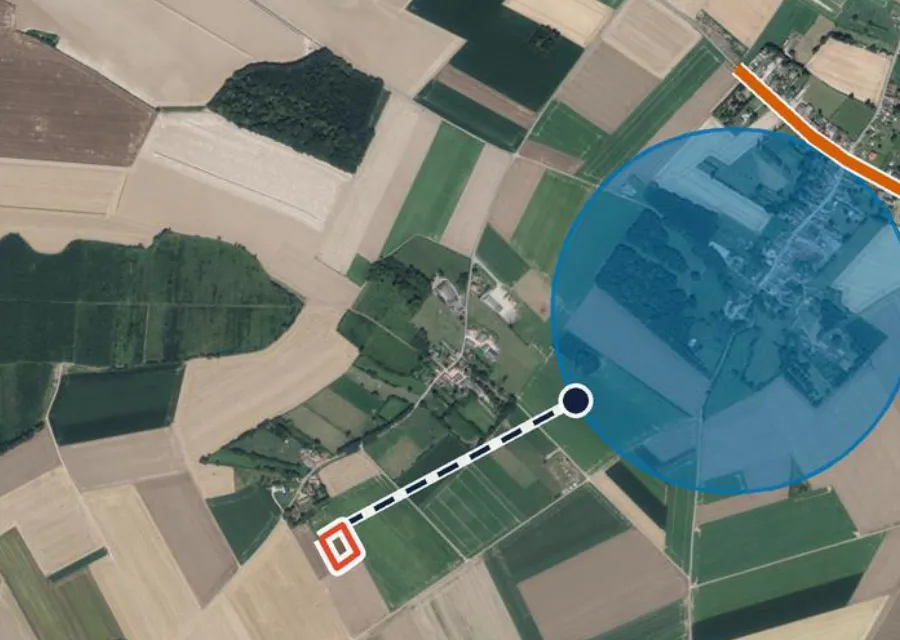
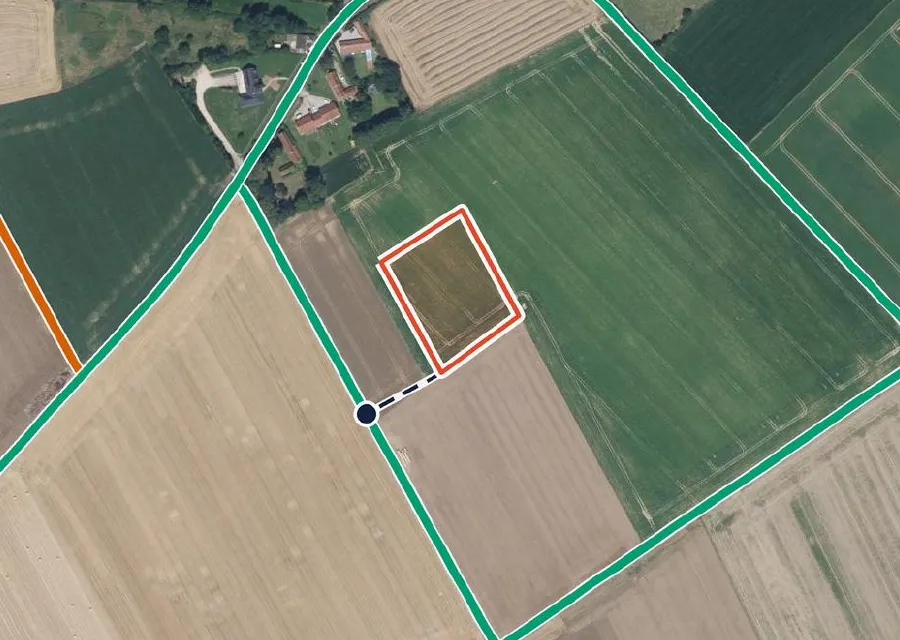
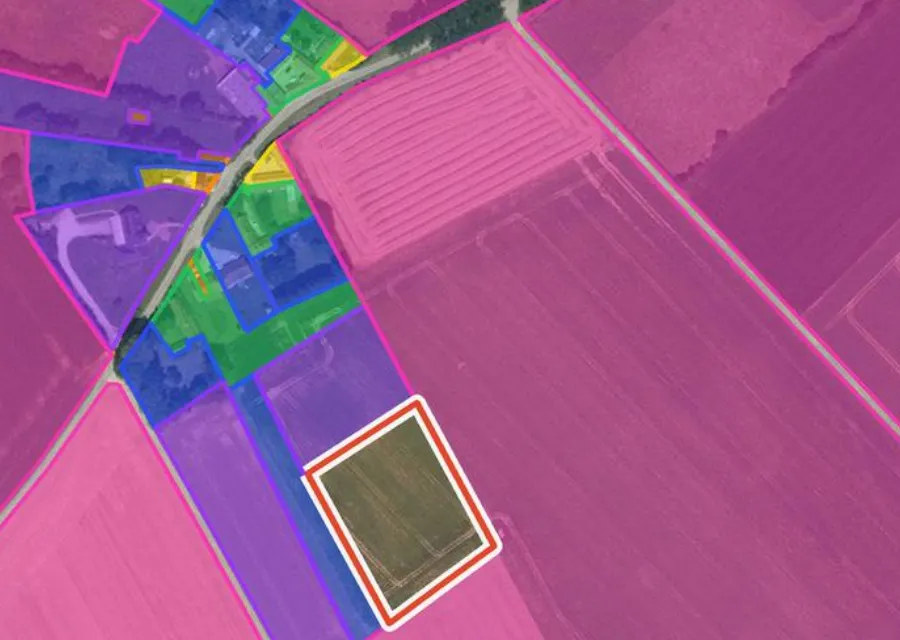
Before you read the deeds, see what the public records say about the parcel
Pick the parcel on the map. The report shows its cadastral outline, the roads and tracks published around it, the planning zone, public-interest easements and natural hazards, each with its source and date and explained in English. It does not say who holds a private right of way: that is in the deeds. Free preview, PDF report for €29 (€39 in French and English).