Compromis de vente for land in France: the clauses to check before you sign
Buying step by step·20 min read·Updated 12 November 2026
A compromis de vente, the preliminary contract signed by both sides, commits the buyer of land in France from signature: under the Civil Code (art. 1589), once both parties agree on the property and the price, it has the force of a sale (vaut vente). What protects you after that are the conditions written into the contract; the law adds a loan condition of at least one month when a property loan pays for land intended for building a dwelling (Consumer Code, art. L313-41). First step: ask the notaire, the public officer who handles the sale, for the draft and check that every condition is in it, with its deadline.
In brief
Ten days to withdraw: they exist under the promesse unilatérale (an option contract) for a plot sold by the developer of a lotissement, a planned subdivision, under a permis d’aménager, its development permit (Planning Code, art. L442-8). In other cases the buyer of a building plot has none, according to Service-Public, the government’s information site, unless the contract grants a period.
Money paid on signing: 5% to 10% of the price outside a lotissement, according to Service-Public. In a lotissement under a permis d’aménager, the holding fee (indemnité d’immobilisation) the developer asks for in a promesse unilatérale cannot exceed 5% of the price (art. R442-12).
Form: a privately signed promesse unilatérale is void unless registered within ten days of its acceptance (Civil Code, art. 1589-2).
A compromis de vente binds both sides: under the rule that “la promesse de vente vaut vente”, a mutual promise has the force of a sale once the parties agree on the property and the price (Civil Code, art. 1589). A promesse unilatérale de vente binds only the seller; the buyer holds an option for an agreed period (art. 1124).
A compromis is signed privately (acte sous signature privée) or as a notarial deed (acte authentique). A promesse unilatérale is a notarial deed, or a private contract registered within ten days of its acceptance by the buyer, failing which it is void (art. 1589-2); registration costs €125 according to Service-Public.
In a lotissement that needs a permis d’aménager, no promise of sale may be given and no payment on account accepted before the permit is issued (Planning Code, art. L442-4). After that, the developer (lotisseur) may grant a promesse unilatérale (art. L442-8).
Cooling-off: when the law gives ten days
The ten-day cooling-off period that buyers of French homes rely on comes from article L271-1 of the Construction and Housing Code. It covers any contract for the building or purchase of a residential property (“immeuble à usage d’habitation”). On 4 February 2016 the Cour de cassation, France’s highest civil court, held that this right does not apply to the sale of a building plot (no. 15-11.140).
Service-Public states the consequence for a building plot outside a lotissement: no ten-day withdrawal period after the preliminary contract, no ten-day reflection period before the deed. Farmland or leisure land is no more covered by that article. The contract may grant its own period (Civil Code, art. 1122), which exists only if it is written in.
The exception: a promesse unilatérale for a plot sold under a permis d’aménager becomes final only after ten days during which the buyer may withdraw; money paid is returned within twenty-one days from the day after the withdrawal (art. L442-8). According to Service-Public, the period starts the day after the registered letter notifying the contract is first presented, or after it is handed over in person, so a buyer living abroad should agree beforehand where it will be sent. In a lotissement created by prior declaration (déclaration préalable), neither seller nor buyer can withdraw (same page).
Warning. The commitment starts before the compromis: according to Service-Public, a buyer can no longer take back a purchase offer (offre d’achat) once the seller has received it. Put your conditions (loan, planning permission) in the offer and pay nothing: a payment makes the offer void.
Conditions and attachments
A condition suspensive (condition precedent) makes the sale depend on a future, uncertain event (Civil Code, art. 1304). If it fails, the obligation is deemed never to have existed (art. 1304-6); it is deemed fulfilled if the party with an interest in it prevented it from happening (art. 1304-3). So keep proof of every step you take, as Service-Public asks.
Clause or attachment
What it protects
Where the document comes from
Loan condition
Implied by law when the contract states that a property loan pays, even in part, for land intended for building a dwelling or a mixed-use building (art. L313-1 and L313-41).
The bank’s offer or written refusal.
Building permit or certificat d’urbanisme opérationnel
It has to be written in: Service-Public lists it among the contents of the contract, with the absence of third-party challenges.
The mairie (town hall); the certificate is free and processed in 2 months.
Ground study
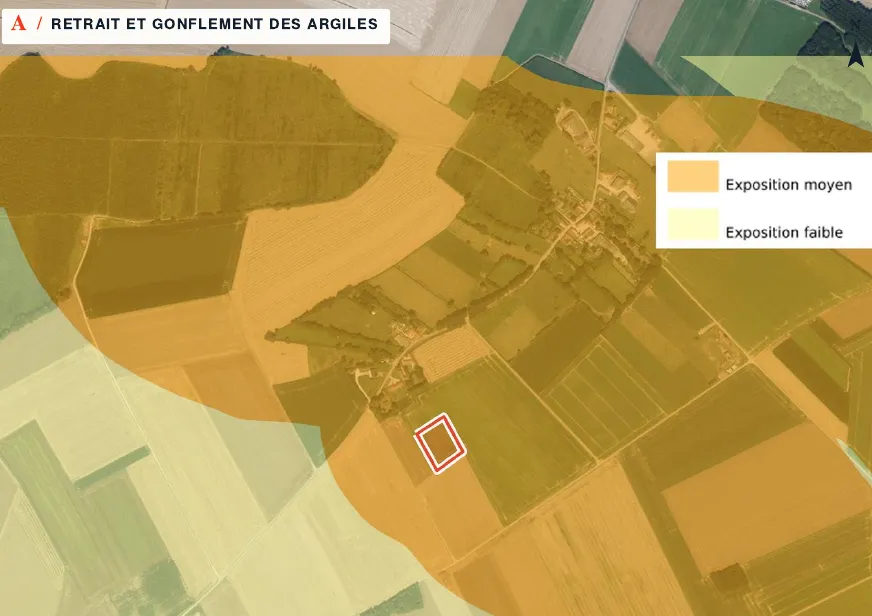
In a zone of medium or high clay exposure, the seller of undeveloped buildable land supplies a preliminary geotechnical study, attached to the preliminary contract (art. L132-5), except where planning rules do not allow single houses.
The seller; any other study: a geotechnical firm, on a quote.
Buying to build a dwelling or a mixed building: the contract states whether the description comes from a bornage; for a plot in a lotissement in particular, it reproduces that description (art. L115-4). If the statement is missing, a nullity action is open until one month after the deed; it is lost if the deed contains the statement (art. L115-5).
The report of the géomètre-expert (chartered land surveyor).
Risk statement (état des risques)
In the zones of article L125-5, it is attached to the preliminary contract; failing that, the buyer may seek rescission of the contract or ask the court for a price reduction.
The seller, from the first viewing if there is one.
The statutory condition lasts at least one month from signature, or from registration where the contract must be registered to be valid. If it is not met, any sum paid in advance is repayable immediately and in full, with no deduction or compensation (art. L313-41). If you pay without borrowing, the contract carries a statement in your own handwriting: you cannot rely on these rules if you borrow after all (art. L313-42). For farmland or leisure land, which article L313-1 does not cover, have a loan condition written in.
The permit: add up the periods before fixing the date
The standard processing period is two months for a single house and three months for other building permits, from the day the mairie receives a complete application (Planning Code, art. R423-19 and R423-23), before any extension (art. R423-24 onwards). Requiring a permit “purgé de tout recours et retrait” (clear of any challenge or withdrawal) adds two periods: the time limit for third-party challenges runs from the first day of a continuous two-month display of the permit notice on the site (art. R600-2), and the authority may withdraw an unlawful permit within three months of its decision (art. L424-5). For a single house, five months can therefore pass between filing and a permit that is clear.
Deposit and holding fee
Outside a lotissement, Service-Public says that a sum of 5% to 10% of the sale price may be asked of the buyer on signing the compromis: €4,000 to €8,000 on land priced at €80,000. The page recommends paying it to the notaire, who holds it in an escrow account. It is deducted from the price on the day of the deed, returned in full if a condition is not met, kept by the seller if the buyer pulls out.
For a plot under a permis d’aménager, if the developer asks for a holding fee (indemnité d’immobilisation) in return for the promesse unilatérale, it cannot exceed 5% of the price (art. R442-12), that is €4,000 on an €80,000 plot. The money, held in a blocked account, is returned within three months unless the sale falls through because of the buyer although every condition of the contract has been met (art. L442-8).
The deadlines up to the deed
The contract sets a deadline for each condition and a final date for signing the deed, generally three months after the preliminary contract according to Service-Public. The two parties can extend it by a signed amendment (avenant) before it expires.
In Moselle, Bas-Rhin and Haut-Rhin, a contract transferring real property that was not signed as a notarial deed must be followed, “à peine de caducité” (failing which it lapses), by a notarial deed or, if one party refuses, by a court claim, within six months of signing (Act of 1 June 1924, art. 42). Service-Public applies that period to the compromis and to the promesse unilatérale alike.
Five steps before you sign
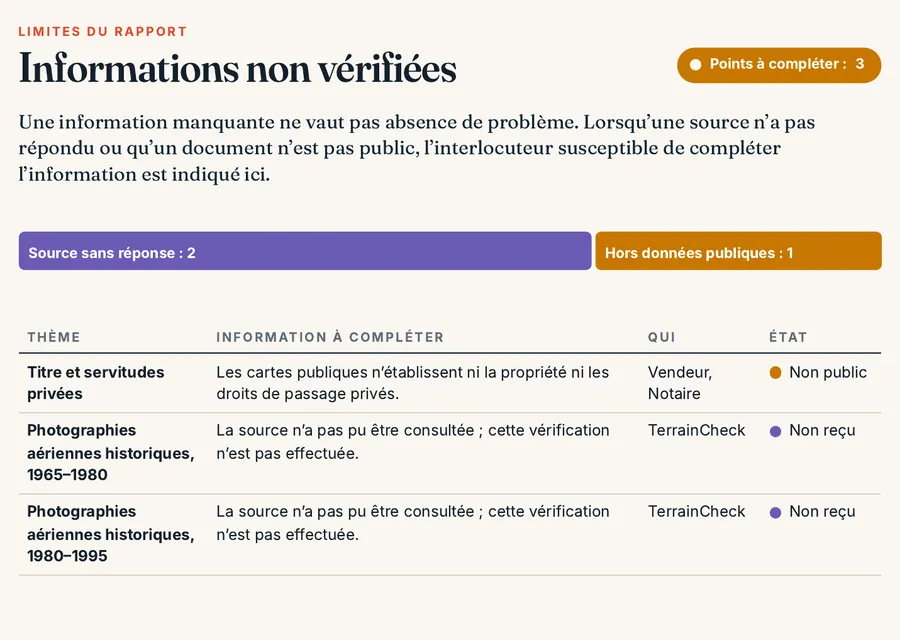
The seller’s documents, from the notaire or the estate agent: title deed, boundary survey report, risk statement, geotechnical study in a clay zone. The seller provides them; collect them before signing.
The loan, with your lenders: have the amount, term and rate worked out. Arrangement fees depend on the lender; period to write in, at least one month.
Signing, at the notaire’s office: pay the agreed sum there. A privately signed promesse unilatérale is registered with the tax office within ten days, for €125 according to Service-Public.
Loan and permit applications, to the bank and the mairie, within the contract’s deadlines: keep the receipts.
From the public records to clauses and attachments in the contract
Withdrawal: the contract says whether you have ten days or not.
Every condition is written with its deadline: loan, certificat d’urbanisme or permit, ground study.
Cadastral reference, bornage statement, easements and access are in the contract; the risk statement and the geotechnical study are attached where they are due.
The sum paid, who holds it and when it is returned are written down; the date of the deed allows for the permit periods.
This guide helps you prepare the signing of a preliminary contract. It is based on public sources opened on 12 November 2026 and does not replace a notaire or legal advice on your own contract.
Common questions
Can I withdraw after signing a compromis de vente for land in France?
For a building plot outside a lotissement, no: Service-Public states that the buyer has no right of withdrawal. A ten-day period exists for the promesse unilatérale of a plot sold by a developer after a permis d’aménager (Planning Code, art. L442-8), or if the contract itself grants one (Civil Code, art. 1122).
How much deposit is paid on a compromis for land?
Service-Public gives 5% to 10% of the price for a building plot outside a lotissement and recommends paying it to the notaire. In a lotissement under a permis d’aménager, the holding fee the developer asks for in a promesse unilatérale cannot exceed 5% of the price (art. R442-12); that cap does not cover the deposit on a compromis.
What happens to the money if the loan or the permit is refused?
If the matching condition is in the contract and is not met, the sum is returned, provided you can prove that you took the steps required (Service-Public). A condition the buyer prevented from being met is deemed fulfilled (Civil Code, art. 1304-3).
Before the compromis, read what public data says about the parcel
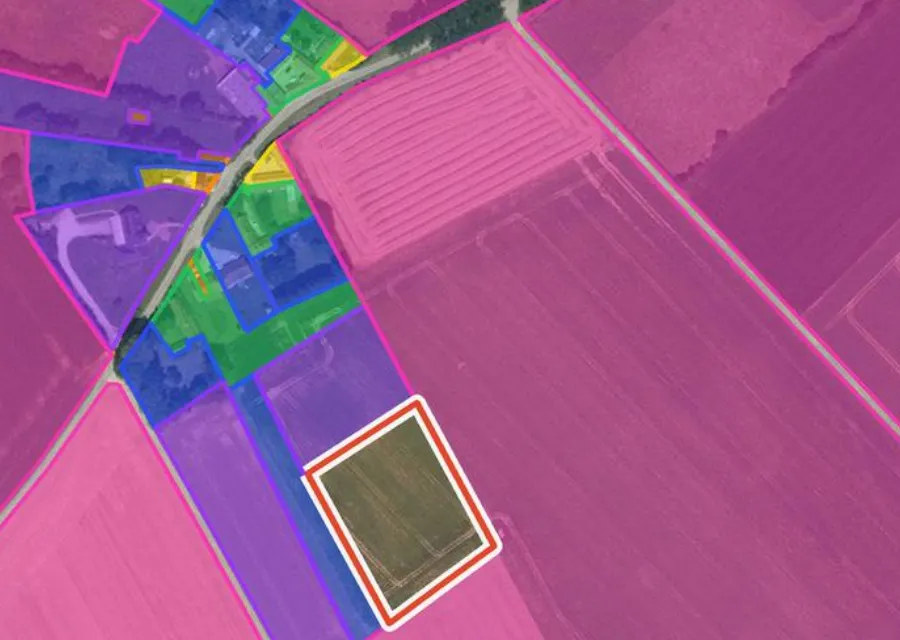
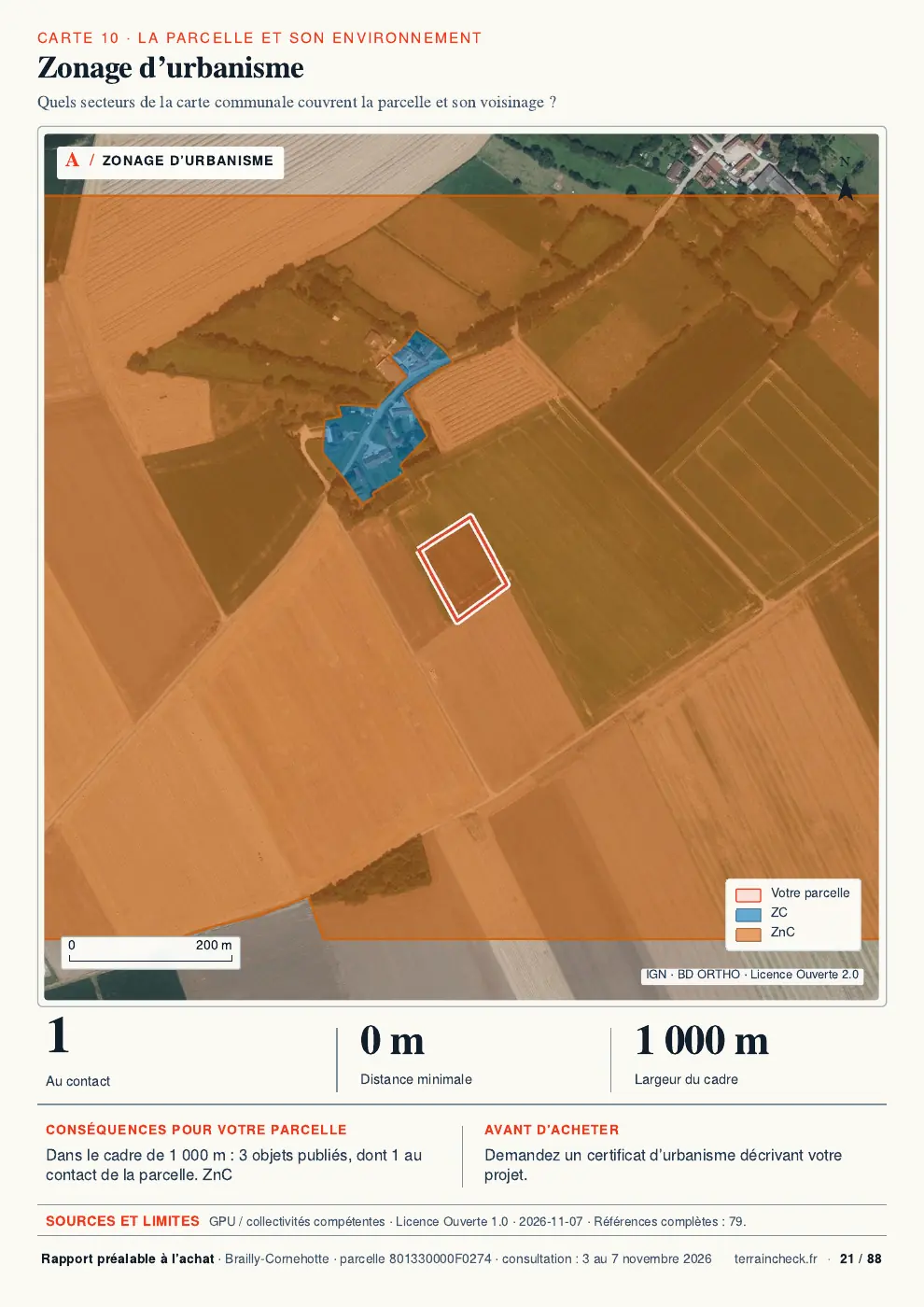
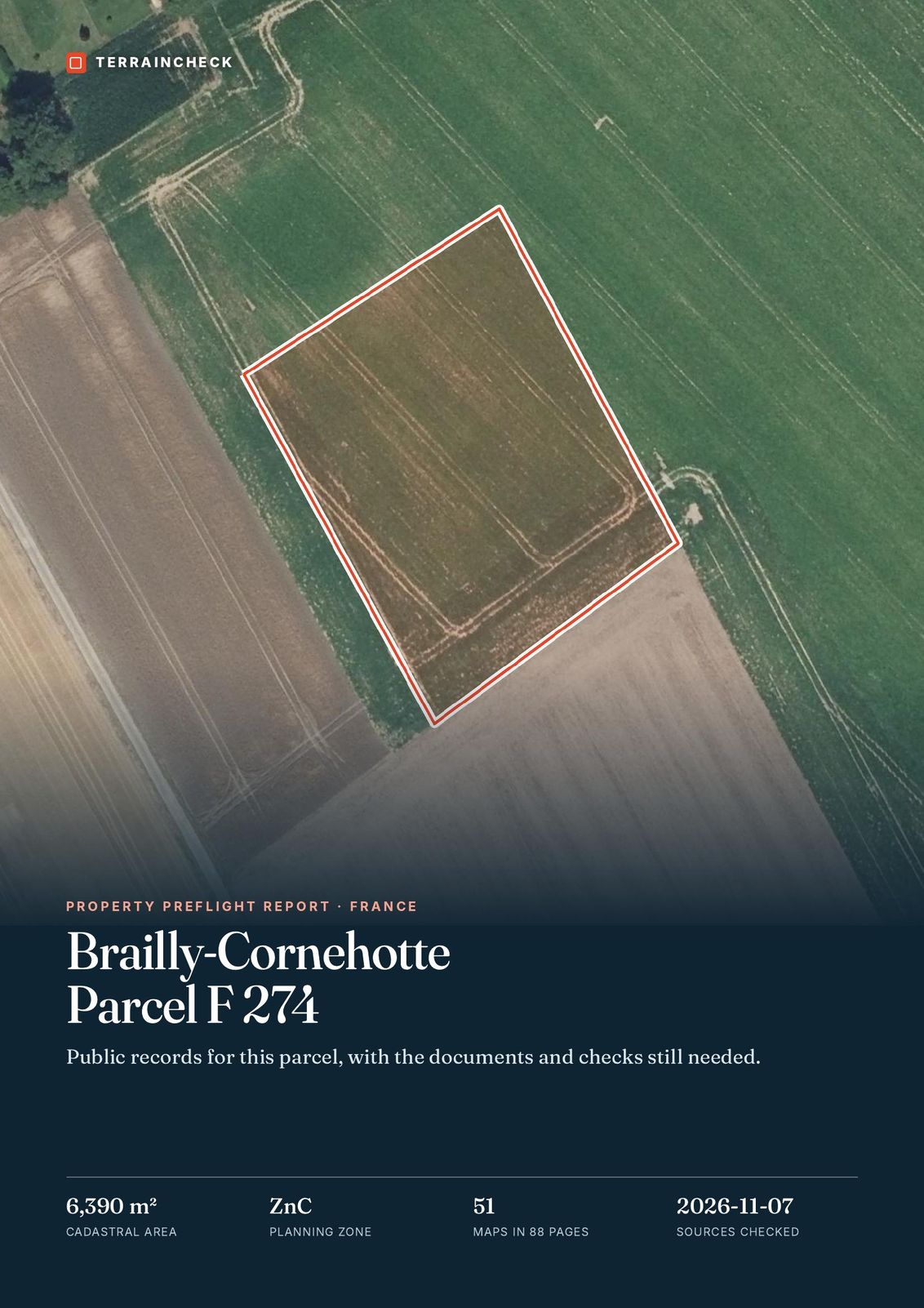
Pick the parcel on the map. The report gives its cadastral reference and area, the published planning zone, clay exposure, mapped hazards and the nearest road, then a list of what to check on site and which documents to ask the seller for. It does not replace the notaire, a boundary survey or a ground study. Free preview, PDF report for €29 (€39 in French and English).