Pillar: Buying building land in France
French planning certificates: information or operational CU before buying land
On this page
Compare French information and operational planning certificates, their response times and limits, and learn how to apply before buying land.
In brief
By TerrainCheck editorial team. Information checked 11 November 2026.
- The information CU lists planning rules, restrictions and taxes; the operational CU also answers for a described project.
- A prospective buyer can apply free of charge. Allow one month for information, two for an operational CU.
- Neither certificate is a building permit.
Which certificate?
| Document | What it says | What it does not say | Time |
|---|---|---|---|
| Information CU | Rules, restrictions and taxes | Whether your project is feasible | 1 month |
| Operational CU | Also feasibility of the described project, roads and networks | Permission to build | 2 months |
Both applications are free. Sources: Service-Public: planning certificates. Accessed 11 November 2026.
How to apply before buying
- Identify the plot. Obtain its municipality, cadastral section and number from the seller or cadastral map. This is free and immediate.
- Prepare the file. Use the official form and a location plan. For an operational CU add a description of the project and, where relevant, a plan of existing buildings. Preparation is free; allow time to describe your project.
- Send it to the mairie. Check the town hall’s online submission or delivery arrangements. Processing is free: one month for information, two for the operational certificate.
- Review the answer with your notaire. Compare the project, conditions, roads, networks and date before signing. Professional advice may cost extra and timing varies.
Describe the proposed project
The mairie needs to understand the intended operation. The short description gives the intended use of the buildings and their approximate location. The form provides a space for it. Attach a location plan and, if buildings already exist, a plan showing where they stand.
Adapt this example to your own file: “A detached house for residential use, approximately in the southern part of parcel F 274, with access envisaged from the existing road.” Add the dimensions and connections you know, and identify any assumptions. This is an illustrative description, not an application actually filed for F 274.
If the land already has buildings, you plan to divide it, create an entrance or change an existing building’s use, explain that and ask the mairie what it needs. The answer addresses the operation described. If the project changes substantially, ask whether to submit a fresh request.
Read the answer and its conditions
A positive operational certificate can contain observations. List each condition and compare it with the plans and rules cited: access, public utilities, easements and other restrictions. Ask the mairie for a written explanation if you cannot tell what a condition means for your design.
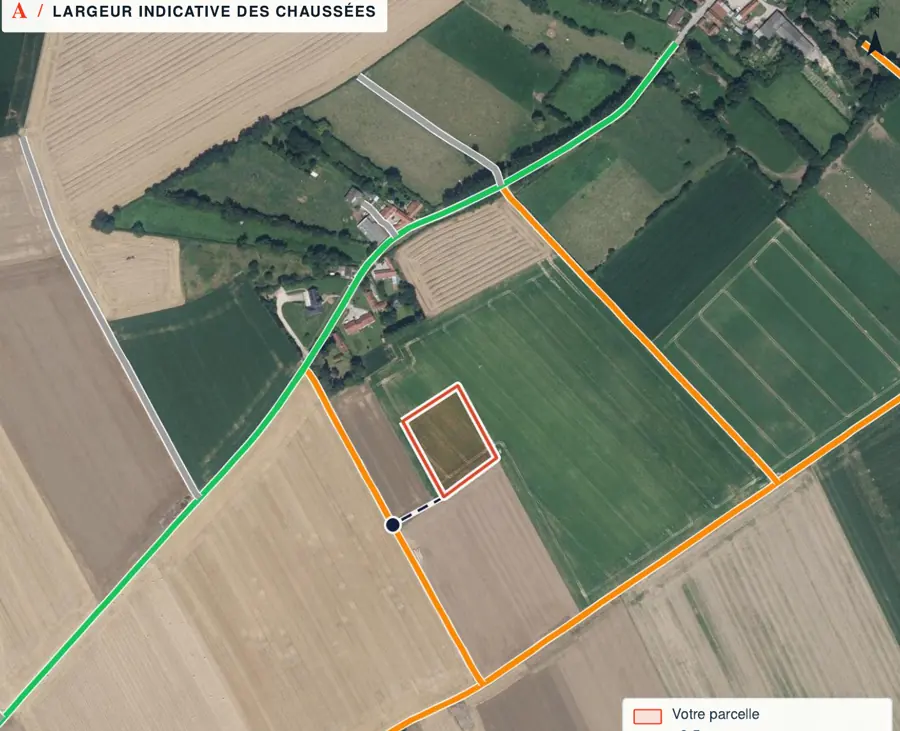
A utility running along the street does not mean your plot is already connected. Ask each provider where a connection could be made, what work is needed and who pays. If a survey or quote is needed, ask for the likely timing before setting a budget; fees and response times vary.
If the answer is negative, ask which rules explain it and whether an altered proposal could be considered. Your notaire can explain how to address unresolved questions in the preliminary contract. Do not assume a stated restriction will disappear at the permit stage.
When the town hall has not replied
Keep proof of filing and the date the application was received. After the operational CU deadline, a tacit certificate protects the listed planning information, but does not confirm the project is feasible. The mairie must still provide a written answer, even late; contact it with your application reference.
If the intended signing date is close and the answer is missing, tell your notaire and the seller. Discuss a realistic timetable and the terms of the preliminary contract. A tacit certificate is not permission to build the proposed house.
Validity and silence
A CU lasts 18 months. A one-year extension may be granted if the rules, public easements and taxes are unchanged; request it at least two months before expiry. A tacit certificate after the deadline does not confirm that an operational project is feasible. Ask the mairie for its written answer.
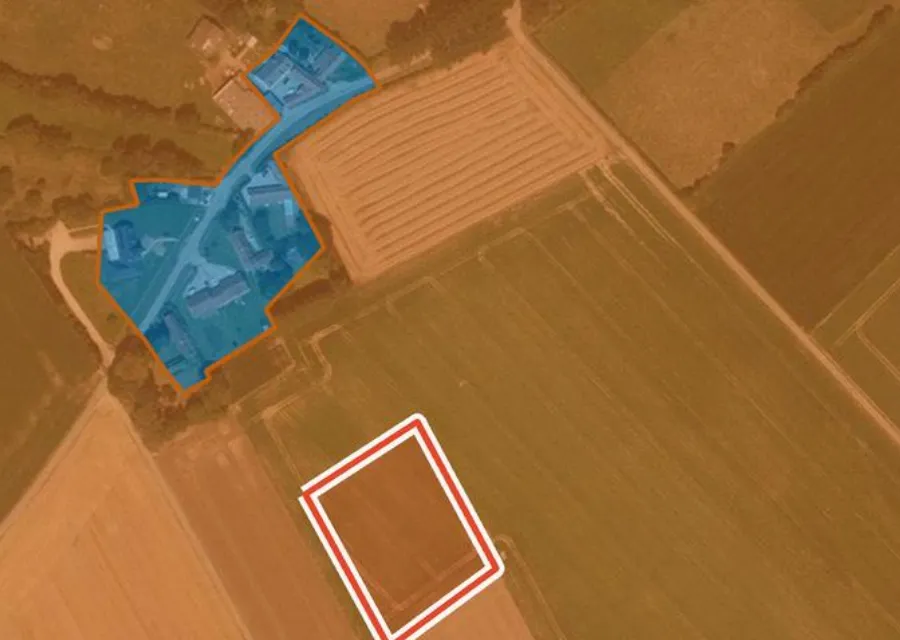
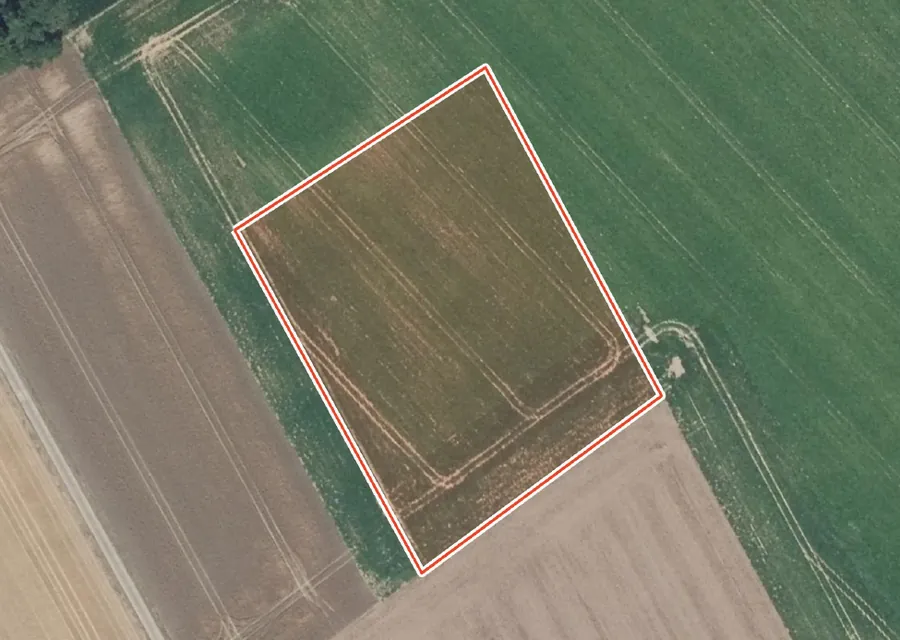
In the report: F 274
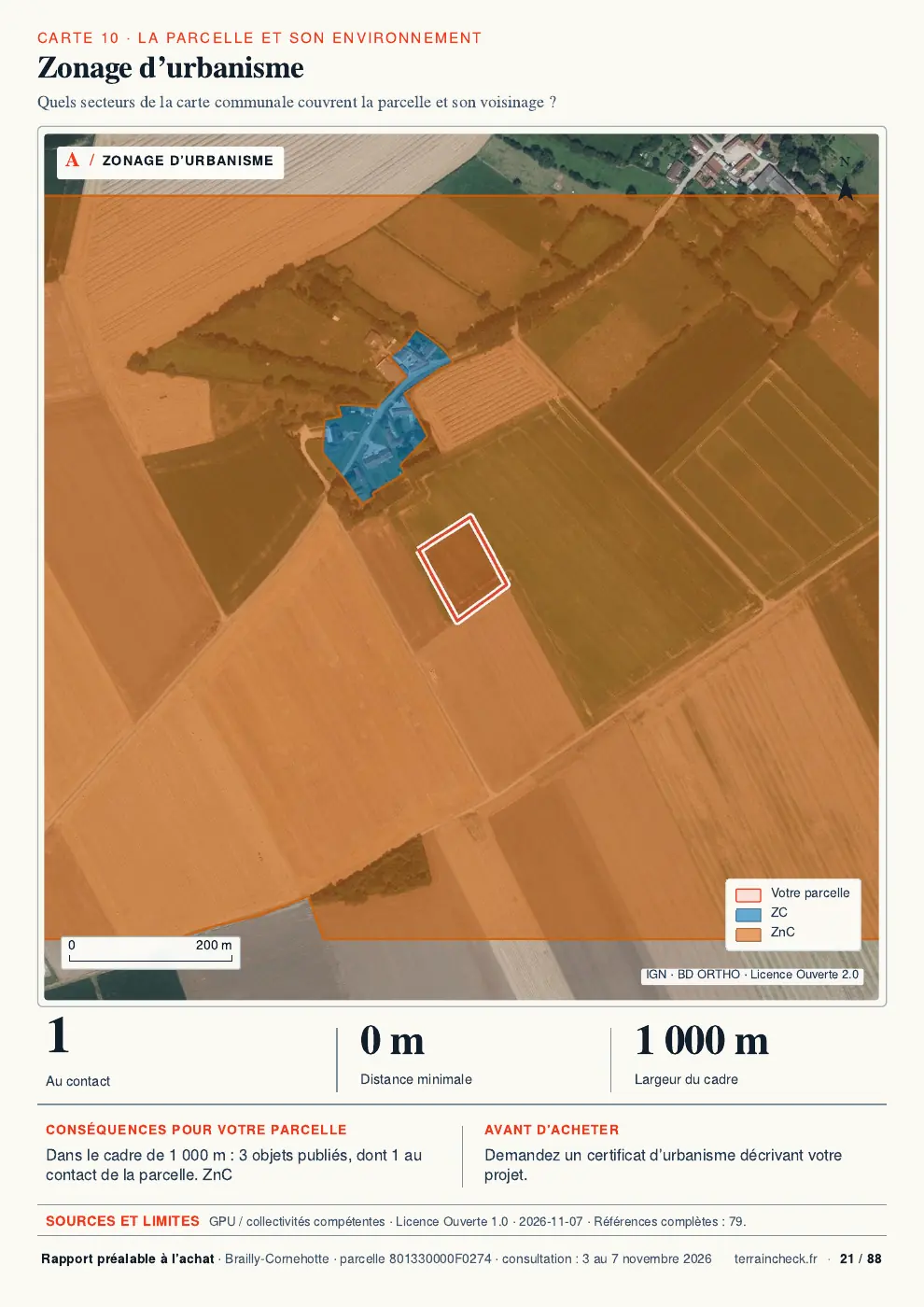
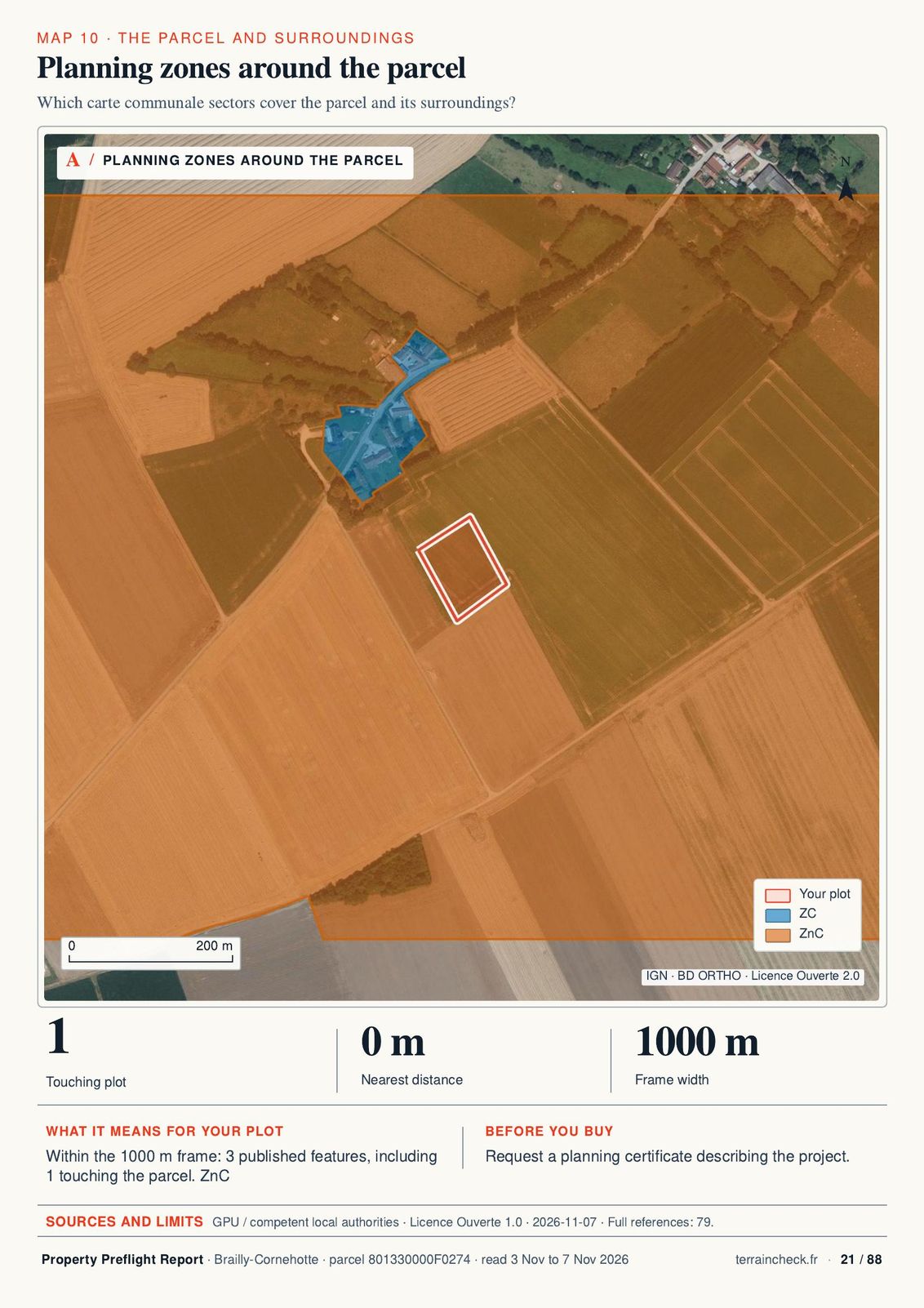
In Brailly-Cornehotte, page 21 of the sample shows the local planning map. It helps prepare an application but is not a certificate or the mairie’s decision on your house.
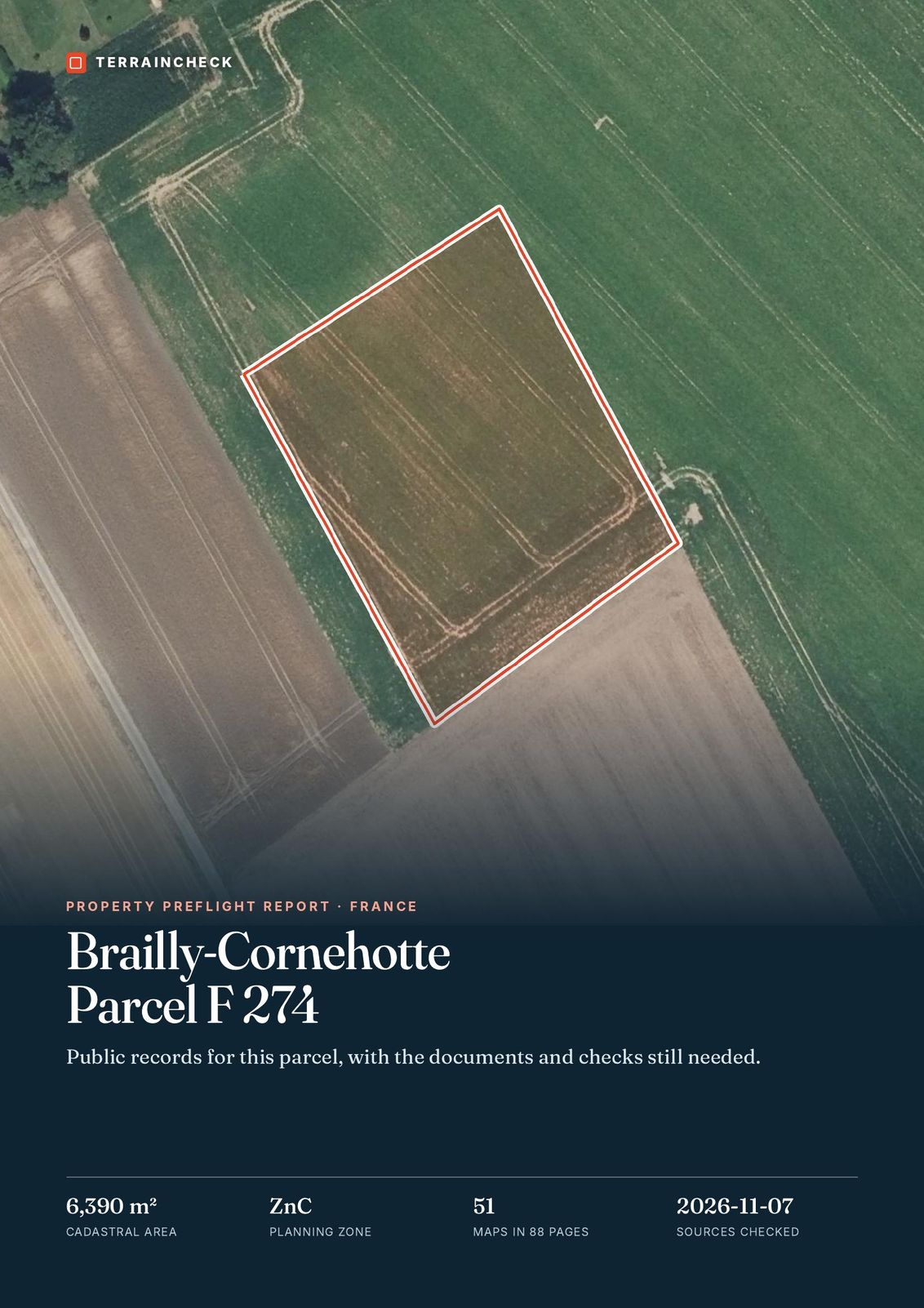
The report brings together public data for the plot. Choose a parcel to order its report.
Before signing: checklist
- Cadastral reference and location plan.
- Project description and attachments for an operational CU.
- Date, conditions, roads and networks in the answer.
- Permit and conditions to discuss with your notaire.
Read about the PLU, buying building land and flood risk.
Keep reading
Buying building land in France: checks before the compromis
Is a plot buildable in France? How to check the zone, utilities, easements and the official answer
Compromis de vente for land in France: the clauses to check before you sign
Serviced or unserviced plot in France: what “viabilisé” promises and how to check it
Connecting land to utilities in France: costs, steps and timescales
Notary fees when buying land in France: 2026 rates by département, the fee scale and worked examples
Check these points on your parcel
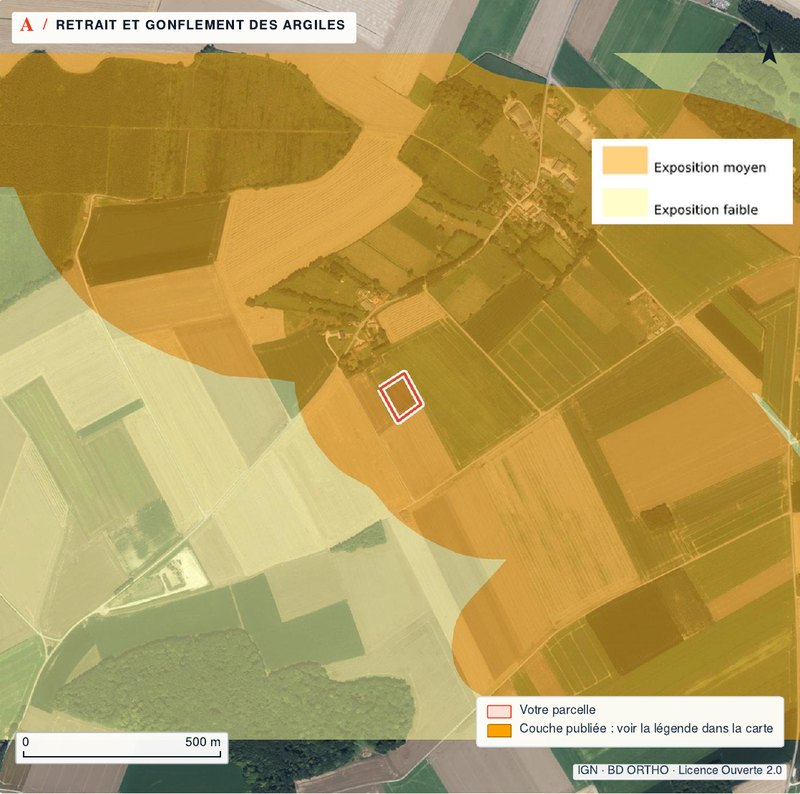
Pick the parcel on the map: outline, PLU zone, hazards, clay, Natura 2000 and heritage are read for it, with source and date. Free check, PDF report for €29 (€39 in French and English).