Pillar: Buying building land in France
Buying land in Alsace-Moselle: the Livre foncier and local law
In Bas-Rhin, Haut-Rhin and Moselle, rights in land are registered in the Livre foncier, a register separate from the land registry used in the rest of France, kept by the local civil court under the authority of a judge. Anyone can get a copy for a given plot, at €7 per property on livrefoncier.fr: start by noting the parcel’s cadastral section and number.
In brief
- Anyone may search by property: you can find out what is registered against one or more given properties. Searching by a person’s name is limited to notaires (the public officials who draw up property deeds), surveyors, bailiffs (huissiers de justice), lawyers, public officials, holders of an enforceable title and people authorised by the judge or by the holder of the right.
- A property copy describes the land, its easements and notices, the holders of rights and the charges on them, including mortgages. When the public agency issues it, it is for information only; a certified copy comes from the registry clerk at the land registry office.
- A privately signed compromis (binding preliminary sale contract) must be followed within six months of signature by an authentic deed before a notaire, or by court proceedings if one party refuses. Otherwise it lapses.
- The cadastre still exists: the Livre foncier identifies each property by its cadastral description. What you may build is still a matter for the PLU (local plan) and a planning certificate.
On this page
A separate register, kept by the court
In Haut-Rhin, Bas-Rhin and Moselle, land registration follows its own chapter of the Act of 1 June 1924, part of the droit local (local law) of Alsace-Moselle. The Livre foncier is kept under the authority of a judge, the juge du livre foncier, and run by the tribunal judiciaire (the local civil court).
You deal with a bureau foncier, a land registry office inside the court. It is a separate register, not the service de la publicité foncière (SPF) used elsewhere: Service-Public sends people in these départements to the Livre foncier offices. A state agency, EPELFI, runs the AMALFI computer system and sets copy fees, but has no registration role.
Introduced under German rule (a law of 1896), the system was kept in 1924. It has been fully computerised since 1 July 2008.
What an entry is worth
A registered right is presumed to belong to the registered holder. From the filing of the application, provided the entry is then made, rights can be relied on against third parties who have themselves registered rights in the property. A buyer is registered only once the seller’s right is on the register.
| Question | Rest of France | Bas-Rhin, Haut-Rhin, Moselle |
|---|---|---|
| Where are rights registered? | Service de la publicité foncière | Livre foncier, a service of the civil court |
| Form of the registered deed | Authentic (Decree of 4 January 1955, art. 4) | Authentic, by a notaire, a court or an administrative authority (1924 Act, art. 42) |
| Sale signed privately | General rules on the preliminary contract | Authentic deed or court claim within six months, or it lapses |
| Cooling-off (housing), ten days today | Article L271-1 of the Housing Code | Article L271-1 too |
| Identifying the land | Cadastral map | Cadastral description, used by the Livre foncier |
The main differences for a buyer, detailed below. Sources: Légifrance: Act of 1 June 1924, article 42 (authentic form, six-month deadline); Légifrance: Decree 55-22 of 4 January 1955, article 4; Légifrance: Construction and Housing Code, article L271-1. Accessed 13 November 2026.
Sources: Légifrance: Act of 1 June 1924, chapter III, rights in land and the Livre foncier (arts 36 to 65); livrefoncier.fr (EPELFI): the land registry offices; Service-Public: finding out who owns a property. Accessed 13 November 2026.
What a copy from the Livre foncier shows
The 2009 decree sorts the register into headings: properties, persons, rights, charges on a property, charges on a right, priority and notices. A property copy brings them together for each property you select.
Three blocks matter most to a buyer. Easements created by agreement, such as a right of way, and those that must be registered to be enforceable. Charges on the seller’s right: a mortgage, a right of use or residence, a provisional entry (prénotation), a restriction on selling.
Then the notices: court claims to rescind, revoke or annul an agreement, and administrative limits that must be registered. A lease of more than twelve years is registered too, worth checking on let farmland.
A copy certified by the clerk gives the extraction time to the minute, the current entries and the references of pending applications, so a filing not yet entered still shows up.
Getting a copy: who, how and what it costs
- Note the cadastral description. Commune (the French municipality), section and parcel number. Cost: nothing. Time: a few minutes (TerrainCheck estimate). How to find it: the cadastral reference.
- Order a property copy on livrefoncier.fr. The site is in French. Search by address or cadastral details; the copy comes by post or email. Fee: €7 per property selected. Timing under the terms of sale: 2 working days after card payment, about 10 days by bank transfer, about 20 days by cheque.
- For a certified copy, go to the bureau foncier. The clerk dates, signs and certifies it. The sources cited give neither price nor deadline: ask the office.
- For the sale deed itself, go through the seller. Copies of the attachments (sale deed, civil status documents) cost €30 per request and are restricted, with proof, to people authorised by the judge, holders of an enforceable title and holders of a right in the property. Otherwise, see how to obtain the title deed.
Example: land made up of two separately registered properties costs 2 × €7 = €14 for the property copy. With the attachments, if you are entitled to them: €14 + €30 = €44. Only judges and public officials are exempt; a private buyer pays.
Sources: Légifrance: Decree 2009-1193, issue of copies (arts 21 to 27); livrefoncier.fr (EPELFI): terms of sale. Accessed 13 November 2026.
Compromis, notaire and the six-month deadline
As elsewhere in France (Decree of 4 January 1955), a sale must be in authentic form to be registered. Here the rule is article 42 of the 1924 Act: any deed concerning a right that can be registered is drawn up, for registration, in authentic form by a notaire, a court or an administrative authority.
Local law adds a constraint on the preliminary contract. A deed between living persons that transfers ownership of land, or creates or transfers an easement, signed in another form, such as a compromis de vente (preliminary sale contract) signed privately, must be followed by an authentic deed within six months of signature. If one party refuses, court proceedings started within the same period are enough. Otherwise the contract lapses.
Lapse does not wipe out every clause: in 2010 the Cour de cassation held that it leaves the penalty clause intact, payable when the sale fails through one party’s fault. In that case (a house, a 2004 contract, Colmar court of appeal) it also applied article L271-1 of the Construction and Housing Code to the notice sent to a married couple buying together; the cooling-off period was then seven days, it is ten today.
That article covers buying a building used as a home and a few other contracts; building land is not named. Ask the notaire whether your preliminary contract gives you a cooling-off period, and see the clauses of the preliminary contract.
After signing
The notaire must have the rights arising from the deed registered without delay, whatever the parties wish, except for a few rights the parties may waive. The judge checks, among other things, the form of the deed and the seller’s registration, then rules by order; priority runs from the filing. The appointment itself: signing the final deed.
Sources: Légifrance: Act of 1 June 1924, article 42 (authentic form, six-month deadline); Légifrance: Act of 1 June 1924, chapter III, rights in land and the Livre foncier (arts 36 to 65); Légifrance: Cour de cassation, 3rd civil chamber, 9 June 2010, no. 09-15.361. Accessed 13 November 2026.
Cadastre, division and easements
The Livre foncier relies on the cadastre: properties are identified by their cadastral description, and a first registration of ownership is filed with an extract of the matrice cadastrale (the tax record of owners).
When only part of a property is to carry a right, it is divided for registration; where a plan is needed, the surveyor’s plan is certified by the cadastre’s inspector. If you buy part of a parcel, the document d’arpentage (survey plan) and the bornage (boundary survey) remain separate steps.
The copy shows only registered easements; for the rest see where to find easements. Outside these départements, see finding the owner of a parcel.
Sources: Légifrance: Decree 2009-1193, rules on properties (arts 28 to 37). Accessed 13 November 2026.
In the report: what public data cannot settle
Sources: DVF (Etalab): FAQ. Accessed 13 November 2026.
Before the compromis in Alsace-Moselle
- Commune, section and number of every parcel noted, and a property copy ordered for each.
- Registered owner matches the seller, or the notaire has explained the difference in writing.
- Easements, mortgages, provisional entries and restrictions on sale read and discussed with the notaire.
- Pending applications checked on a recent copy.
- Six-month deadline after signing the compromis marked in the sale timetable.
- PLU, planning certificate and risk statement requested separately.
For the other checks: the order of checks before the compromis and notary fees on bare land.
Common questions
Can I look at the Livre foncier for free?
Searching is open to anyone, but a property copy on livrefoncier.fr costs €7 per property. Only judges and officials of the state, local authorities and their groupings get it free.
Do I need a notaire in Alsace-Moselle?
To be registered, the deed must be authentic, drawn up by a notaire, a court or an administrative authority (article 42 of the Act of 1 June 1924). A notaire who draws up the deed must then have the rights registered without delay (article 43).
What if the final deed is not signed within six months?
A privately signed compromis lapses, unless court proceedings were started within that period because one party refused to complete. The Cour de cassation held in 2010 that the penalty clause still applies.
Is there a cadastre in Alsace-Moselle?
Yes. The Livre foncier identifies properties by their cadastral description, and a first registration is filed with an extract of the matrice cadastrale.
Keep reading
Land in Alsace or Moselle? Put the public records next to your Livre foncier copy
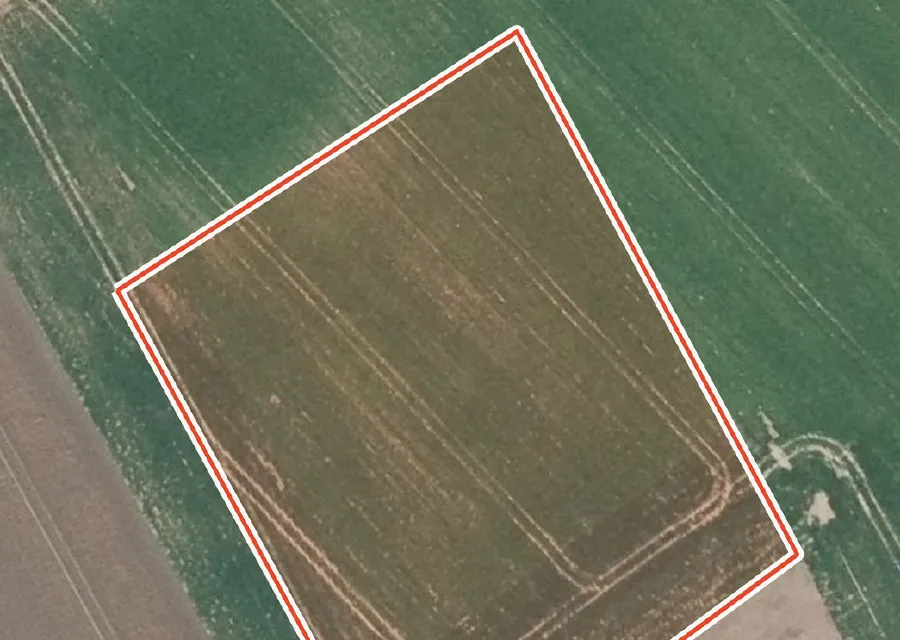
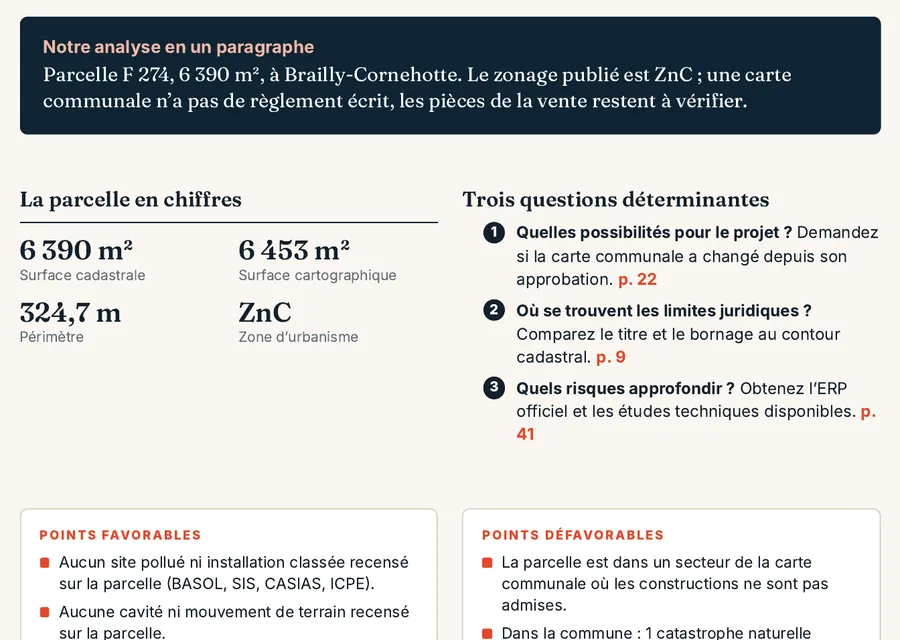
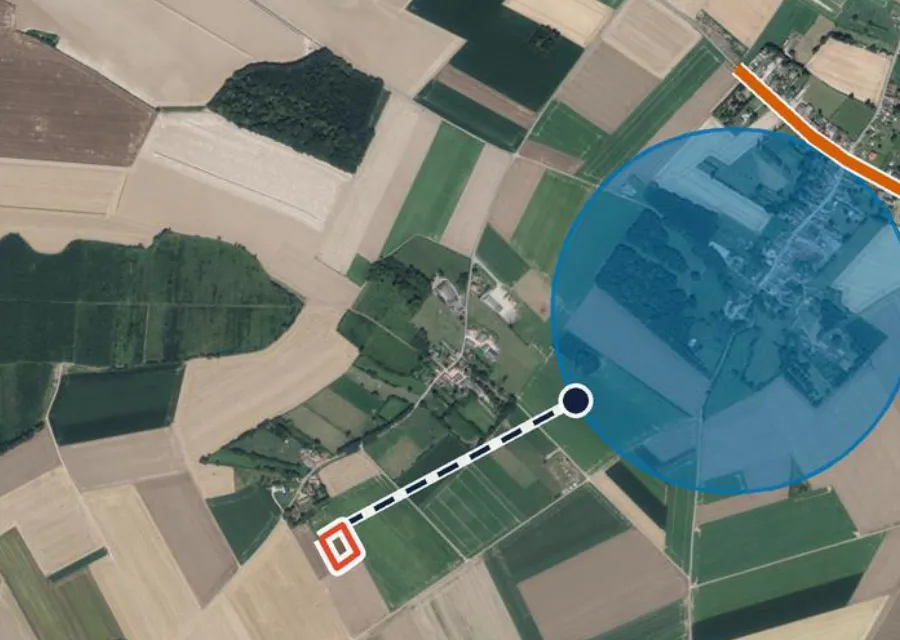
Pick the parcel on the map. The report sets out its outline and cadastral area, the PLU zone, natural hazards, clay soils and Natura 2000, each with its source and date and explained in English. In these three départements it has no nearby sales: the public DVF sales data do not cover them. It does not replace the Livre foncier copy or the notaire. Free check, PDF report for €29 (€39 in French and English).