Pillar: Buying building land in France
Sewer connection and the PFAC fee in France: duty, time limits and cost
In France, a building with access to a public sewer under the road must be connected to it within 2 years of the sewer coming into service (Public Health Code, art. L1331-1); a new house in a street that already has a sewer is connected during the building works. If the local authority has adopted it, the PFAC charge comes on top, capped at 80% of the cost of the private system you avoid. First step: ask the mairie (town hall) for the sanitation zoning map and the PFAC decision.
In brief
- The zonage d’assainissement (sanitation zoning map), available at the mairie (town hall), shows whether the plot is in a mains-sewer zone or a zone where each building has its own system. On its own it does not tell you whether the sewer already runs past the plot.
- New house in a street with a sewer: you connect during the building works, and the site plan in the building permit application shows the connection. Existing building when a new sewer arrives: 2 years from the date the sewer is brought into service, unless the mayor grants an extension or an exemption approved by the prefect.
- The PFAC (sewer connection charge) only applies if the authority in charge, the commune (municipality), its grouping of communes or a joint board, has adopted it by a council decision. It is capped at 80% of the cost of the private treatment system you no longer need, minus what you repay for the connection works.
- Works on your land, up to the public part of the connection, are yours to pay. The public part under the road may be built by the commune, which can recover the cost from you.
On this page
Mains sewer or private system: check the zoning first
After a public inquiry, the commune or its grouping of communes maps the zones where it collects and treats wastewater (assainissement collectif) and the zones where it inspects private systems (assainissement non collectif).
Being in a mains-sewer zone does not mean the plot is served on the day you buy. The duty to connect applies to buildings with access to a public sewer laid under the public road, either directly or through a private road or a right of way. If there is no sewer in the street yet, ask the sanitation service whether works are planned. Outside the mains zone, see private sewage systems and the SPANC.
Sources: General Code of Local Authorities, art. L2224-10; Public Health Code, art. L1331-1; Service-Public: domestic wastewater sanitation (checked 12 December 2025). Accessed 13 November 2026.
The duty to connect and the time limits
The law sets two years from the date the public sewer is brought into service: that is the case of an existing building when the sewer reaches the street. For a new building in a street that already has a sewer, Service-Public, the government information site, says the connection is made during the works and the site plan in the building permit application has to show it. During the two years the commune may already charge a sum equal to the sewerage charge, if it has decided to.
With the prefect’s approval, the mayor can extend that period, up to ten years, for certain buildings: those with a permit under ten years old and a compliant private system in good working order, or those that installed one while waiting for the sewer. Exemptions also exist, for instance where connection is technically impossible. You apply to the town hall by recorded-delivery letter.
| Situation | Time limit | If you do nothing |
|---|---|---|
| New building, sewer already in service | During the works, per Service-Public | A sum at least equal to the sewerage charge, up to +400% |
| Existing building, sewer brought in later | 2 years from the start of service | Same sum; works done for you, at your cost, after formal notice |
| Recent private system in good order | Extension possible, 10 years at most | Mayor’s decision approved by the prefect |
| Connection technically impossible | Exemption possible | A private system is then compulsory |
What the Public Health Code and Service-Public provide for a building with access to a public sewer. Sources: Public Health Code, art. L1331-1; Public Health Code, art. L1331-8; Public Health Code, art. L1331-6; Service-Public: domestic wastewater sanitation (checked 12 December 2025). Accessed 13 November 2026.
As long as the owner fails to meet these duties, they owe a sum at least equal to the sewerage charge, which the council can increase by up to 400%. It is not collected if the connection is made within twelve months of the penalty notice being sent. After a formal notice, the commune can also carry out the essential works itself, at the owner’s expense.
Sources: Public Health Code, art. L1331-1; Public Health Code, art. L1331-8; Public Health Code, art. L1331-6; Service-Public: domestic wastewater sanitation (checked 12 December 2025). Accessed 13 November 2026.
The PFAC: who sets it, how much, when
The PFAC (participation pour le financement de l’assainissement collectif) is only due if the authority in charge of mains sewerage has adopted it: the commune, a grouping of communes, a joint board or, in Lyon, the Métropole. A council decision (délibération) sets how it is calculated.
It is paid by the owner of a building that is required to connect. It falls due on the date of connection, or of an extension or conversion that produces more wastewater. It cannot exceed 80% of the cost of supplying and installing the private system the connection makes unnecessary, minus any repayment for connection works owed by the same owner. In a ZAC (a planned development zone), it is reduced in proportion to what the developer paid towards the sewer.
Worked example, Montpellier Méditerranée Métropole: a new house of 120 m² of floor area (surface de plancher), with its building permit granted in 2026. The rate that applies is the one in force on the date of the planning decision; with no planning consent, on the date of actual connection; if that is unknown, on the date the connection is recorded (decision D22071). The charge there is due on floor areas above 40 m². On the 2026 basic rate alone: 120 × €29.40 = €3,528, with no VAT on top: the service rules state that the PFAC is not subject to VAT (art. 42). The caps and weighting annexed to the decision can change the amount, so ask the service for the calculation. Repaying the connection works under the road (art. L1331-2) is a separate item.
Older charges
Until the act of 14 March 2012, the charge only applied to buildings put up after the sewer came into service. It now covers any building that must connect, including an existing house when the sewer arrives. The roads and networks levy (PVR) was abolished on 1 January 2015, but a decision for a specific road taken before that date still has effect: if the notaire (the public notary who handles the sale) mentions one, ask the town hall for a copy.
Sources: Public Health Code, art. L1331-7; Public Health Code, art. L1331-7, version in force 31 December 2006 to 16 March 2012; Service-Public: domestic wastewater sanitation (checked 12 December 2025); Ministry for Ecological Transition, wastewater portal: funding principles; Montpellier Méditerranée Métropole water authority: basic PFAC rate from 1 January 2026 (decision D22071 of 12 December 2022). Accessed 13 November 2026.
The connection: what is public and what is yours
A sewer connection has a public part, under the public road, and a private part, which carries wastewater from the building to the public part. When it lays a new sewer, the commune may itself build the parts of the connections under the public road, up to and including the inspection chamber nearest the edge of public land. For a building put up after the sewer came into service, it may do so at the owner’s request. Those parts then become part of the public network, which the commune maintains.
In both cases the commune may recover all or part of the cost, less any grants and plus 10% for overheads, on terms set by a council decision. The pipework that carries wastewater to the public part is entirely the owner’s to pay for and maintain. As soon as the connection is made, any old septic tank must be put out of use, at the owner’s expense.
Sources: Public Health Code, art. L1331-2; Public Health Code, art. L1331-4; Public Health Code, art. L1331-5; collectivites-locales.gouv.fr: local authorities and VAT, sanitation (sewer connection charges). Accessed 13 November 2026.
Steps from the contract to connection
- Town hall: zoning and decisions. Ask for the sanitation zoning, the PFAC decision in force and the service rules (règlement de service). Cost: free to consult. Time: none set by the texts cited.
- Sanitation service: connection point. Ask where the sewer runs, how deep it is and whether a connection chamber already exists. Cost: repayment for the public part as the council decision sets, sometimes a flat rate. Time: none set by the texts cited.
- Building permit. The site plan shows the connection to the public sewer. Processing time: see building permit processing times.
- Works. Private part by a contractor of your choice, on a quote; public part under the service rules. Time: as quoted, and at most 2 years from the sewer coming into service for an existing building. The sanitation service checks the connection; Service-Public says the check is valid for 10 years.
- PFAC. It falls due on the date of connection. The authority then sends the bill; check the amount against the council decision. Cost: as set by the decision, at most 80% of the cost of the system avoided.
Sources: Service-Public: domestic wastewater sanitation (checked 12 December 2025); Public Health Code, art. L1331-7; Public Health Code, art. L1331-2. Accessed 13 November 2026.
In the report: networks on parcel F 274
Before you sign: six sewer checks
- Sanitation zoning seen: mains-sewer zone or private-system zone.
- Public sewer in the street, or works date confirmed in writing.
- Location of the connection chamber and depth of the sewer.
- PFAC decision in force and the rate for your project.
- Any connection repayment outstanding, and who pays it, seller or buyer.
- For a plot with a building: old septic tank to decommission and connection compliance check.
For all the utilities, see serviced or unserviced plot and electricity connection.
Common questions
Is the PFAC due on bare land?
Not while there is nothing to connect: it falls due on the date the building is connected to the sewer. The owner at that point pays it, if the local authority has adopted it.
Can I refuse to connect if I already have a septic tank?
As a rule, no, if the building has access to the sewer. The mayor, with the prefect’s approval, may extend the deadline by up to ten years for a recent private system in good order; exemptions exist, for instance where connection is technically impossible. Otherwise the owner owes a sum at least equal to the sewerage charge, which can be increased by up to 400%.
Does the PFAC replace the development tax?
No. The development tax (taxe d’aménagement) is due on the building permit; the PFAC comes under the Public Health Code, reflects the saving on a private system and depends on a decision by the authority in charge of sewers.
Keep reading
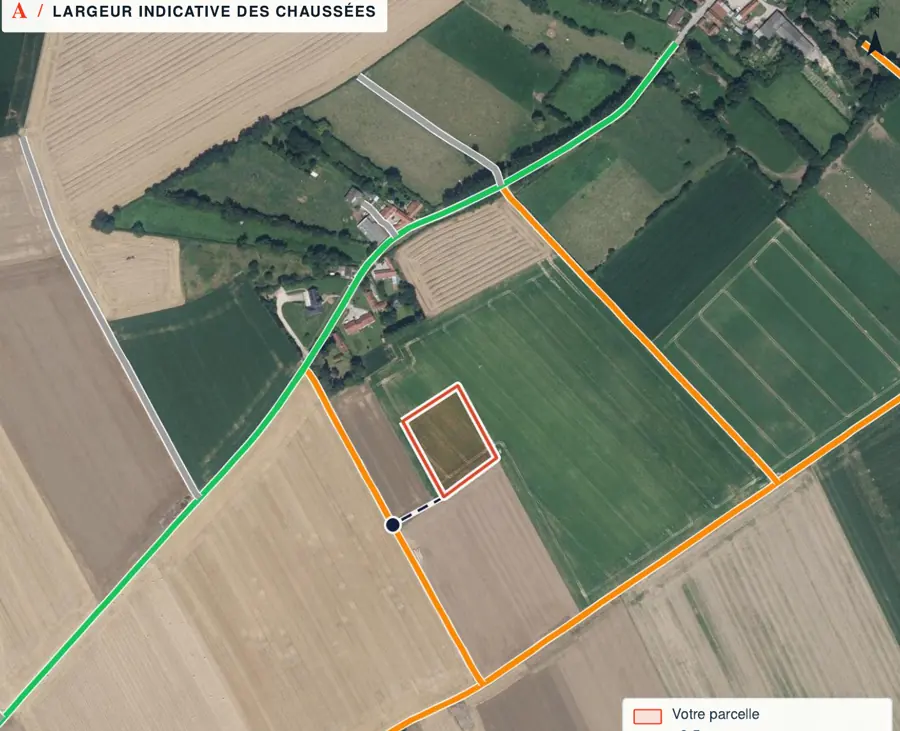
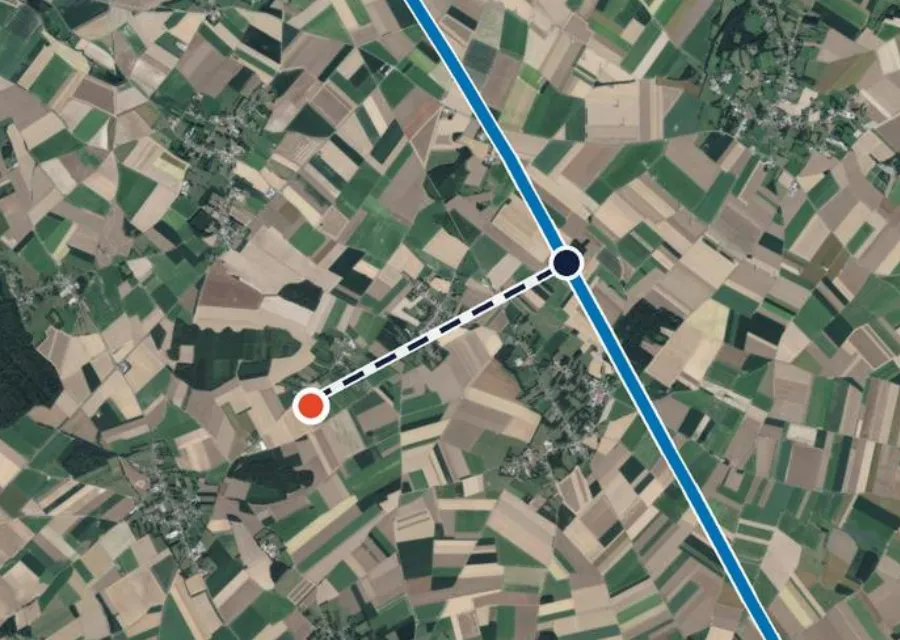
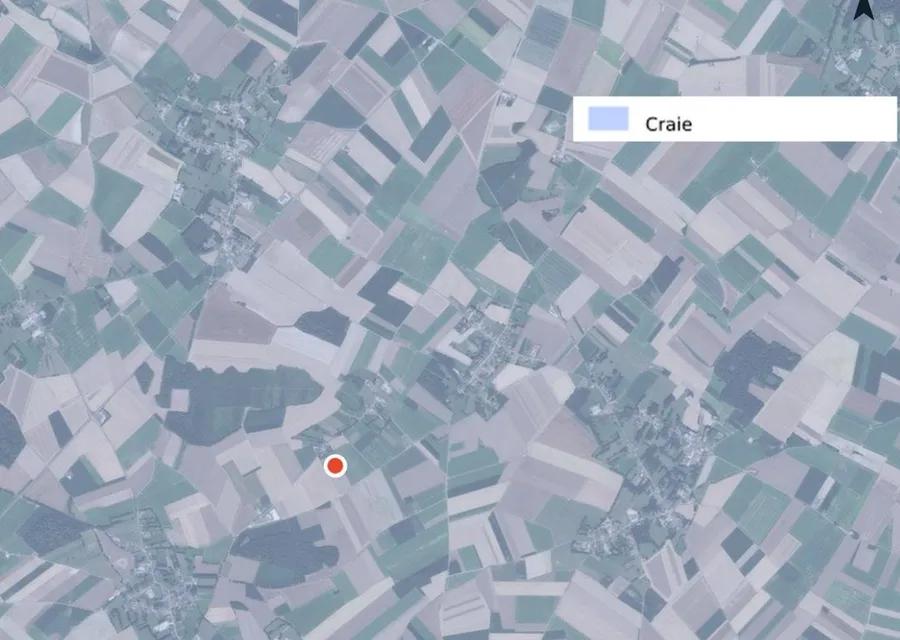
Before you price the sewer, look at the parcel
Pick the parcel on the map. The report gives you its plan and area, road access, the PLU zone and natural hazards, each with its source and date, explained in English. It does not map sewers or other networks: ask the sanitation service for the route. Free check, PDF report for €29 (€39 in French and English).