Pillar: Buying building land in France
Building in a French commune with no local plan: the national planning rules (RNU)
In France, a commune with no PLU (local zoning plan), no equivalent document and no carte communale falls under the national planning rules (RNU): new buildings are allowed only in its built-up parts, save for the exceptions in article L111-4 of the planning code. First step: confirm with the mairie (town hall) that no plan applies, then apply for an operational planning certificate (CU): free, issued within 2 months, and not a permit.
In brief
- At 31 December 2024, 8,578 of France’s 34,931 communes (municipalities) were under the RNU, according to the ministry’s annual survey (SuDocUH); 4,952 of them were drawing up a PLU or PLUi, which will change the rules.
- There is no map and no national threshold for a built-up part (partie urbanisée): the ministry points to the number and density of buildings, road access and the absence of a break, assessed case by case and subject to the courts.
- Outside the built-up part only the cases in article L111-4 remain: existing buildings, farming, public facilities, or a project backed by a reasoned resolution of the municipal council that needs the binding approval of the département commission for farmland (CDPENAF).
- The permit is normally signed by the mayor on behalf of the State and examined by the State planning service in the département (DDT or DDTM); if the two disagree, the préfet (State representative) decides.
On this page
When the RNU applies
The règlement national d’urbanisme (RNU) groups the general rules of the French planning code. It applies everywhere, but its toughest rule, limited building rights under articles L111-3 to L111-5, only bites where no PLU (plan local d’urbanisme, the local zoning plan), equivalent document or carte communale (a simple village zoning map) is in force.
There are three routes: the commune never adopted a plan; its older plan d’occupation des sols (POS), not turned into a PLU by 31 December 2015, lapsed and the RNU has applied since 1 January 2016, subject to the transitional cases in articles L174-2 to L174-5; or its plan was quashed or repealed with no earlier document revived.
To check a commune, open the Géoportail de l’urbanisme, the national planning portal, and search for it: recent PLUs and cartes communales are published there with their zones. RNU communes are identified through an annual ministry survey instead, so an empty screen proves nothing on its own. Ask the mairie (town hall) to confirm in writing.
Limited building rights and the built-up part
Article L111-3 sets the principle: with no PLU, equivalent document or carte communale, “buildings may only be authorised in the built-up parts of the commune”. No plan maps them: the authorities assess them at each application.
In an answer published in the Official Journal on 12 April 2022, the ministry restated the case law of the Conseil d’État, France’s highest administrative court: a built-up part groups “a sufficient number of dwellings served by access roads” and must have “a significant number and density of buildings”. It added that there can be no national criteria: distance, the purpose of the area and any break in development are weighed against the type of housing nearby.
The hard case is the edge of the existing buildings. According to the same answer, it can count as built-up unless there is a clear break, such as a change of level or a physical barrier, and the project must fit into the built-up part rather than extend it. Outside built-up parts, article R111-14 also allows refusal of a project that would encourage scattered development or harm farming or forestry.
Outside the built-up part: the exceptions in article L111-4
Outside the built-up part, article L111-4 (version of 12 March 2023) allows five kinds of project, each with conditions:
- 1° adapting, converting, restoring or extending existing buildings, and new homes within the footprint of a former farmstead, in keeping with local building traditions;
- 2° buildings needed for farming, public facilities compatible with farming, grazing or forestry on the plot, Traveller sites, use of natural resources and projects of national interest;
- 2° bis processing, packing and selling farm produce as an extension of production, compatible with farming, grazing or forestry on the plot, outside natural zones and without harming the protection of natural areas and landscapes, after an opinion from the CDPENAF;
- 3° installations incompatible with homes nearby, and a limited extension of existing buildings;
- 4° any project approved by a reasoned resolution of the municipal council, where the commune’s interest justifies it, in particular to stop the population falling, provided it does not harm natural areas, landscapes, public health or safety, does not cause significant extra public spending, and respects the objectives of article L101-2 and the coastal and mountain rules (chapters I and II of title II of book I).
Article L111-5 adds a filter. The new homes under 1°, biogas plants and projects under 2° and 3° that reduce land outside the built-up parts that is farmed, or agricultural in character (à vocation agricole), even if nothing is grown on it now, go to the commission départementale de préservation des espaces naturels, agricoles et forestiers (CDPENAF) for an opinion. The council resolution under 4° needs its binding approval, deemed given if the commission has not answered within one month of being consulted.
Distances, height and appearance: the general rules
Inside the built-up part, the RNU also sets siting rules, which article R111-1 switches off where a PLU exists; others, such as public safety (R111-2) or appearance (R111-27), apply everywhere.
| Point | Commune under the RNU | Commune with a PLU |
|---|---|---|
| Where to build | Built-up parts, save the L111-4 exceptions | According to the PLU zone |
| Distance from the road | Next to a road: distance to the opposite side at least equal to the difference in height (R111-16) | R111-16 does not apply; PLU rules |
| Side boundaries | On the boundary, or at least half the difference in height away, 3 m minimum (R111-17) | R111-17 does not apply; PLU rules |
| Two buildings, one plot | A 3 m gap may be required (R111-15) | R111-15 does not apply; PLU rules |
| Access | Refusal possible if road access is inadequate (R111-5) | R111-5 does not apply; PLU rules |
| Appearance | Refusal or conditions possible (R111-27) | R111-27 also applies |
Six points compared. Reasoned exemptions from articles R111-15 to R111-18 are possible (R111-19). Sources: Code de l’urbanisme, art. R111-1; Code de l’urbanisme, art. R111-16 (distance from the road); Code de l’urbanisme, art. R111-17 (side boundaries); Code de l’urbanisme, art. R111-15 and R111-19; Code de l’urbanisme, art. R111-5 (access); Code de l’urbanisme, art. R111-27 (appearance). Accessed 13 November 2026.
Example on flat ground (TerrainCheck calculation): a wall 7 m high must stand at least 3.50 m from the neighbouring boundary. For a 5 m wall, half the height is 2.50 m, below the minimum, so the required distance is 3 m. A PLU would have its own rules.
Steps before the compromis
- Check which document applies. On the Géoportail de l’urbanisme, free, then in writing from the mairie. Time: a few minutes online (TerrainCheck estimate); the texts cited set no deadline for the mairie to reply.
- Apply for a certificat d’urbanisme opérationnel (operational planning certificate, which says whether a described project is feasible; it is not a permit) describing the house and where it would stand. File it at the mairie or online, 4 paper copies, free of charge. The authority has 2 months from receipt at the mairie. A tacit certificate (issued by silence) does not confirm the project is feasible. See planning certificates.
- Meet the mairie, free and with no deadline set by the texts cited: is a 4° resolution or a PLU under way?
- Sign a compromis de vente (binding preliminary contract) with a condition that the permit is granted: see the clauses that matter. The length of the condition is negotiated; allow for the processing time below.
- Apply for the permit at the mairie, with a complete file. Processing times for a house are in the table below: usually 2 months from a complete file. If that period is extended, the mairie tells you within a month of receiving the file the new time limit, any new starting point, and the reasons.
| Case | Time for a house | Rule |
|---|---|---|
| Standard | 2 months from receipt of a complete file | R423-23, b |
| CDPENAF opinion (art. L112-1-1 of the rural code), the commission article L111-5 sends projects to | 3 months (+1 month) | R423-24, d |
| Consultation of another département or regional commission | 4 months (+2 months) | R423-25, a |
Processing times for a building permit for a single-family house. The two extensions are not added together. Sources: Code de l’urbanisme, art. R*423-23 and R*423-19 (processing times); Code de l’urbanisme, art. R423-24 (one-month extension); Code de l’urbanisme, art. R*423-25 (two-month extension); Code de l’urbanisme, art. R*423-42 (notice of the new time limit). Accessed 13 November 2026.
Example: a new house within the cluster of a former farmstead (L111-4, 1°) that reduces land à vocation agricole goes before the CDPENAF. The time becomes 3 months, not 4.
Article R423-25, a, does not list the commissions it covers, whereas the CDPENAF is expressly covered by R423-24.
Who decides? The mayor on behalf of the State, or the préfet in the cases in article R*422-2, including disagreement between the mayor and the examining service. Where the mayor decides on behalf of the commune for an area not covered by a plan, or after a PLU or carte communale has been quashed or repealed with no earlier document revived, the préfet’s binding approval is required (L422-5 and L422-6).
Price and timing: what the RNU means for a buyer
Under the RNU, building rights are judged project by project: a plot advertised as “constructible” is worth what the operational certificate or the permit says. Negotiate on that basis and compare with nearby sales in DVF.
When a commune is preparing a PLU, the authority may, once the council has debated the plan’s general policy (the PADD), defer its decision on an application that would compromise the future plan, for up to two years on the same ground. A planning certificate freezes the rules in force on its date for 18 months, except those protecting public safety or health, and states whether a deferral could be used. The future PLU may also zone the plot as farmland or natural area: see land that may lose its building status.
In the report: which plan covers the parcel
Before you sign: six checks
- The commune has no PLU, PLUi or carte communale: confirmed in writing by the mairie.
- The plot is surrounded by buildings served by a road, with no break (change of level, watercourse, barrier).
- A positive operational planning certificate (certificat d’urbanisme opérationnel) for your project, less than 18 months old.
- Outside the built-up part: which L111-4 exception applies, and what did the CDPENAF say?
- The planned house meets article R111-17 towards each neighbouring boundary: built on the boundary, or at least half the difference in height away and never under 3 m, checked point by point (unless an exemption is granted).
- A PLU or PLUi in preparation? Stage reached and risk of a deferred decision.
Next: how to check whether land is buildable, and partly buildable plots.
Common questions
Can land outside the built-up part become buildable without a PLU?
Only for the projects in article L111-4: existing buildings, a former farmstead, farming, public facilities, or a reasoned council resolution approved by the CDPENAF. Otherwise the commune has to adopt a carte communale or a PLU that zones the plot for building.
How do I know whether my plot is in a built-up part?
No map says so. The only reliable route is an operational planning certificate (certificat d’urbanisme opérationnel, CU) describing your project. It is not a permit, but it is free, answered within 2 months, and it freezes the rules for 18 months, except those protecting public safety or health.
Does the RNU also apply in a commune with a PLU?
Partly. Articles L111-3 to L111-5 and several siting rules (R111-5 to R111-19, among others) do not apply; others, such as public safety (R111-2) and appearance (R111-27), apply everywhere.
Keep reading
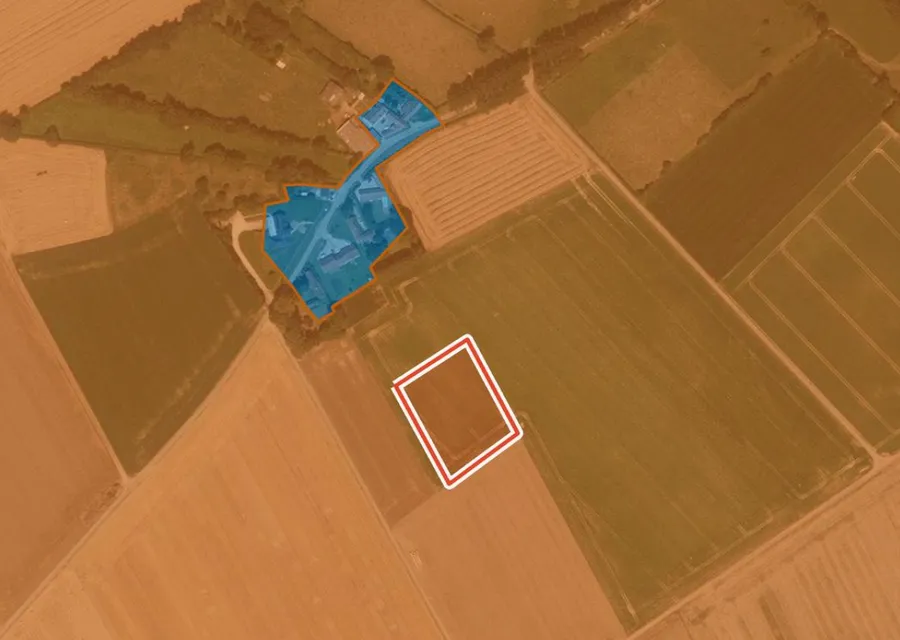
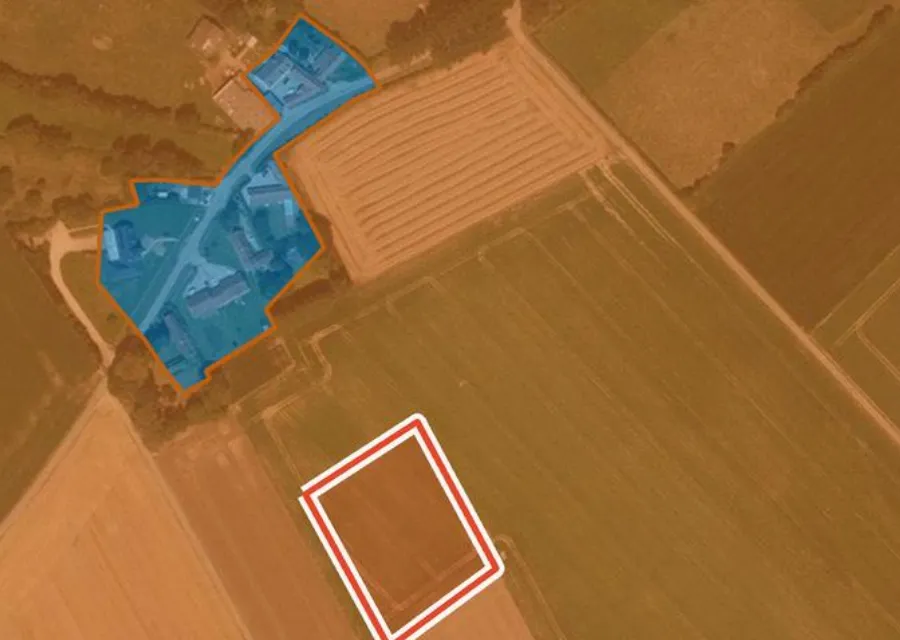
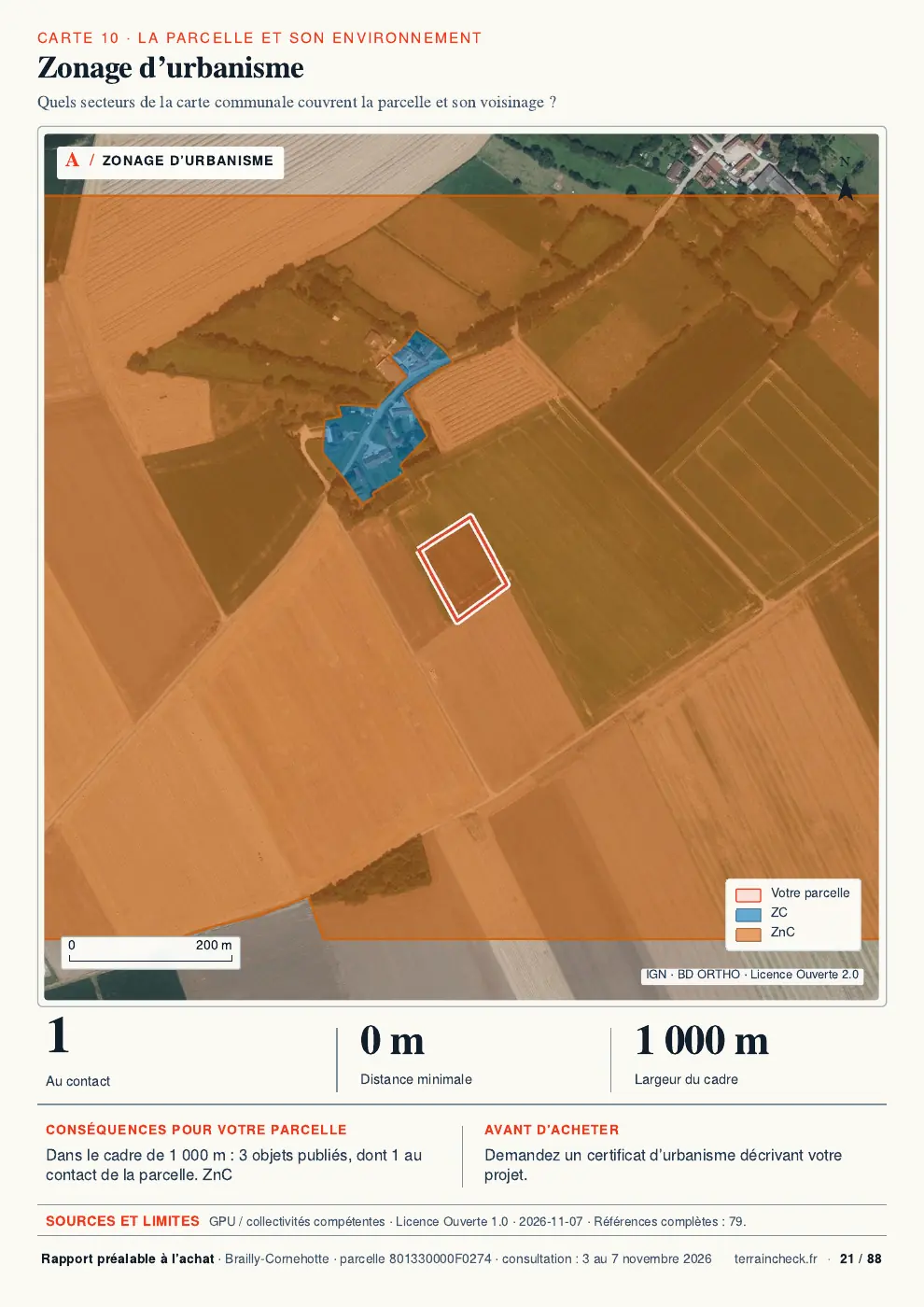
Looking at a plot in the countryside? See which plan covers it first
Pick the parcel on the map. The report shows the planning zones published around it, then natural hazards, clay soils and recent sales nearby, each with its source and date and explained in English. It cannot tell you whether your project will be approved: only the planning certificate and the permit do that. Free check, PDF report for €29 (€39 in French and English).