Pillar: Buying building land in France
Reserved site (emplacement réservé) on a plot in France: what it blocks and how to make the council buy
In France, an emplacement réservé is an area that the PLU (local zoning plan) of a commune (municipality) or group of communes reserves for a road, public works, a general-interest facility, green space or a housing scheme (art. L151-41 of the Planning Code): any other building there is allowed only exceptionally, on a temporary permit. The owner can serve notice on the beneficiary to buy, and it must decide within one year. First step: look for the reservation on the PLU zoning map or on the Géoportail de l’urbanisme.
In brief
- What can be reserved: an area marked out by the rules of the PLU (the local zoning plan) for public roads and works, general-interest facilities, green space or ecological corridors, housing schemes (U and AU zones only) or relocating facilities threatened by coastal retreat (art. L151-41).
- On that strip: works must comply with the plan’s rules and maps (art. L152-1). Any other building is allowed only exceptionally, on a temporary permit, and must be removed without compensation when the beneficiary first asks (art. L433-1 and L433-3).
- Buy-out right (droit de délaissement): the owner can require the beneficiary to buy the land at a price agreed or set by the court, once the PLU is enforceable (art. L152-2). The notice goes to the mairie (town hall); a decision is due within one year, and an agreed price must be paid within two years (art. L230-1 and L230-3).
- No agreement on price: the owner or the public body can refer the case to the expropriation judge. If neither does so within three months after the one-year period, the reservation and the building restrictions can no longer be enforced (art. L230-4, version of 28 November 2025).
On this page
What a reserved site can be for
An emplacement réservé (reserved site) is a tool of the plan local d’urbanisme (PLU), the zoning plan drawn up by a commune (the French municipality) or a group of communes. The plan’s rules can “mark out land” reserved for a public project (art. L151-41). The reservation covers the area drawn on the map, which may be only a strip of the plot; the rest of the land follows the rules of its zone.
The plan’s maps state each reservation’s purpose and the public body that benefits: the commune, but also a département, an inter-municipal body or a joint authority (art. R151-34, R151-38, R151-43, R151-48 and R151-50).
| Purpose (art. L151-41) | Zones | GPU code | Buy-out from |
|---|---|---|---|
| 1° Public roads and works | All | 05-01, 05-02 | Beneficiary |
| 2° General-interest facilities | All | 05-03 | Beneficiary |
| 3° Green space, ecological corridors | All | 05-04 | Beneficiary |
| 4° Housing schemes (social mix) | U and AU | 05-05 | Beneficiary |
| 6° Relocation away from coastal retreat | Outside retreat zones | 05-08 | Beneficiary |
| Location easement (last paragraph) | U and AU | 05-06 | Commune |
| 5° Holding easement, 5 years at most | U and AU | 05-07 | Commune |
The last two rows are easements, not reserved sites in the strict sense; the owner can also serve notice on the commune to buy (art. L152-2, second paragraph). Codes: CNIG PLU standard v2024-01, used by the Géoportail de l’urbanisme. Sources: Planning Code, art. L151-41; Planning Code, art. L152-2; Planning Code, art. R151-34; Planning Code, art. R151-38; Planning Code, art. R151-43; Planning Code, art. R151-48; Planning Code, art. R151-50; CNIG, PLU data standard v2024-01 (20 December 2023), prescription codes, code 05. Accessed 12 November 2026.
What the reservation rules out
Works must comply with the plan’s rules and maps (art. L152-1): a house or garage that encroaches on a strip reserved for widening a road does not.
A building that breaks the rules can exceptionally be granted a building permit on a temporary basis (à titre précaire, art. L433-1). The permit then requires a description of the site drawn up by a joint expert survey at the applicant’s expense (art. L433-2). The permit holder must remove the building without compensation and restore the land at their own cost, on the date set in the permit or, on a reserved site, as soon as the beneficiary of the reservation asks (art. L433-3).
Sources: Planning Code, art. L152-1; Planning Code, art. L433-1; Planning Code, art. L433-2; Planning Code, art. L433-3. Accessed 12 November 2026.
How many reservations are in published plans
Since 2023, a PLU and its amendments only take effect once published on the national planning portal, barring technical problems (art. L153-23). Using its official data service, we counted the features filed under code 05, the national code for reserved sites.
Out of 208,226 features, public roads account for about 41%, and about 69% of those whose purpose is coded. The most common case in the data is therefore a road to be built or widened. About 39% of features carry no coded purpose in the data: only the PLU itself gives it.
The buy-out right, step by step
The owner of reserved land, built on or not, can require the public body or service named as beneficiary to buy it once the PLU is enforceable against third parties, even while a decision deferring their planning application is in force (art. L152-2). The procedure follows articles L230-1 onwards.
- Serve the formal notice to purchase (mise en demeure d’acquérir). Where: the town hall of the commune where the land lies, even if the beneficiary is another body. Content: the request plus any farm tenants, tenants, holders of long leases, rights of residence or use, and anyone who may claim easements (art. L230-1). Cost: no fee set by the texts. Tip: send it in a way that proves the date of receipt, since every period runs from it. Write it in French; a lawyer or the notaire can check it.
- Wait for the decision. The beneficiary must decide within one year of receipt at the town hall. Other interested parties, notified by public notice, have two months to come forward or lose any right to compensation (art. L230-1 and L230-3).
- If a price is agreed, it must be paid no later than two years after the notice reached the town hall (art. L230-3).
- If there is no agreement on price after one year, the owner or the public body can refer the case to the expropriation judge, who orders the transfer and sets the price. Cost: lawyer’s or valuer’s fees on quotation; the texts cited set no scale. Time: these articles set no deadline for the judgment.
- If neither side refers the case to the judge within three months after the one-year period, the building restrictions and the reservation can no longer be enforced (art. L230-4).
The act of 26 November 2025 tightened this. The former article L230-4 added that the case could still be referred to the judge after the three months; that sentence has gone. Article L230-3 now refers to the lack of agreement “on the price”. Explanations written before that date describe the old text.
How the price is set
When the judge sets it, the price, including the re-investment allowance, is fixed and paid as in a compulsory purchase, disregarding the provisions that gave rise to the buy-out right: the reservation does not pull the valuation down (art. L230-3). The reference date for assessing the land’s use is the date on which the most recent act approving, revising or amending the PLU and delimiting the land’s zone became enforceable.
Where the reservation takes only part of the plot, the owner can require the whole plot to be bought in the cases listed in articles L242-1 to L242-5 of the Expropriation Code (art. L230-3). No public statistic measures the discount on reserved land sold privately.
Sources: Planning Code, art. L230-3 (version of 28 November 2025). Accessed 12 November 2026.
Spotting a reservation before you buy
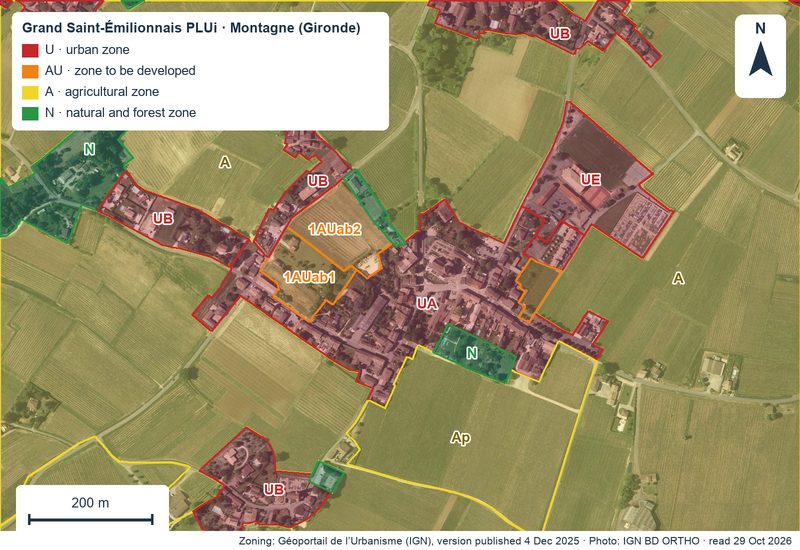
- Read the zoning map. Where: the town hall or the inter-municipal body’s website, the PLU’s zoning maps (documents graphiques), which give each reservation’s purpose and beneficiary. Cost: nothing. Time: half an hour (TerrainCheck estimate). How-to: reading the PLU before buying.
- Check on the Géoportail de l’urbanisme. Search for the address or parcel and show the prescriptions: reservations carry code 05, with the label entered by the local authority. The site is in French. Cost: nothing. Time: ten minutes (TerrainCheck estimate).
- Apply for an information planning certificate (certificat d’urbanisme d’information). It states the planning rules and the administrative limits on property rights that apply to the land (art. L410-1). Where: the town hall, online or on a form. Cost: free. Time: 1 month. If a permit application or prior declaration is filed within 18 months of its issue, the planning rules, taxes and administrative limits on property rights in force on its date cannot be challenged, except those concerning public safety or health. It is not a building permit. More: information or operational planning certificate.
- Measure what is left. Plot the reserved area on the cadastral map and check that the house, access and utilities fit outside it. For buildability in general: is my land buildable?
Sources: Géoportail de l’urbanisme (national planning portal); CNIG, PLU data standard v2024-01 (20 December 2023), prescription codes, code 05; Planning Code, art. L410-1; Service-Public: planning certificate (CU). Accessed 12 November 2026.
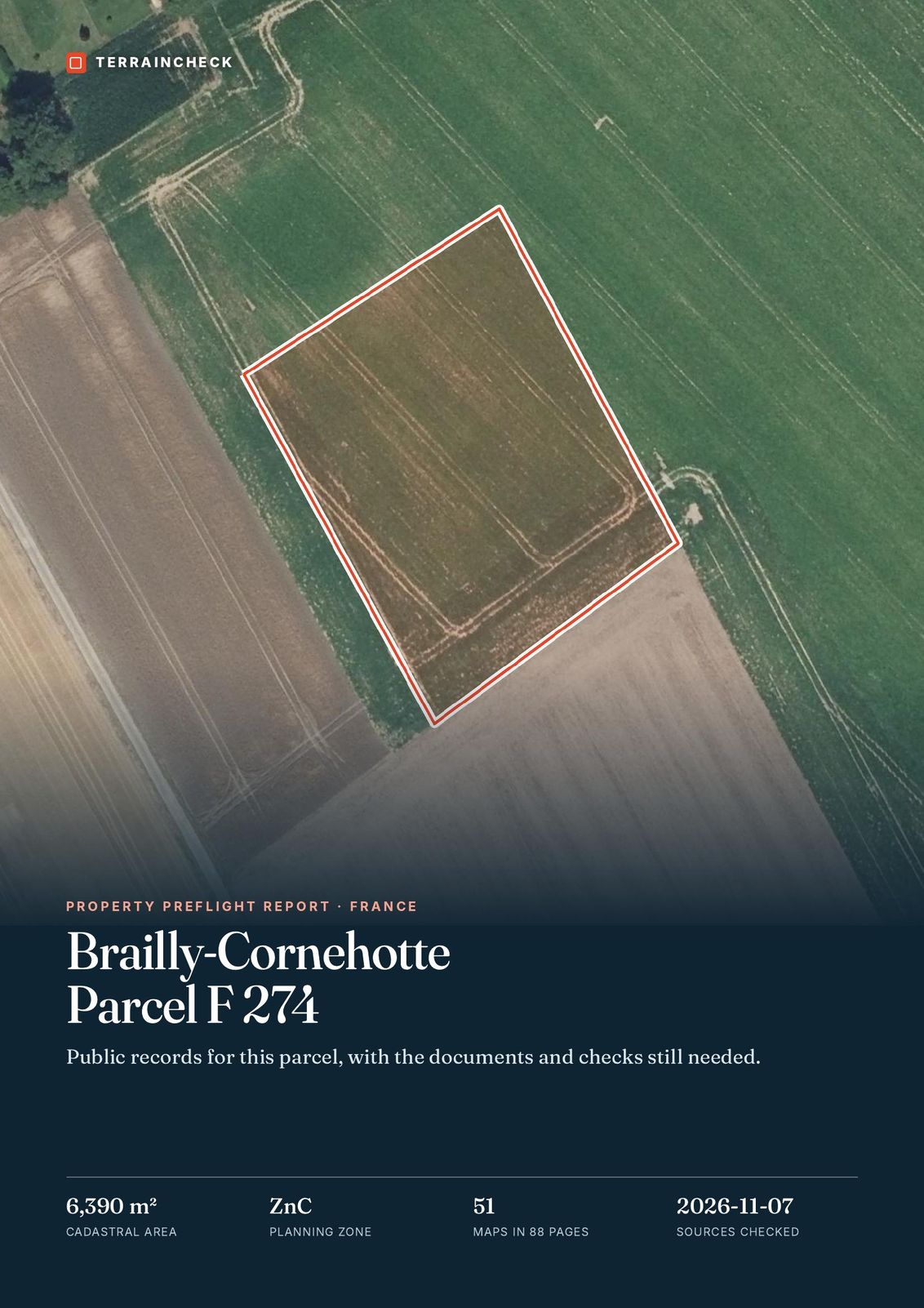
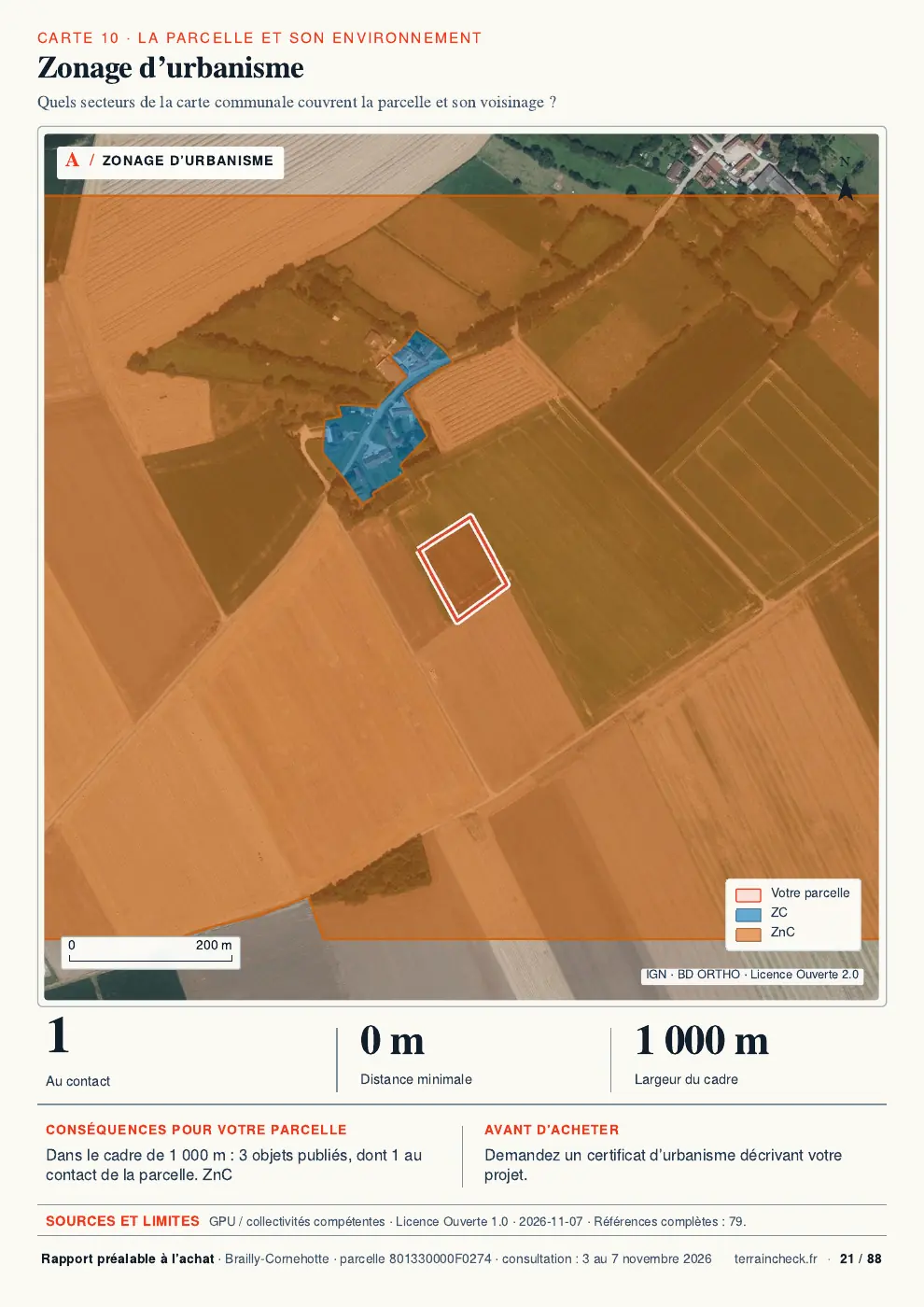
In the report: prescriptions around F 274
To check before the compromis
- Zoning map of the PLU in force checked: reservation on the plot or not.
- Purpose and beneficiary of the reservation noted from the PLU map.
- Area outside the reservation measured: house, access, septic system and utilities fit.
- Information planning certificate applied for, quoting the same cadastral reference.
- If the seller has started a buy-out: copy of the notice, date received at the town hall, any reply.
- Price and conditions in the compromis based on the area outside the reservation.
Common questions
Can I build on a reserved site in France?
Not anything unrelated to the reservation’s purpose: works must comply with the plan’s rules and maps. Only a temporary permit can exceptionally allow it, and the building must then be removed without compensation when the beneficiary first asks. The rest of the plot, outside the reserved strip, follows the rules of its zone.
Does the council have to buy reserved land?
The owner can serve formal notice on the beneficiary of the reservation to buy, through a request sent to the town hall. The beneficiary must decide within one year. Without agreement on price, either side can refer the case to the expropriation judge; if neither does so within three months after that year, the reservation and the building restrictions can no longer be enforced.
Can a buyer use the buy-out right?
The right belongs to the owner: a buyer can use it once the deed of sale is signed, not before. If the seller has already served notice, ask for the date it reached the town hall and any reply, since the time limits run from that date.
Keep reading
Reading the PLU before you buy: zone, rules, easements and pending changes
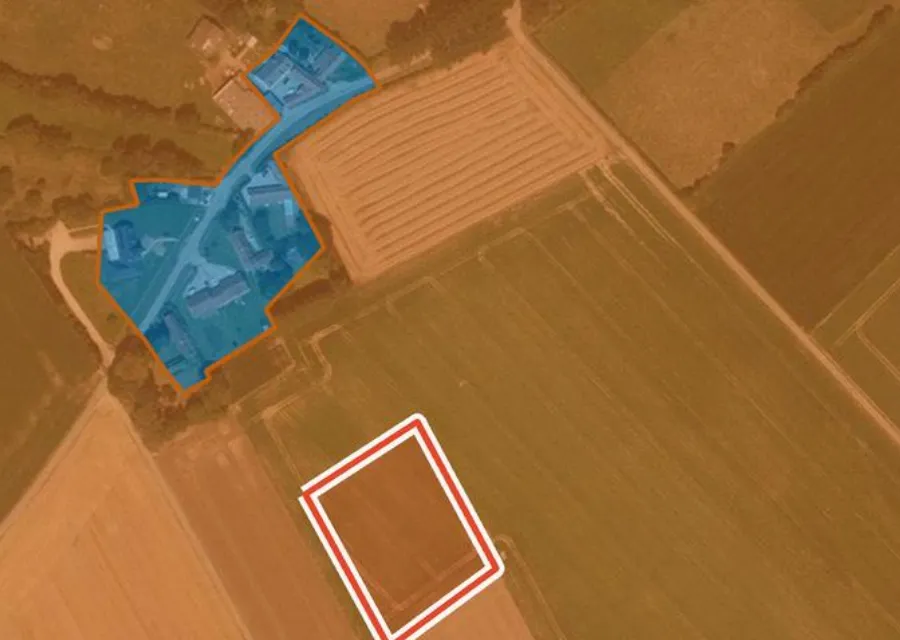
Is a plot buildable in France? How to check the zone, utilities, easements and the official answer
French planning certificates: information or operational CU before buying land
Certificate of alignment in France: will part of your plot go to the public road?
Planning prescriptions published around a plot
Pick the parcel on the map: the report shows the zoning and the planning prescriptions published around it, reserved sites included where they are published, with the distance to the nearest, then easements and hazards, each with its source and date, explained in English. It does not replace reading the PLU. Free preview, PDF report for €29 (€39 in French and English).