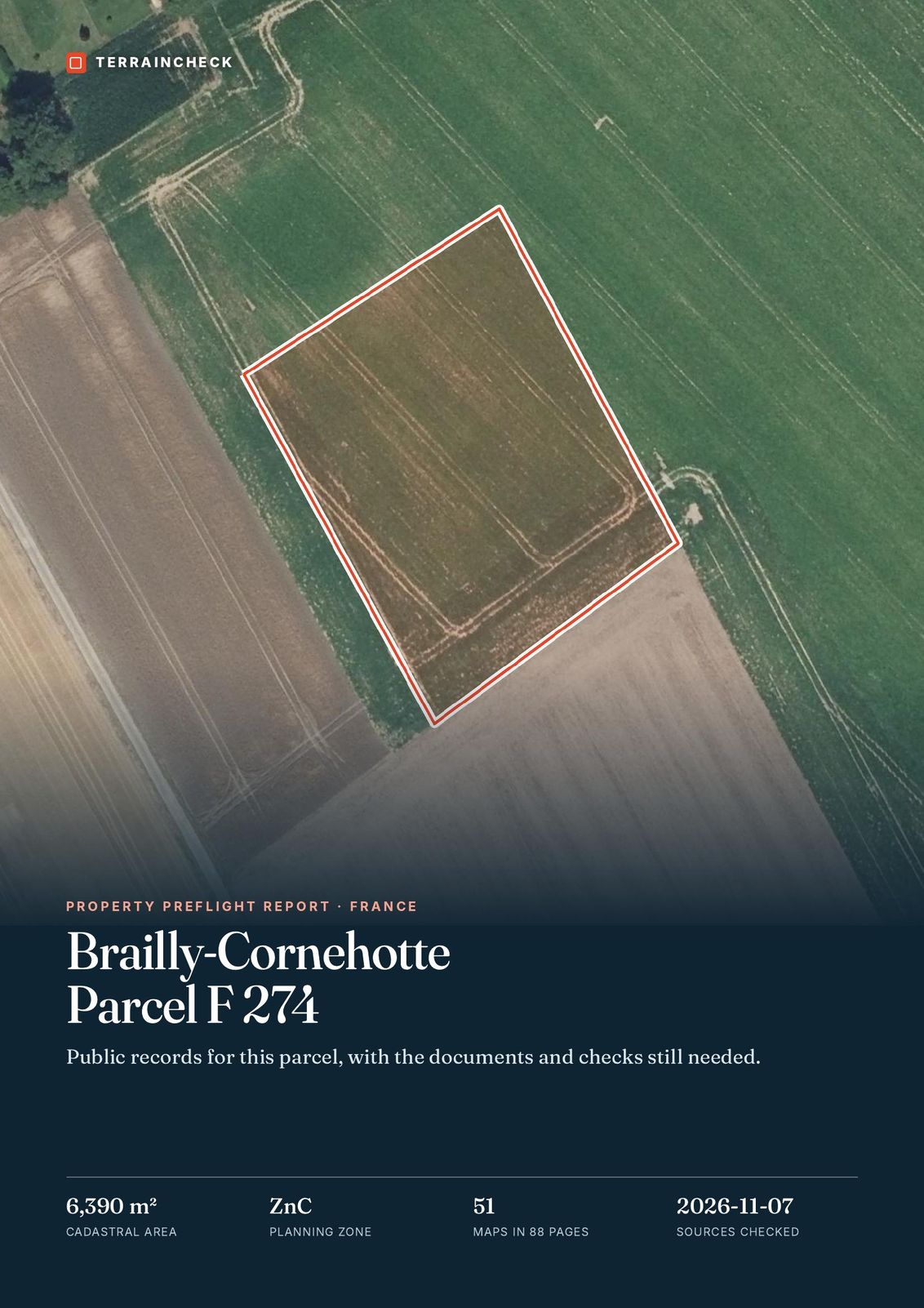
Pillar: Buying building land in France
Buying land with a granted building permit in France
In France, a building permit obtained by the seller is put in your name through a transfer application (form Cerfa 16701*03) filed with the mairie, the town hall of the commune where the plot lies. The mairie has 2 months to reply and silence counts as approval, as long as the permit is still valid: usually 3 years from notification to start work, or 5 years if it was granted between 28 May 2022 and 28 May 2024 and was still valid on 27 May 2025. First step: ask the seller for the permit decision, proof of its notification date and the plans.
In brief
- The mairie (town hall) grants the transfer when three conditions are met: the permit is still valid, both the holder and the new holder agree, and the new holder is entitled to apply (for example as owner, or with the owner’s consent). A change in the planning rules since the permit was granted is not a ground for refusing the transfer.
- As a rule, the permit lapses if work has not started within 3 years of notification, or if, after that period, work is interrupted for more than a year (art. R424-17): two separate rules. A court appeal against the permit stops the clock.
- Granted between 28 May 2022 and 28 May 2024 and still valid on 27 May 2025: 5 years to start work, with no ordinary extension; the rule on interrupted work is unchanged. Granted since then: 3 years, which can be extended twice by a year if the rules have not changed against the project, on a request made at least 2 months before expiry.
- Taking over the permit makes you liable for the planning taxes (development tax, archaeology levy), possibly jointly with the seller.
On this page
What a permit already granted is worth
A permis de construire (building permit) obtained by the seller answers a question the listing leaves open: the town hall has accepted this specific project on this plot, under the rules in force on the date of the decision. While it is valid, the town hall cannot refuse to transfer it because the rules have changed since.
Two limits: the permit covers one building, with its position, floor area and appearance, not any house you might like, and it is granted subject to third-party rights.
If the approved house only partly suits you, there are two routes. An amended permit (permis modificatif) covers small changes, such as the exterior, footprint or floor area, as long as the nature of the project stays the same; filed within 3 years of the original permit, it is assessed under the rules of that date, except for new public safety or health rules. A different project needs a fresh application. Once you hold the permit, you can file one without giving up the transferred permit: filing does not withdraw it.
Sources: Service-Public: amending a planning permission (F19450); Code de l’urbanisme, art. L424-5 (withdrawal, new application), current version. Accessed 13 November 2026.
Having the permit transferred to you
The transfer uses form Cerfa 16701*03, which you sign as applicant and the current holder signs to give consent (or on an attached document). It can be full or partial, if you buy only some of the plots covered. The form and the replies are in French.
- Get the full file. Ask the seller for the permit decision (arrêté), proof of the notification date (postal receipt or the town hall’s e-mail), the plans and any extension or amendment decisions. Cost: nothing. Time: no deadline in the texts cited; get them before the preliminary contract.
- Work out the expiry date with the timeline and table below. About an hour with the file in hand (TerrainCheck estimate).
- File the application with the mairie of the commune (municipality) where the plot lies: online where the commune offers it, by recorded-delivery letter with proof of receipt, or by hand. In Paris it goes online to the Basu, the city’s planning desk. Cost: the form is free and Service-Public mentions no fee.
- Wait for the decision. The town hall has 2 months from the filing date on the receipt. With no written answer by then, the transfer is granted tacitly, and the mayor or the prefect issues a certificate on request.
- Display the transfer on site. The new holder puts the permit up on a board readable from the road. A third party can challenge the transfer within 2 months from the first day of a continuous 2-month display, and the authority that granted it can withdraw it within 3 months of its decision if it considers it unlawful.
Buying through a company, such as a French SCI (property-holding company)? Service-Public says a transfer to a legal entity requires the original plans to have been drawn up by an architect. In a commune of more than 3,500 inhabitants, a legal entity must file online.
How long the permit stays valid
The clock starts at notification of the decision, or on the date of a tacit decision, not when the decision was signed. For a recorded-delivery letter, Service-Public takes the first time the letter was presented; for an electronic notice, the day after it was sent.
As a rule, the permit lapses if work has not begun within 3 years, or if, after that, work stops for more than a year. An appeal against the permit before the administrative court, or the civil court under article L480-13, suspends the period until a final ruling. If another law delays the start of work, the 3 years run from the date work may begin.
Permits granted between 2021 and 2024
Decree 2025-461 of 26 May 2025, as amended by decree 2026-674 (version in force since 29 July 2026), only covers permissions still valid when it was published on 27 May 2025: it does not revive a permit that had already lapsed, been withdrawn or quashed. Those granted between 28 May 2022 and 28 May 2024 are valid for 5 years and can no longer be extended under the first paragraph of article R424-21, the ordinary extension; power plants using renewable energy follow separate rules, outside the scope of this guide. Those granted between 1 January 2021 and 27 May 2022 gained one year.
The decree overrides the first and third paragraphs of article R424-17 (time to start work), not the second, on work interrupted for more than a year, as the Landes prefecture notes (4 June 2025).
In practice, on 13 November 2026 a permit from 2021 or early 2022 is no longer valid, unless work started in time and was never interrupted for more than a year, an appeal suspended the clock, or an extension was granted. A permit granted between May 2022 and May 2024 and still valid on 27 May 2025 leaves until some time in 2027–2029 to start work, with no ordinary extension unless an appeal suspended the clock. If work started and then stopped, ask the mairie in writing, with the site records, how it treats that permit.
Asking for an extension
A permit granted since 29 May 2024 can be extended twice by one year at the holder’s request, if the planning rules and public easements applying to the project have not changed against it. The request, in two copies, goes by recorded delivery or is handed in at the town hall at least 2 months before expiry. With no decision sent within 2 months of the postal receipt or the town hall’s acknowledgement, the extension is granted, starting when the original validity ends. Timing of a new application: building permit processing times.
What to check in the file
| Item | Where to find it | Why it matters |
|---|---|---|
| Notification date | Postal receipt, town hall e-mail | Starts the 3 (or 5) years |
| Decision date | Permit decision (arrêté) | Shows whether decree 2025-461 applies (permit still valid on 27/05/2025) |
| Extensions | Extension decisions or request receipt | New expiry date |
| Known appeals | Notice of appeal sent to the holder | Suspends validity, delays work |
| Work started | Notice of start of work (DOC), invoices, dated photos | Interrupted over a year: risk of lapse, to be assessed by the mairie |
| Display on site | Dated photos, board on the plot | Starts the third-party appeal period |
| Approved project | Plans, floor area, position | Small change or new application |
| Plots covered | Permit decision, location plan | Full or partial transfer |
| Taxes | Permit decision, land tax office | Pass to the new holder |
Nine points to check before taking over a permit. Sources: Code de l’urbanisme, art. R*424-17 to R*424-20 (lapse), current version; Form Cerfa 16701*03: application to transfer a permit that is still valid; Service-Public: building permit (F1986). Accessed 13 November 2026.
Neighbours’ appeals against the original permit: see our guide to third-party appeals.
Planning taxes: what you take over
The transfer passes on all the rights and obligations attached to the permit, tax included. You become liable for the development tax (taxe d’aménagement), the preventive archaeology levy and, where it applies, the roads and networks contribution; the Cerfa form states that the new holder is liable, possibly jointly with the previous applicant.
For the amounts, Service-Public points you to the land tax office (centre des impôts fonciers). Apart from special cases, for applications filed since 1 September 2022 a return is due within 90 days of completion of the work on the “Gérer mes biens immobiliers” service at impots.gouv.fr. How the tax is worked out: our guide to the development tax.
In the report: the plot’s current rules
What to put in the preliminary contract
The transfer depends on the seller’s signature and on a town hall deadline, so the compromis de vente (binding preliminary contract) has to provide for it. The notaire (the public officer who handles the sale) drafts these clauses with you; other conditions are in our guide to the compromis.
- The seller, as permit holder, undertakes to sign the transfer application in your favour and to hand over the full file.
- A condition precedent that the transfer is obtained, with a date that allows for 2 months’ processing plus the appeal and withdrawal periods.
- A statement by the seller on appeals received, work already started and extensions granted, with the documents.
- Where an extension is allowed, the seller undertakes to request it at least 2 months before expiry if the sale has not completed.
- Who pays which planning taxes, with the figure given by the land tax office.
Before you sign: the list
- Permit decision, plans and proof of notification date received.
- Expiry date worked out, 2022–2024 window and validity on 27 May 2025 checked.
- No known appeal; if work has started, no interruption of more than a year, confirmed in writing by the mairie for a 2022–2024 permit.
- The approved house suits your plans and budget.
- Transfer application (Cerfa 16701*03) signed by the seller.
- Transfer condition and deadline written into the compromis.
- Planning tax figures requested from the land tax office.
Common questions
Can the transfer be requested before the final deed is signed?
Yes, if you have the owner’s consent: that is one of the four cases on form Cerfa 16701*03 that entitle you to apply. The permit holder must also agree. The preliminary contract then makes the sale conditional on the transfer.
What happens if the permit expires before work starts?
It lapses and cannot be extended, since only a permission that is still valid can be. You need a new application, assessed under the planning rules in force at that time.
Can I change the house that was approved?
Yes for small changes that keep the nature of the project, through an amended permit while the permit is valid and the work unfinished. Anything bigger needs a new permit application.
Can a permit granted in 2023 be extended?
No, for a house permit. If it was still valid on 27 May 2025, a permit granted between 28 May 2022 and 28 May 2024 is valid for 5 years under decree 2025-461, which rules out the extension in the first paragraph of article R*424-21. Renewable energy plants follow separate rules.
Keep reading
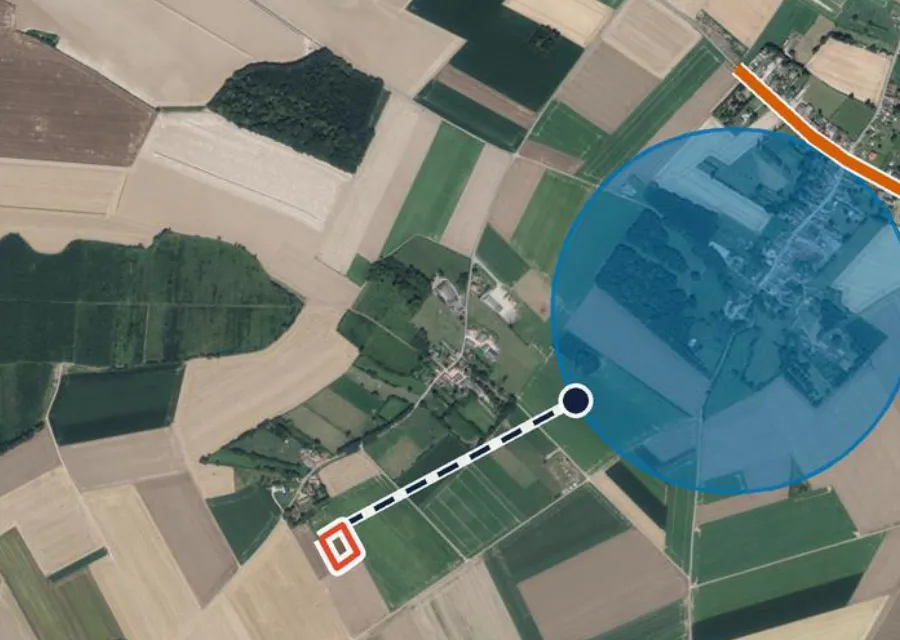
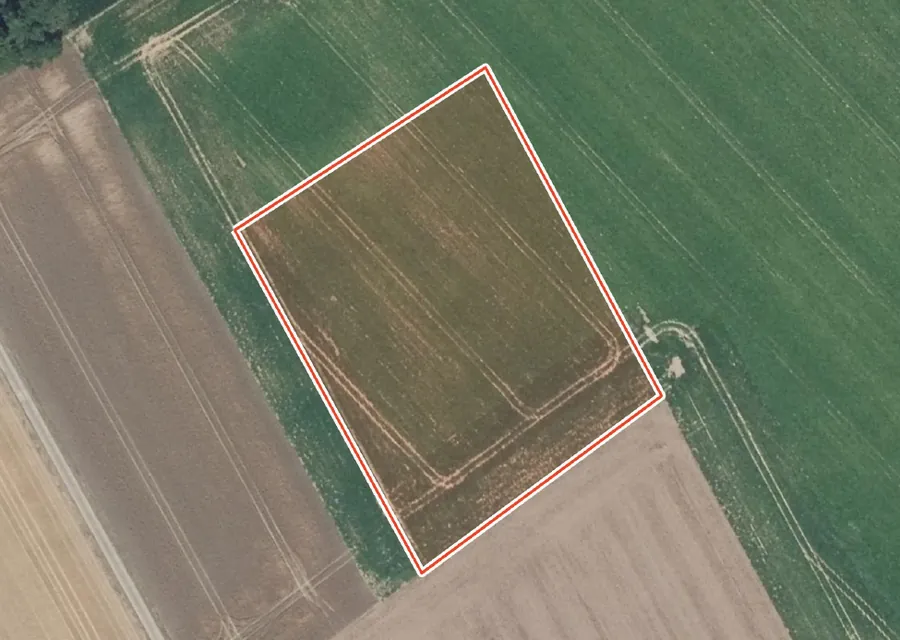
Set the permit against the plot’s current rules
Pick the parcel on the map. The report gives the planning document that covers it today (zone or sector, official title, date), natural hazards, clay soils, Natura 2000 and recent sales nearby, each with its source and date and explained in English. It does not say whether a permit exists or is still valid. Free check, PDF report for €29 (€39 in French and English).