Pillar: Buying building land in France
Selling bare land in France: which diagnostics the seller must provide
In France, selling bare land does not require the surveys a building needs (asbestos, termites, energy rating). The seller must provide a risk statement if the land lies in a zone listed by the Environment Code, and a preliminary geotechnical study if the buildable land is in a medium or high clay zone, unless planning rules there do not allow single-family houses. First step: ask for the risk statement, free on Géorisques, before your first viewing.
In brief
- Risk statement (état des risques): due if the land lies in a listed zone (risk prevention plan, seismic zones 2 to 5, radon level 3, coastline retreat, compulsory brush clearing). Handed over at the first viewing if one takes place, less than six months old, free on Géorisques.
- Preliminary geotechnical study: due for unbuilt buildable land in a zone of medium or high clay shrink-swell exposure, except where planning rules do not allow single-family houses. Valid thirty years if the ground has not been reworked.
- Written disclosures, not diagnostics: a classified installation (licensed or registered industrial site) once run on the land, a soil information sector, a mine worked beneath it.
- If the risk information is missing, the buyer can ask a court to cancel the sale or reduce the price.
On this page
What the seller of bare land must provide
France’s technical diagnostics file (dossier de diagnostic technique, article L271-4 of the Construction and Housing Code) applies to the sale of “all or part of a built property”. Bare land does not need the whole file. The documents that do apply come from other laws, and each one depends on where the land is.
| Document | Due when | Law | Cost |
|---|---|---|---|
| Risk statement (ERP) | Land in a zone listed in art. R125-23 | Env. Code, L125-5 | Free online (ERRIAL) |
| Preliminary geotechnical study | Unbuilt buildable land, medium or high clay exposure, except where planning rules do not allow single-family houses | CCH, L132-5 | On quote |
| Disclosure of a classified installation | Site under licence or registration run on the land; known hazards; chemical or radioactive substances if the seller ran it | Env. Code, L514-20 | Seller’s written notice |
| Disclosure of soil pollution | Land in a soil information sector (SIS) | Env. Code, L125-7 | Seller’s written notice |
| Disclosure of a mine | Mine worked beneath the land; known hazards | Mining Code, L154-2 | Seller’s written notice |
Documents specific to selling bare land. The seller provides each one; none of them says whether you can build. Sources: Environment Code, art. R125-23 (zones where a risk statement is due); Environment Code, art. L125-5 (risk information for buyers); Construction and Housing Code, art. L132-5 (preliminary geotechnical study); Environment Code, art. L514-20 (land of a former classified installation); Environment Code, art. L125-7 (soil information sectors); Mining Code, art. L154-2 (land above a former mine); Géorisques: free risk statement (ERRIAL). Accessed 13 November 2026.
The risk statement, the document you will meet most often
Article L125-5 of the Environment Code covers property in certain zones, built or not. Article R125-23 lists them: areas of technological, natural or mining risk prevention plans, seismic zones 2, 3, 4 or 5, radon potential level 3, zones exposed to coastline retreat and zones under a legal duty to clear brush. Outside those zones, article L125-5 does not require a risk statement.
For unbuilt land, the statement is attached to the preliminary contract or, if there is none, to the final deed. It must be handed over at the first viewing, if a viewing takes place, and be less than six months old. The seller updates it if its contents are no longer accurate on the day the contract or deed is signed. How zones and plans fit together is covered in our guide to the risk and pollution statement.
- Ask the seller for the risk statement before you view. Where: the seller can fill it in on georisques.gouv.fr (the ERRIAL form, in French). Cost: free. Timing: due at the first viewing; the laws cited set no other deadline.
- Check the date and the parcel. Where: at the top of the document. It must be less than six months old and carry the cadastral reference of the plot you saw. Time: a few minutes (TerrainCheck estimate).
- Insist on an up-to-date version at the contract. Where: with the notaire (the public notary who handles French property sales) or the agent drafting the preliminary contract. Cost: nothing. Timing: before the preliminary contract, then before the deed.
The preliminary geotechnical study in clay zones
Article L132-5 of the Construction and Housing Code requires the seller of unbuilt buildable land to provide a preliminary geotechnical study. The rule applies in zones where exposure to clay shrink-swell is identified as medium or high (art. R132-3). It does not apply to land in sectors where planning rules do not allow single-family houses.
The study makes a first identification of the site’s geotechnical risks and sets general principles for building (art. R132-4). It is attached to the preliminary contract or, failing that, the deed, and then stays attached to the title. It remains valid for thirty years if the ground has not been reworked (art. R132-6). Its price is set by quote; what it contains, and how it differs from the design study, is in our guide to G1, G2 and G5 soil studies.
Diagnostics that do not apply to bare land
Lead, asbestos, termites, gas, electrics, energy performance, non-mains sewage, dry rot, airport noise: these all belong to the article L271-4 file, which is for the sale of a built property. Lead, gas and electrics are needed only for residential property. A field, a meadow or an empty building plot calls for none of them.
Is there a shed, a barn or a ruin on the land? The sale may then cover “all or part of a built property”, and some of these documents can be due again. Ask the notaire to settle the point before the preliminary contract. If you will need a septic system on a plot with no building, see our guide to non-mains sewage and the SPANC.
Former industrial site, polluted soil, mine: the seller’s written notice
Three laws require the seller to tell the buyer in writing. If an installation subject to a licence or registration was operated on the land, the seller must say so and, as far as they know them, report the significant hazards or nuisances it left (art. L514-20); a seller who ran the installation must also state in writing whether it involved handling or storing chemical or radioactive substances. The seller must also give written notice when the land lies in a soil information sector, passing on the information published by the State (art. L125-7), or when a mine was worked beneath it, with the significant hazards or nuisances the seller knows of (Mining Code, art. L154-2).
In the first two cases, the deed of sale records that the notice was given. To find out before a viewing whether a plot appears in these inventories, see our guide to polluted land: Basias, Basol and SIS.
Land created by a division
A plot split off a larger parcel is sold like any bare land: the risk statement and, in a medium or high clay zone, the preliminary study cover the plot being sold. One statement is added. Where the contract states that the buyer intends to build a residential or mixed residential and professional building on the land, it must say whether the description of the land comes from a bornage (boundary survey) (art. L115-4 of the Planning Code).
For a plot in a lotissement (planned subdivision), land divided by the developer inside a ZAC (development zone) or regrouped by an urban land association (AFU), the contract states the description resulting from the boundary survey. The division procedure itself is in our guide to the prior declaration for a land division.
If a document is missing
If the risk information is not provided as article L125-5 requires, the buyer may seek cancellation of the contract or ask the court for a price reduction (art. L125-5, V). The rule that bars the seller from excluding liability for hidden defects concerns items 1, 2, 3, 4, 7 and 8 of the article L271-4 file, which relate to buildings.
Former classified installation: if the written notice was not given and pollution is found that makes the land unfit for the use stated in the contract, the buyer has two years from the discovery to seek cancellation or a partial refund, or clean-up at the seller’s expense if the cost is not out of proportion to the price (art. L514-20). Soil information sector: same time limit and remedies, but unfitness is judged against the use stated in the contract or, failing that, the intended use within the meaning of article L556-1 A (art. L125-7). Mine: without the notice, the buyer chooses cancellation or a partial refund, and may ask for the hazards that prevent normal use of the land to be removed at the seller’s expense if the cost is not disproportionate (art. L154-2).
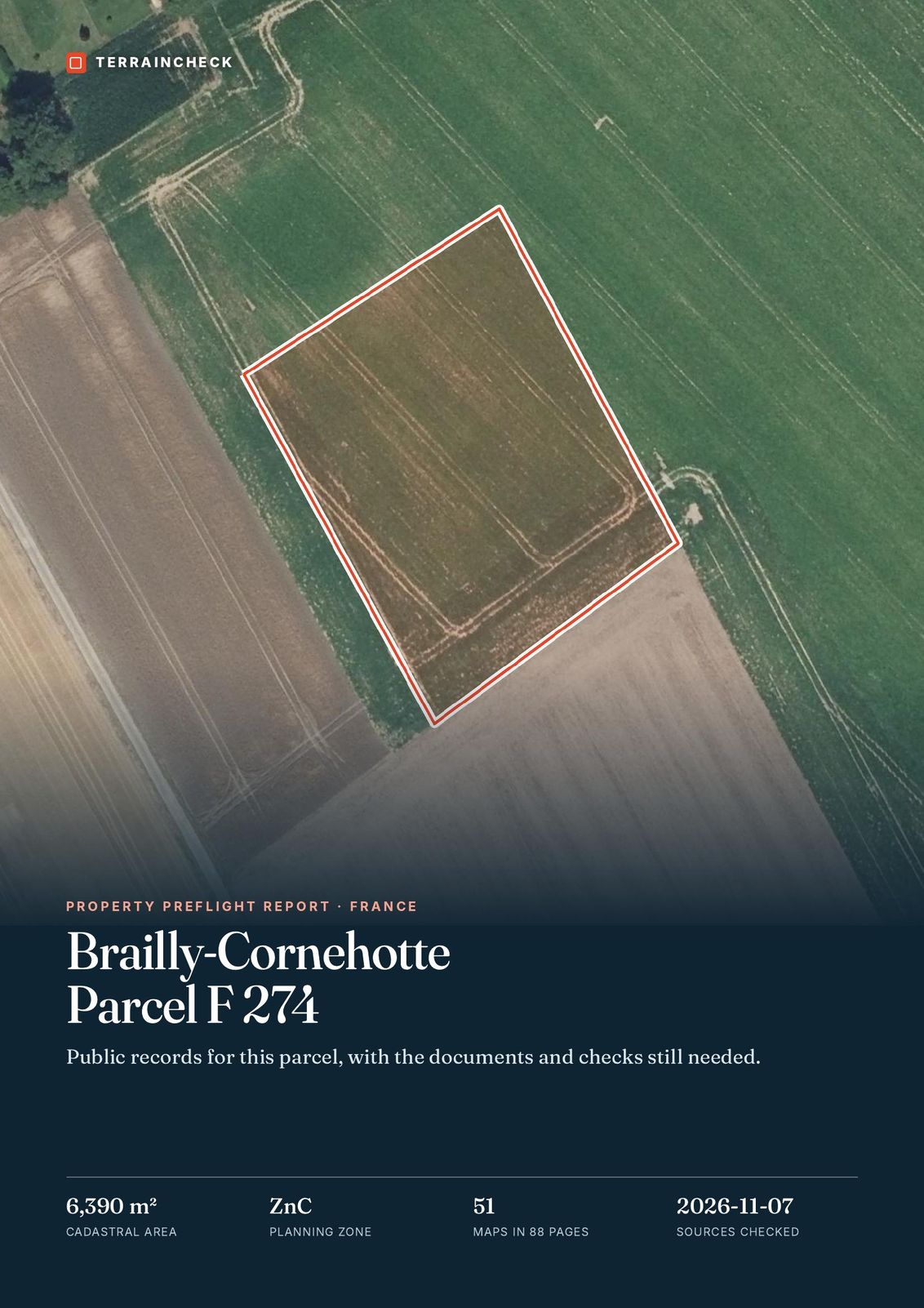
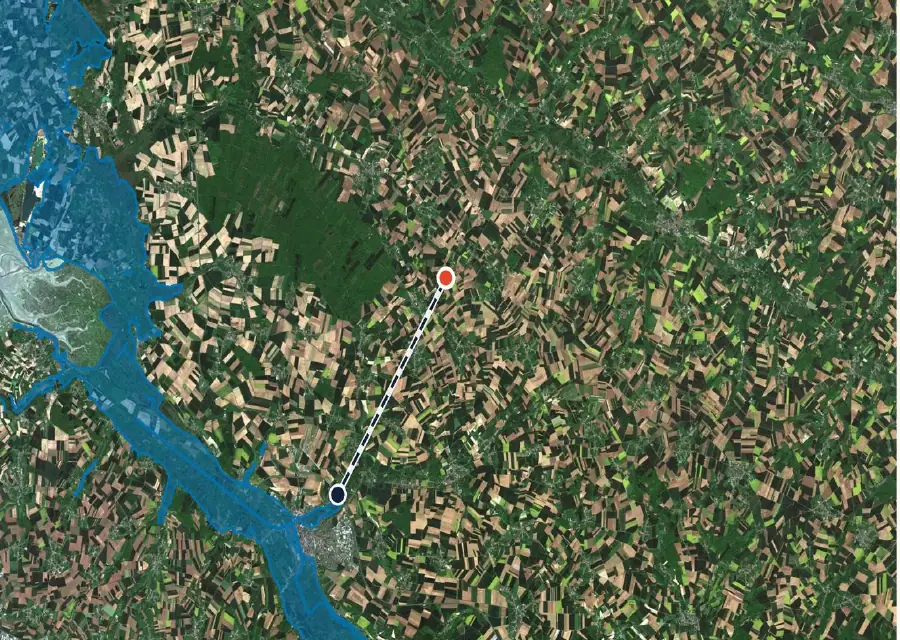
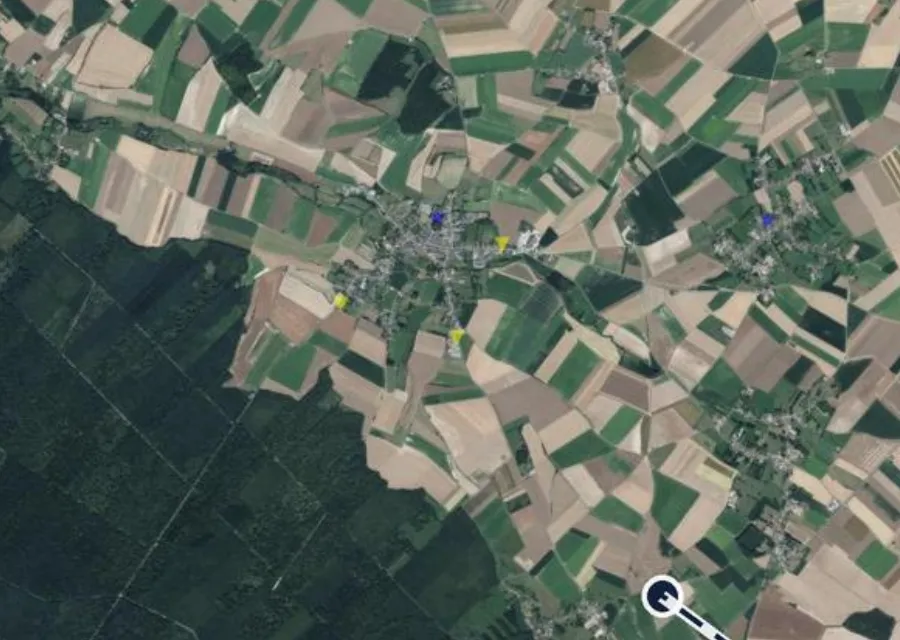
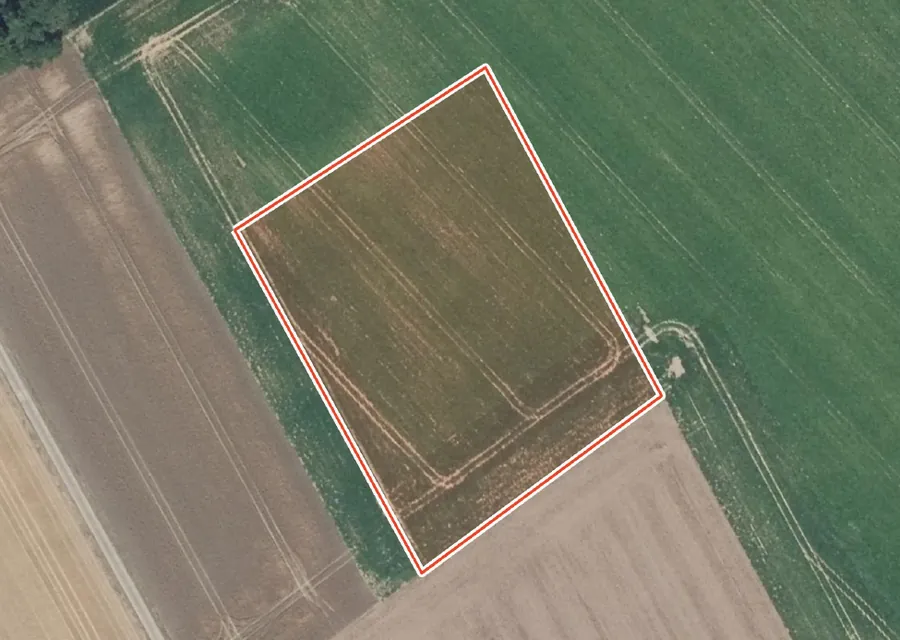
In the report: hazards for parcel F 274
Before the preliminary contract: documents to ask for
- Risk statement received at the first viewing, under six months old, with the right cadastral reference.
- Clay map checked; at medium or high exposure, outside sectors where single-family houses are not allowed, preliminary geotechnical study attached to the draft contract.
- Seller’s written answer on a classified installation (known hazards, substances if they ran it), a soil information sector and a mine (known hazards).
- Any building on the land: the notaire’s view on the building diagnostics.
- Plot created by a division: boundary survey statement in the contract.
Next: the order of checks before you sign the compromis (preliminary contract) and the clay hazard map.
Common questions
Do I need an energy rating (DPE) to sell bare land?
No. The energy performance diagnosis belongs to the article L271-4 file, which is for the sale of a built property. Land with no building does not need one.
Is a risk statement required for land?
Yes, if the land lies in a zone listed in article R125-23 of the Environment Code: risk prevention plan, seismic zones 2 to 5, radon level 3, coastline retreat or brush clearing. It is attached to the preliminary contract or, if there is none, to the deed.
Who pays for the preliminary geotechnical study?
The law says the seller provides it. Its price is set by quote. It is due only for unbuilt buildable land in a medium or high clay exposure zone, outside sectors where single-family houses are not allowed.
What happens if the seller gives no risk statement?
If the duty to inform is not met, the buyer may seek cancellation of the contract or ask the court to reduce the price (art. L125-5, V).
Keep reading
Viewing a plot? Prepare your questions for the seller
Pick the parcel on the map. The report sets out the published hazards (clay, seismic zone, radon, flooding), the PLU zone and recent sales nearby, each with its source and date and explained in English. It does not replace the risk statement the seller signs. Free check, PDF report for €29 (€39 in French and English).