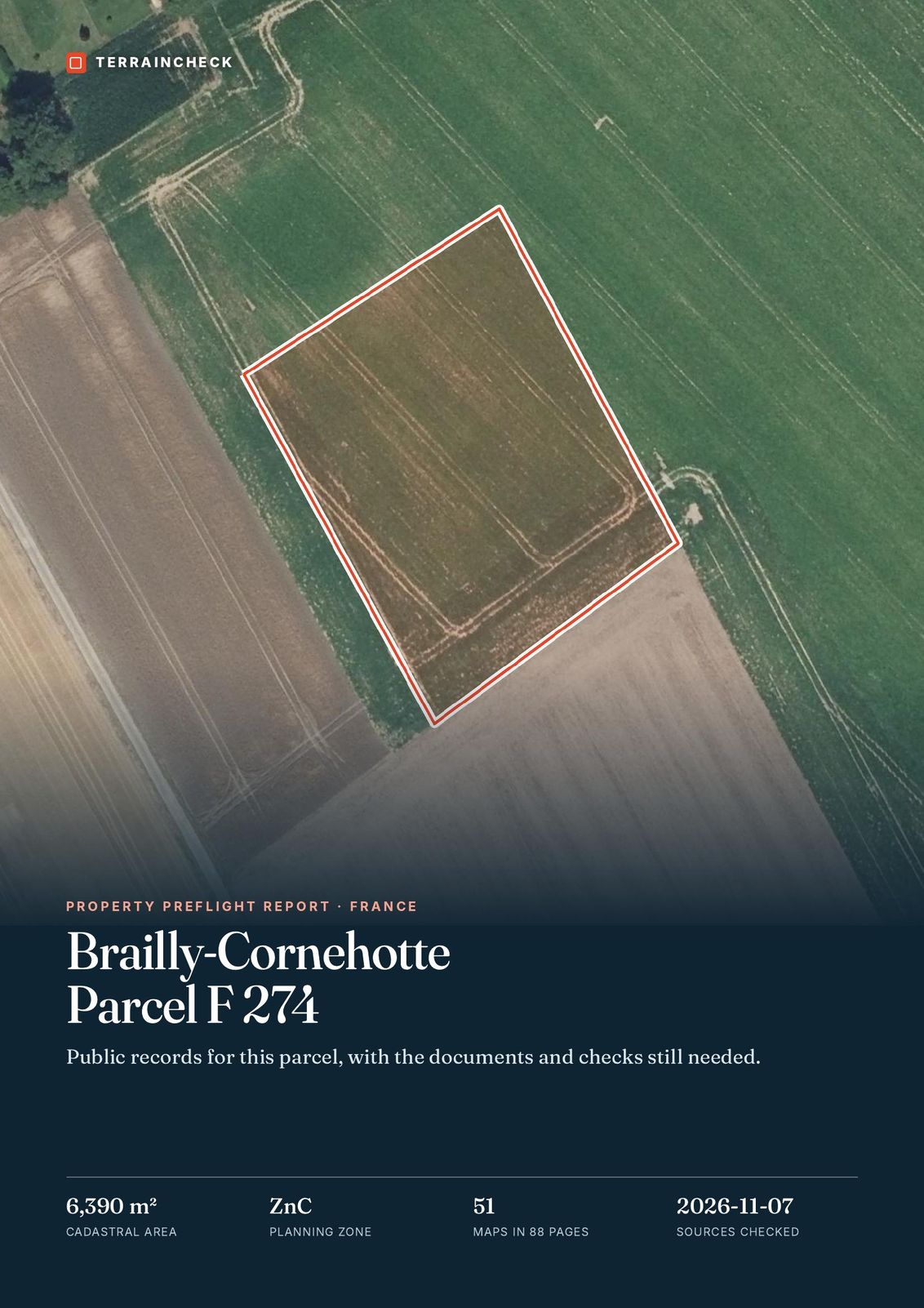
Pillar: Buying building land in France
Unilateral promise to sell or compromis: what changes for the buyer of a plot in France
In France, a compromis (two-way preliminary contract) binds both seller and buyer of a plot, while a unilateral promise binds only the seller: you keep an option to buy, in return for a holding fee that is freely agreed, subject to special rules for planned subdivisions and for promises over 18 months. If the promise is signed without a notaire (the French public official, a type of notary, who handles property sales), have it registered with the tax office within ten days of your acceptance (€125), or it is void.
In brief
- Compromis de vente (the binding two-way preliminary contract): seller and buyer are both committed. Article 1589 of the Civil Code says a promise to sell is a sale once both parties agree on the property and the price.
- Promesse unilatérale de vente (unilateral promise to sell): the seller may not sell to anyone else during the option period. You decide whether to buy; if you do not take up the option, you lose any holding fee paid, unless a condition precedent failed.
- Signed without a notaire, the unilateral promise is void unless registered with the tax office within ten days of your acceptance. Fixed duty: €125.
- Stand-alone building plot: no cooling-off period, according to Service-Public, the government information site. A plot in a lotissement (planned subdivision) with a development permit: the developer’s promise becomes final only after a 10-day cooling-off period.
On this page
Who is bound to what
The compromis, which lawyers call a promesse synallagmatique, binds both sides: the seller must sell and the buyer must buy, subject to the conditions precedent written into it. For land “already divided or to be divided” into plots, article 1589 adds its own rule: acceptance is established by paying a down payment and taking possession of the land.
The unilateral promise is defined in article 1124 of the Civil Code: the seller grants the buyer the right to opt for a sale whose price and property are already set; only the buyer’s consent is missing. For the whole life of the promise, the seller may neither keep the plot on the market nor sell it to someone else.
A seller who has second thoughts cannot pull out: revoking the promise during the option period “does not prevent the formation of the promised contract”. A sale to a third party who knew of the promise is void. Under a compromis, the party who fails to perform can, after formal notice, be made to perform, unless that is impossible or its cost is manifestly out of proportion (article 1221).
| Point | Unilateral promise | Compromis |
|---|---|---|
| Who is bound | The seller only | Seller and buyer |
| Money paid | Holding fee, freely agreed | Deposit, as a rule 5 to 10% |
| Form | Notarial, or private and registered within 10 days | Private or notarial |
| Buyer walks away | Option not taken up: seller keeps the fee | Seller keeps the deposit |
| Seller backs out | The sale still forms if the option is taken up | Performance after formal notice (art. 1221) |
| Condition precedent fails | Fee returned | Deposit returned in full |
| Over 18 months, private seller | Notarial deed, fee of at least 5% | Notarial deed |
| Alsace-Moselle | Deed within 6 months according to Service-Public; ask the notaire when the period starts | Private contract: final deed, or a court claim if one party refuses, within 6 months |
Eight differences for a building plot. Sources: Légifrance: Civil Code, article 1124; Légifrance: Civil Code, article 1589-2; Légifrance: Construction and Housing Code, article L290-1; Service-Public: preliminary contract for a stand-alone building plot; Légifrance: Act of 1 June 1924 (Alsace-Moselle), article 42. Accessed 13 November 2026.
Holding fee, deposit and registration
Under a unilateral promise, the indemnité d’immobilisation (holding fee) pays for the exclusivity the seller grants you. The amount is freely agreed; Service-Public says it is, as a rule, 5 to 10% of the price. It is paid on signing, ideally to the notaire into a blocked account, and comes off the price if the sale goes through.
If the conditions precedent are not met, you get it back, provided you can show you took the steps (loan, permit). If you change your mind or let the option period lapse, the seller keeps it. A deposit under a compromis works the same way: returned if a condition fails, kept if you walk away.
For a plot sold for €50,000, 5% is 50,000 × 0.05 = €2,500 and 10% is €5,000. In a lotissement with a development permit (permis d’aménager), the holding fee may not exceed 5% of the price: €2,500 at most in this example.
Registering a unilateral promise
Article 1589-2 of the Civil Code makes a unilateral promise to sell real property “null and void” unless it is a notarial deed or a private contract registered within ten days of its acceptance by the buyer. Signed before a notaire as a notarial deed, it is not subject to this deadline. Signed at an estate agent’s or between private parties, it has to be filed with the tax office’s registration service.
Cost: the fixed duty of €125 under article 680 of the General Tax Code, which the tax authority’s guidance (BOFiP) applies to unilateral promises. Service-Public speaks of “10 working days”, the Civil Code of “ten days”: do not wait for the last day.
Two rules cover long promises. A promise to sell, unilateral or compromis, lasting more than 18 months including extensions, is void unless drawn up by a notaire, where the seller is a private individual (article L290-1 of the Construction and Housing Code). A unilateral promise in that case must provide a holding fee of at least 5% of the price, paid or guaranteed into the notaire’s hands (L290-2).
Cooling-off: what the law says for land
The ten-day cooling-off period in article L271-1 of the Construction and Housing Code covers a non-professional buyer of a building used as a home, building such a home, off-plan sales and a few other contracts it lists. Bare land is not on that list. For a stand-alone building plot, Service-Public states plainly that the buyer has no right of withdrawal, whether the preliminary contract is a promise or a compromis.
A lotissement that needs a development permit is the exception. No promise may be given there, and no down payment accepted, before the permit is issued. After that, the developer may grant a unilateral promise, which “becomes final only at the end of a ten-day period” during which you may withdraw. If you withdraw, your money is returned within 21 days from the day after the withdrawal.
A lotissement created by a simple prior declaration (déclaration préalable) gives no such right, according to the Service-Public page on subdivisions. Clauses and conditions precedent: see our guide to the preliminary sale agreement for land.
Sources: Légifrance: Construction and Housing Code, article L271-1; Légifrance: Planning Code, article L442-8; Service-Public: preliminary contract for a plot in a lotissement. Accessed 13 November 2026.
From signing to the final deed: the order at the notaire’s
- Before signing, run the checks before the compromis. Time and cost: depend on the documents you ask for; no deadline in the texts cited.
- Signing the preliminary contract, at the notaire’s or privately. The holding fee or deposit is paid that day, ideally to the notaire into a blocked account. Drafting fee if a notaire writes it: ask for it before signing.
- Registration of a private unilateral promise with the tax office’s registration service. Cost: €125. Deadline: ten days from the buyer’s acceptance (as a rule, the day the buyer signs).
- Plot in a lotissement with a development permit: the promise is sent to you by recorded-delivery letter or handed over; you have 10 days, from the day after the letter is first presented or handed over, to withdraw.
- Option period and conditions precedent: the deadlines are set in the contract. Service-Public cites 3 months as usual for taking up the option. You take it up by recorded-delivery letter or before the notaire, as the promise provides.
- Final deed (acte authentique), signed before the notaire, who checks the seller’s title, the planning position and that pre-emption rights have been cleared. For a stand-alone plot there is no reflection period. Costs are in notary fees for land.
Sources: Légifrance: Act of 1 June 1924 (Alsace-Moselle), article 42; Service-Public: preliminary contract for a stand-alone building plot. Accessed 13 November 2026.
Which one to accept
A unilateral promise leaves you free until the option period ends, which helps when the project depends on a permit, a mortgage or a survey you do not yet have. The price of that freedom is the holding fee, lost if you walk away without a condition precedent having failed. A compromis commits you more: walk away without a failed condition and you lose the deposit, and the seller can ask for the contract to be performed.
Either way, the conditions precedent protect you: building permit granted, no third-party appeal, mortgage. When a developer hands you a unilateral promise for a plot, that is the form provided for in article L442-8 of the Planning Code: check that the development permit has been issued and that the fee is no more than 5%. If the plot comes tied to a builder, read land tied to a builder.
In the report: the page to take along before you commit
Before you sign a promise or a compromis
- I know which form I am being offered: unilateral promise or compromis.
- The holding fee or deposit is written down, paid to the notaire, and the cases where it comes back are listed.
- Private promise: registration planned within ten days of acceptance.
- Option period, deadline for each condition precedent and last date for the deed are written down.
- Total length over 18 months with a private seller: notarial deed.
- Plot in a lotissement needing a development permit, unilateral promise from the developer: permit issued, fee of 5% at most.
- Plot in a lotissement created by prior declaration: decision of no objection obtained, copy requested.
Next: how the final deed signing works and the urban pre-emption right, which the notaire clears before the deed.
Common questions
Can the seller withdraw a unilateral promise before the option period ends?
They can say so, but it changes nothing: under article 1124 of the Civil Code, revoking the promise during the option period does not prevent the sale from forming if the buyer takes up the option. A sale to a third party who knew of the promise is void.
What happens to the holding fee if planning permission is refused?
If obtaining the building permit is one of the conditions precedent in the promise and it fails, the fee is returned. Service-Public adds that the buyer has to show the application was actually made.
Can a promise last more than 18 months?
Yes, but where the seller is a private individual it must then be drawn up by a notaire, extensions included (article L290-1 of the Construction and Housing Code). A unilateral promise must also provide for a holding fee of at least 5% of the price, paid or guaranteed with the notaire.
Can I sign a unilateral promise to buy?
Yes, but article 1589-1 of the Civil Code makes it void if any payment is demanded from the buyer or received from them, in whatever form.
Keep reading
Compromis de vente for land in France: the clauses to check before you sign
Signing the final deed (acte authentique) for land in France: from the compromis to the title
Buying building land in France: checks before the compromis
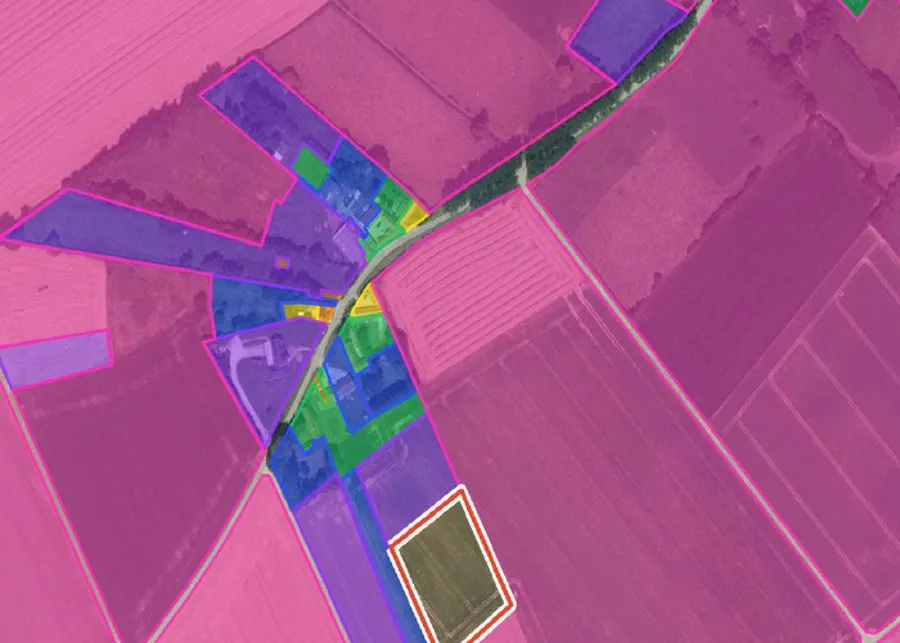
Buying a plot in a French subdivision (lotissement): the developer’s promise, the covenants and any duty to build
Use the option period to check the plot
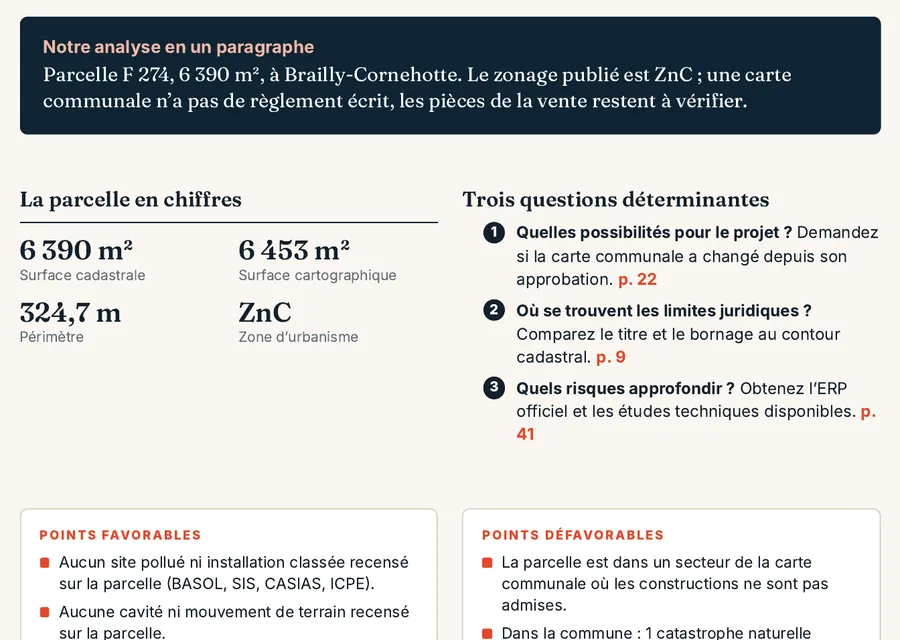
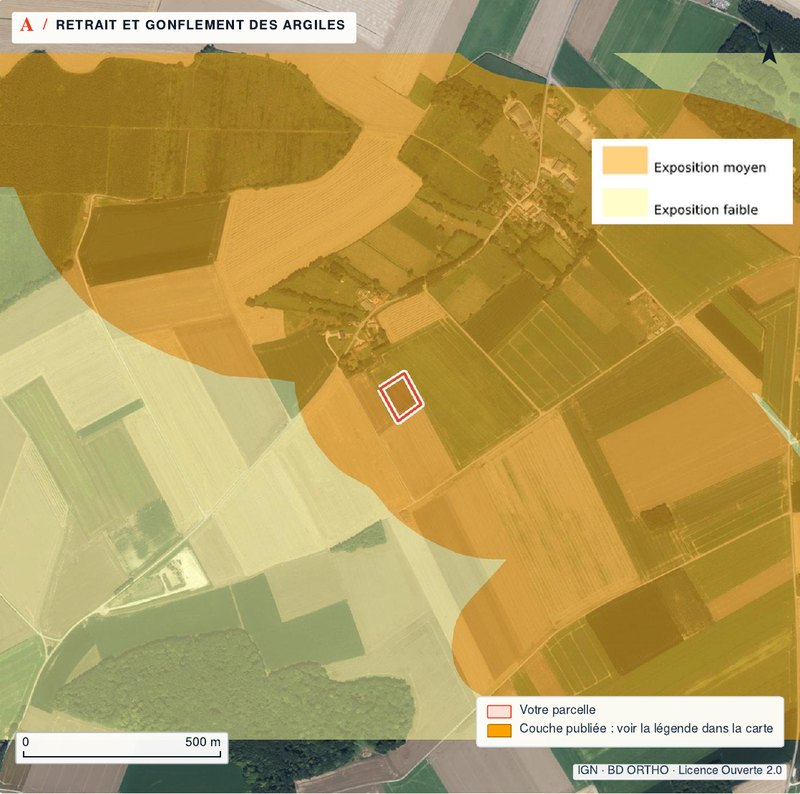
The report brings together the public records on the parcel: cadastral outline, zone in the local plan (PLU) or carte communale, natural hazards, clay soils and nearby sales, each with its source and date, explained in English. It does not replace the notaire and does not name the owner. Free check, PDF report for €29 (€39 in French and English).