Pillar: Buying building land in France
Can agricultural land become buildable in France? Procedure, timescales and taxes
In France, where a PLU (the local zoning plan) or a carte communale applies, agricultural land zoned as non-building becomes buildable through a change to that document decided by the commune or the competent inter-municipal body: a revision or amendment of the PLU or a revision of the carte communale, each with a public consultation; without a document, the national planning rules (RNU) apply instead. Municipal PLUs approved from 2020 to 2024 took a median of about 5 years 5 months from start to approval. First step: find the document covering the plot on the Géoportail de l’urbanisme, then ask the mairie (town hall) whether a procedure has started.
In brief
- Under a PLU, since 26 May 2026 the plan is revised when the change affects the policies of its PADD (the plan’s planning-policy statement), and amended otherwise (articles L153-31 and L153-36). Procedures started before that date keep the old rules.
- At 31 December 2024, 15,945 of France’s 34,931 communes (municipalities) had a planning procedure under way (SuDocUH, planning ministry). A procedure under way makes no plot buildable.
- On the first sale after rezoning the seller pays the national tax (General Tax Code, art. 1605 nonies: nothing if the price is under 10 times the inflation-adjusted purchase price, otherwise 5% of the gain, and 10% on the part of the gain above 30 times that price; other exemptions) and, if the commune has adopted it, a 10% flat-rate tax (art. 1529), under conditions.
On this page
Who decides, and on which document
Zoning is not up to the owner or the buyer but to the planning document. A PLU revision is started by a resolution of the commune or the competent inter-municipal body (a grouping of communes; art. L153-32); an amendment is started by the mayor or the president of the inter-municipal body (art. L153-37). The owner can only make their case during the consultation (art. L103-2) and the public inquiry (art. L153-19).
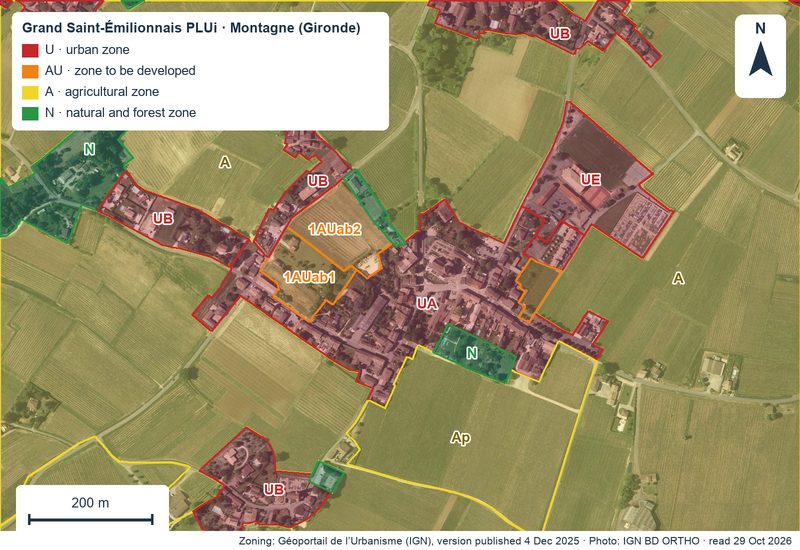
Under a PLU, municipal or inter-municipal (PLUi), the plot has to move from an agricultural or natural zone to an urban or future-development zone (U or AU). Under a carte communale, a simpler zoning map used by small communes, it has to enter a sector where building is allowed. With no document, the national rules (RNU) only allow building in the built-up parts of the commune (art. L111-3); their exceptions are covered in building a house on agricultural land.
Sources: Planning Code, art. L153-32; Planning Code, art. L153-37; Planning Code, art. L111-3; Planning Code, art. L103-2; Planning Code, art. L153-19. Accessed 12 November 2026.
PLU: revision or amendment since 26 May 2026
Act no. 2025-1129 of 26 November 2025, which simplified planning and housing law, rewrote these procedures from 26 May 2026. A PLU is revised when the authority decides to change the policies of the PADD, apart from cases the law assigns to an amendment (art. L153-31). Other changes go through an amendment (art. L153-36).
Some rules still quoted online have left the code: the revision required to shrink an agricultural zone or to open a future-development zone left closed for six years, the light revision and the simplified amendment. They still govern procedures under way on 26 May 2026.
Two rules weigh on farmland. An amendment that opens a zone to development needs a reasoned resolution on its usefulness, given the capacity still unused in areas already built up (art. L153-38). And the PADD may only plan to open natural, agricultural or forest land if a densification study shows that the building capacity of built-up areas is already in use (art. L151-5): this is where the national goal of cutting land take enters the PLU.
Sources: Planning Code, art. L153-31; Planning Code, art. L153-36; Act no. 2025-1129 of 26 November 2025, art. 1; Planning Code, art. L153-38; Planning Code, art. L151-5. Accessed 12 November 2026.
Under a carte communale
A carte communale is revised the way it is drawn up (art. L163-8): an opinion from the chamber of agriculture, a public inquiry or online participation, approval by the municipal council or the inter-municipal body, then by the prefect (the State’s representative in the département), who has two months; without an answer, the map is deemed approved (art. L163-7).
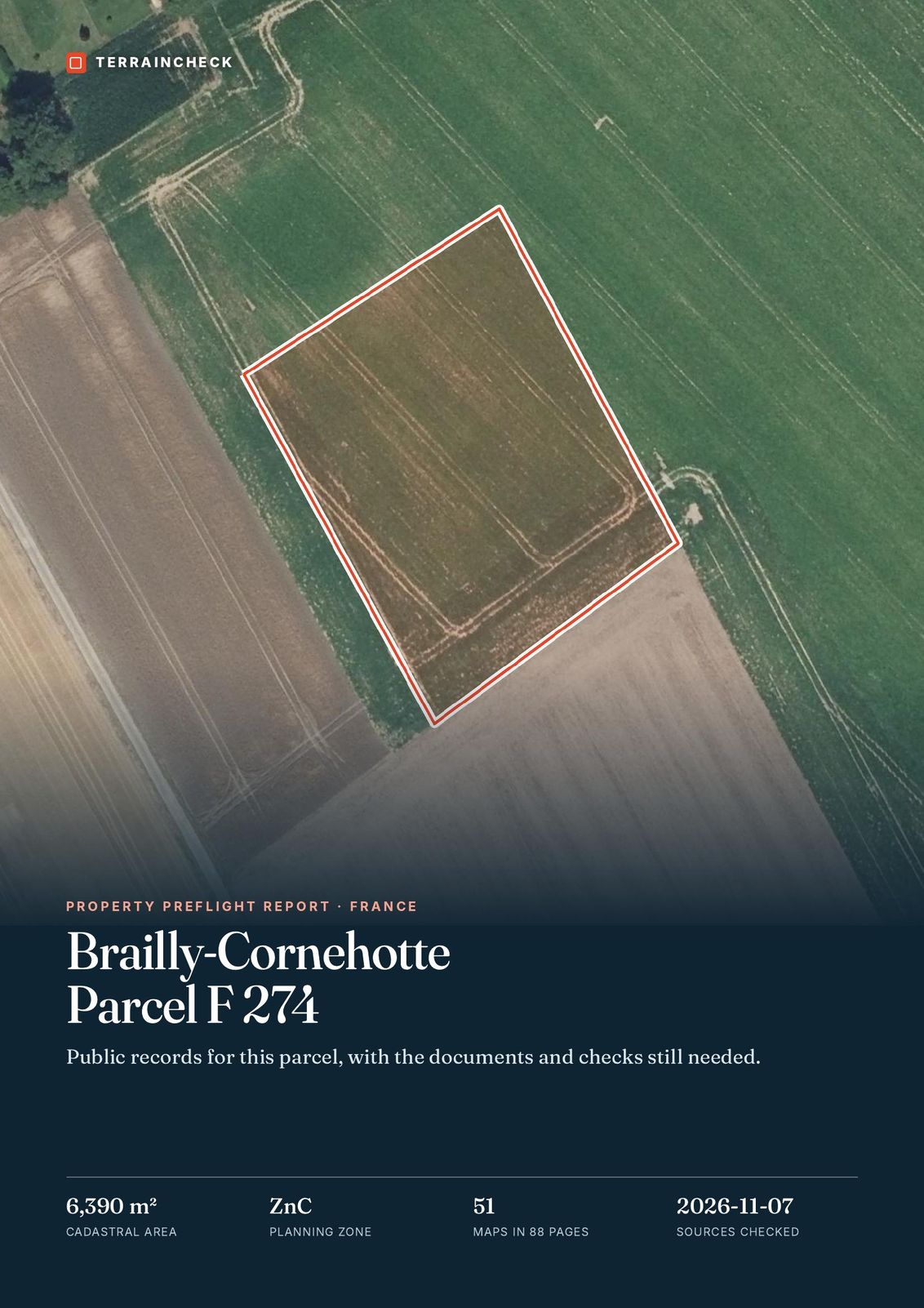
Example: in Brailly-Cornehotte, the commune in our sample report, the carte communale dates from 25 February 2020 and a PLUi was started on 12 July 2022 by the Ponthieu-Marquenterre community of communes (SuDocUH). Until it is approved, the carte communale applies.
Sources: Planning Code, art. L163-8; Planning Code, art. L163-4; Planning Code, art. L163-5; Planning Code, art. L163-6; Planning Code, art. L163-7; SuDocUH (planning ministry, DGALN), planning documents by commune, 31/12/2024 (data.gouv.fr). Accessed 12 November 2026.
How long it takes: the figures
The texts set no overall duration. We measured it in the ministry’s SuDocUH file, from start to approval, for documents in force approved from 2020 to 2024 and drawn up or revised as a whole; a targeted amendment can be shorter.
| Document | Approved 2020–2024 | Median | Fastest quarter: up to | Slowest quarter: over |
|---|---|---|---|---|
| Municipal PLU | 2,017 | 5 years 5 months | 4 years 1 month | 7 years 3 months |
| Inter-municipal PLU | 209 | 5 years 5 months | 4 years 3 months | 6 years 9 months |
| Carte communale | 344 | 3 years 8 months | 2 years 7 months | 5 years 2 months |
TerrainCheck calculation on SuDocUH at 31 December 2024 (overseas départements included): each document counted once, from start to approval, rounded to the month. Sources: SuDocUH (planning ministry, DGALN), planning documents by commune, 31/12/2024 (data.gouv.fr). Accessed 12 November 2026.
Taxes on the first sale
The first sale for value of bare land that has become buildable can trigger two separate taxes, payable by the seller, not the buyer; the flat-rate tax applies only to some sellers. Later sales are outside both.
| Flat-rate tax (General Tax Code, art. 1529) | National tax (General Tax Code, art. 1605 nonies) | |
|---|---|---|
| Who adopts it | The commune, by council resolution; or the competent inter-municipal body, with the agreement of all its communes | The law |
| Land covered | Made buildable by a PLU (U zone or AU zone opened to development) or a carte communale | Made buildable after 13 January 2010 by a PLU, a carte communale or article L111-3 |
| Basis | Sale price minus inflation-adjusted purchase price; with no reference, 2/3 of the sale price | Sale price minus inflation-adjusted purchase price, cut by one tenth a year beyond the eighth year after rezoning |
| Sellers covered | Individuals and companies taxed under art. 150 U (private capital gains); non-residents liable under art. 244 bis A; not companies paying corporation tax | Any seller: individual, company or other legal entity, non-resident |
| Rate | 10% of the basis | 5% of the basis if the price is more than 10 times the inflation-adjusted purchase price; above 30 times, 5% on the part of the basis up to 30 times that price and 10% on the rest |
| No tax if | Buildable for more than 18 years; price under 3 times the purchase price; certain sales (150 U, II, 3° to 8°) | Price under €15,000 or under 10 times the adjusted purchase price; public-interest declaration for compulsory purchase; more than 18 years after rezoning |
Versions in force on 12 November 2026. Art. 1529: the 3-times test uses the purchase price actually paid, not adjusted; a resolution applies to sales from the first day of the third month after it. Sources: General Tax Code, art. 1529; General Tax Code, art. 1605 nonies; BOFiP BOI-RFPI-TDC-10-10 (art. 1529, scope); BOFiP BOI-RFPI-TDC-10-20 (art. 1529, calculation); BOFiP BOI-RFPI-TDC-20-10 (art. 1605 nonies, scope); BOFiP BOI-RFPI-TDC-20-20 (art. 1605 nonies, method and examples). Accessed 12 November 2026.
Example (worked hypothesis): land bought for €10,000, or €12,000 once adjusted for inflation, rezoned in 2027 and sold for €150,000 in 2029, with no deductible selling costs. National tax: the price is 12.5 times the adjusted purchase price, between 10 and 30, so 5% of €138,000 (150,000 − 12,000) = €6,900. Flat-rate tax, if the commune has adopted it: €150,000 is more than 3 times €10,000, so 10% of €138,000 = €13,800.
Above 30 times, the tax authority’s own example: sale €287,000, adjusted purchase price €7,000, basis €280,000, ratio 41. National tax: 5% of €210,000 (30 × 7,000) + 10% of €70,000 = €17,500, not 10% of the whole basis.
These taxes do not replace French capital gains tax on property, which has its own rules, including for non-residents. The notaire (the public notary who handles property sales) works out what is due; the return goes with the deed. For the buyer’s side, see notary fees when buying land.
Before buying or selling
- Find the document and the zone. Where: Géoportail de l’urbanisme, the national planning portal. Cost: nothing. Time: ten minutes (TerrainCheck estimate). Method: checking whether land is buildable.
- Ask whether a procedure has started. Where: the mairie (town hall) or the inter-municipal body: the starting resolution, its objectives, the inquiry file if open. Cost: nothing. Time: the texts cited here set no deadline for an answer.
- Read the PADD and the draft rules. Where: the consultation or inquiry file. Cost: nothing. Time: one to two hours (TerrainCheck estimate). Guidance: reading the PLU before buying.
- Pay only for what is buildable today. If the price anticipates rezoning, make the sale conditional on a positive certificat d’urbanisme opérationnel (a planning certificate for a specific project) or on the permit: see the clauses of the compromis, the preliminary sale contract. Cost: nothing. Certificate: 2 months from receipt of the application.
- Sellers: have the taxes worked out before setting the price. Where: the notaire, with the purchase deed, the rezoning date and any resolution of the commune. Cost and time: set by the notaire.
Sources: Géoportail de l’urbanisme (national planning portal); Service-Public: planning certificate. Accessed 12 November 2026.
In the report: where the building line runs
To check
- Document in force (PLU, PLUi, carte communale or RNU) and zone noted, with the approval date.
- Procedure under way: starting resolution obtained, objectives read, stage reached.
- Price compared with farmland until the rezoning is in force.
- Condition precedent (planning certificate or permit) if the price anticipates rezoning.
- Seller’s side: taxes under articles 1605 nonies and 1529 estimated by the notaire.
For buying the farmland itself (the Safer land agency, agricultural leases), see buying agricultural land as a private buyer.
- Can you build a house on agricultural land in France? A zones, carte communale, national rules and farmers’ homes
- France’s ZAN land-take rules: could your plot lose its building status, and what to check before buying
- Is a plot buildable in France? How to check the zone, utilities, easements and the official answer
Common questions
Can an owner ask for their farmland to become buildable?
They can ask the mairie or the inter-municipal body and submit comments during consultation and the public inquiry, but the decision to revise or amend the planning document belongs to the competent authority.
How long does it take for farmland to become buildable in France?
No overall duration is set. Median time from start to approval (documents approved 2020–2024): about 5 years 5 months for a municipal PLU, 3 years 8 months for a carte communale (TerrainCheck calculation on SuDocUH).
Who pays the tax on land that has become buildable?
The seller, on the first sale for value after rezoning: the national tax under article 1605 nonies of the General Tax Code, unless exempt, and the flat-rate tax under article 1529 if the commune has adopted it, the seller falls under art. 150 U or 244 bis A and its other conditions are met.
Keep reading
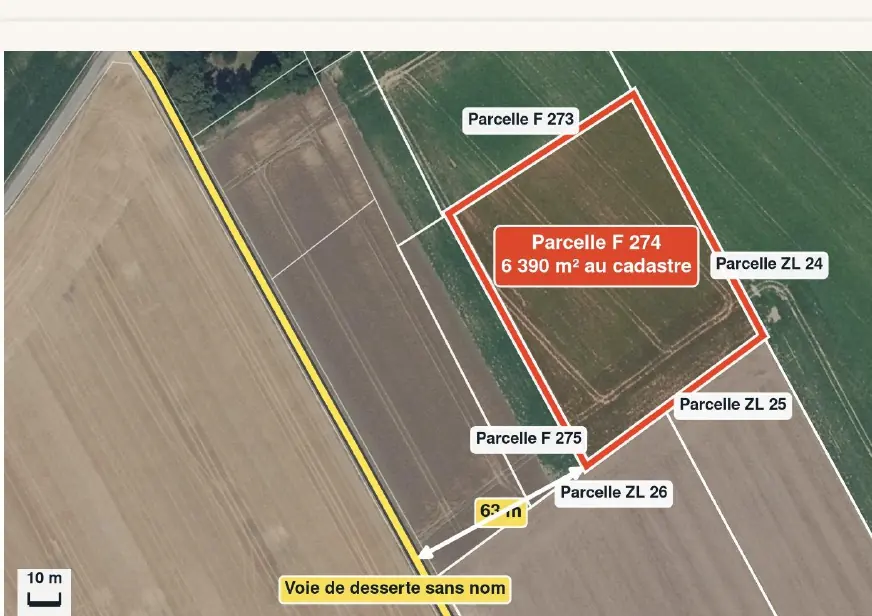
Can you build a house on agricultural land in France? A zones, carte communale, national rules and farmers’ homes
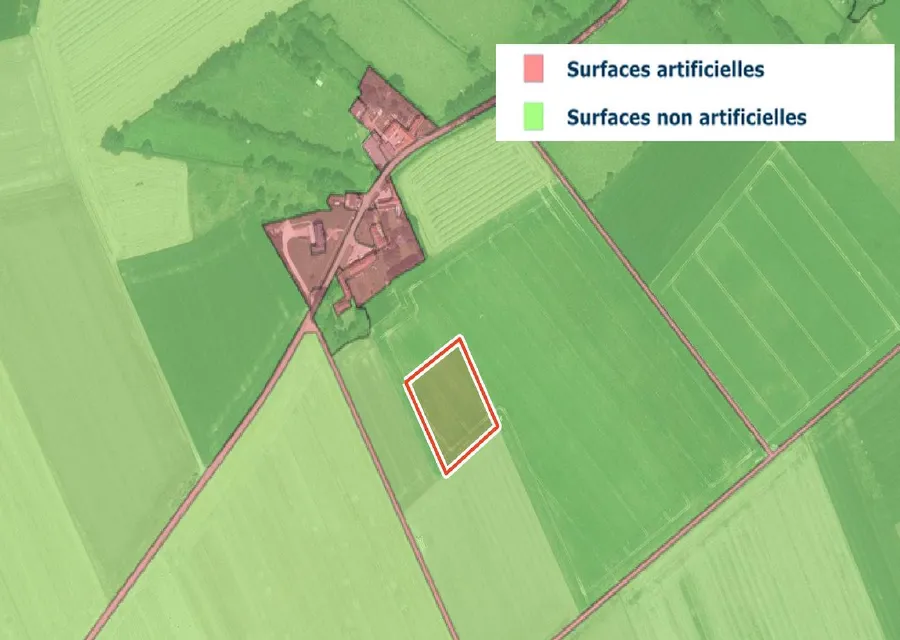
France’s ZAN land-take rules: could your plot lose its building status, and what to check before buying
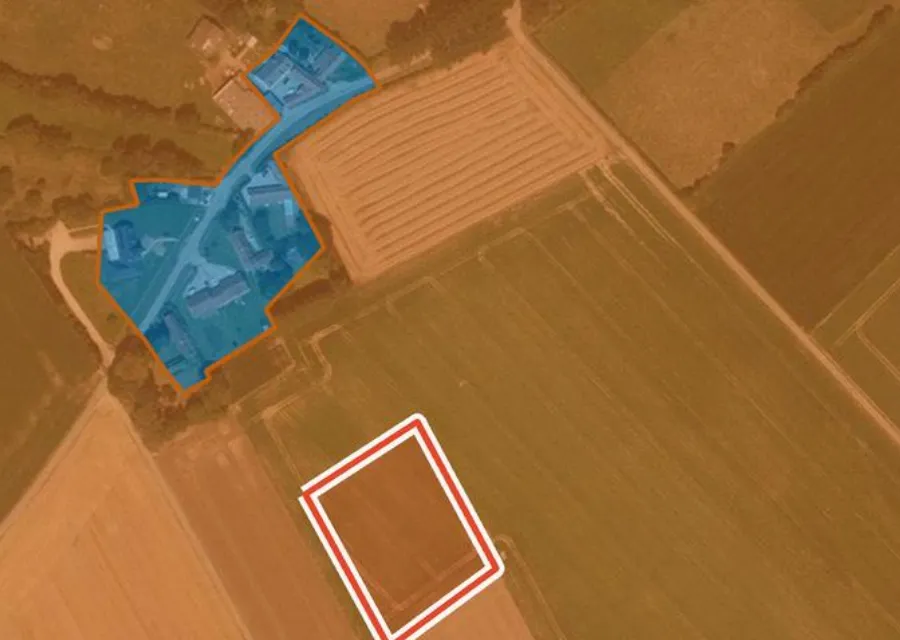
Is a plot buildable in France? How to check the zone, utilities, easements and the official answer
Reading the PLU before you buy: zone, rules, easements and pending changes
A plot’s zoning, before you pay for it
Pick the parcel on the map: the report shows the planning document and the sector covering it, the neighbouring sectors, recorded easements and hazards, each with its source and date, in English. It does not predict future zoning. Free preview, PDF report for €29 (€39 in French and English).