Pillar: Buying building land in France
Buying farmland in France when you are not a farmer: Safer, sitting tenant, right to farm
Yes. In metropolitan France a private individual can buy agricultural land: the Rural Code rules described here do not require the buyer to be a farmer, and the authorisation to farm, where it is needed, concerns whoever works the land. But the Safer, the regional rural land agency, and, if the land is let, the sitting tenant farmer, under conditions, may buy in your place. First step: ask the seller in writing whether the parcel is let, to whom and since when.
In brief
- Safer (the regional rural land agency): it may buy in your place (pre-emption). It has two months from the day it receives notice of the sale from the notaire, the notary who handles the sale; silence counts as a waiver, and a request to visit the property suspends the period.
- Tenanted land: a sitting tenant farmer who meets the conditions of article L. 412-5 of the Rural Code also has two months to pre-empt. If the tenant does not buy, you cannot evict a tenant whose lease is a notarial deed or has a date certaine (a date binding on third parties, explained below).
- Farming it: the authorisation to farm (autorisation d’exploiter) concerns whoever works the land, not the buyer. It is required in the cases of article L. 331-2; you apply to the DDT(M), the State’s land office in the département.
On this page
Who can buy in your place
A right of pre-emption (droit de préemption) is a statutory right to buy first: its holder takes the buyer’s place. This guide deals with the two specific to farmland, the Safer’s and, if the land is let, the tenant farmer’s. Those of the State, public authorities and public bodies, among others, take precedence over the Safer’s (article L. 143-6).
| Safer | Sitting tenant farmer | |
|---|---|---|
| Sales covered | Agricultural property and bare land with an agricultural purpose, in the zones set by decree for each Safer. | Land let under a farm lease (bail rural), except the small parcels of article L. 411-3. |
| Time to answer | Two months from receiving the notaire’s notice; suspended if the Safer asks to visit the property. Silence: waiver. | Two months from receiving the notice. Silence: waiver. |
| Disagreement on price | The Safer makes an offer at its own price; the seller has six months to respond. | The tenant may ask the farm lease court (tribunal paritaire des baux ruraux) to set the value. |
French Rural Code (code rural et de la pêche maritime), as in force on 12 November 2026. Sources: Rural Code, art. L. 143-1 to L. 143-16: Safer pre-emption; Rural Code, art. L. 412-1 to L. 412-13: the tenant’s pre-emption. Accessed 12 November 2026.
The Safer: what it can pre-empt
A Safer (société d’aménagement foncier et d’établissement rural) is a non-profit company supervised by the State; there is one for each region. The notaire notifies it of the sale two months before the planned date.
It may pre-empt sales of agricultural property and of bare land with an agricultural purpose, for example land that a local planning document places in an agricultural zone or a natural and forest zone (article L. 143-1).
A decree sets, for each Safer, the zones where it may pre-empt and, where applicable, a minimum area: before making an offer on a small parcel, ask the Safer of the region (contact details on safer.fr).
Sales it cannot pre-empt
Article L. 143-4 lists eight exceptions, including these:
- Family: transfers to relatives by blood or marriage up to the fourth degree, to co-heirs or to their surviving spouse.
- Land bought to build on: the buyer undertakes to put it to that use within three years at most. For a detached house, the land must be under 2,500 m² per house, or under the minimum plot size required by regulation if that is larger.
Even then, the notaire notifies the Safer and points out the exception.
If the Safer finds the price excessive
If it considers the price excessive, notably against prices paid in the region, the Safer sends the notaire a purchase offer on its own terms, once the Government commissioners have agreed. The seller may accept it, withdraw the property from sale or ask the civil court (tribunal judiciaire) to set the price; a seller who does not respond within six months of the notaire receiving the offer is deemed to have accepted it, unless the seller dies within that time. To place a price, see farmland prices per hectare in France.
In 2023, according to the Safer group, the Safer pre-empted 3,750 times out of 393,800 sale notices received from notaires, about 1%, and 49% of those pre-emptions ended in an acquisition.
Sources: Rural Code, art. R. 141-2-1: the notaire’s notice; Rural Code, art. R. 143-1 to R. 143-3: scope of pre-emption. Accessed 12 November 2026.
Tenanted land: the tenant comes first, then the lease carries on
If the parcel is let under a bail rural, the French farm lease, the sitting tenant may pre-empt after at least three years in farming, provided they work the land personally or with family and do not already own more than three times the area threshold of article L. 312-1. The right does not apply to the small parcels of article L. 411-3, nor where the sale benefits a relative of the owner by blood or marriage up to the third degree (unless the tenant is one too).
The notaire notifies the tenant of the price and conditions of the sale. The reply must reach the owner within two months of receipt; silence counts as a waiver. A tenant who pre-empts has two months from sending the reply to sign the final deed (acte authentique).
The Safer cannot pre-empt against a sitting tenant (or the tenant’s spouse, civil partner or substituted descendant) who has farmed the property for more than three years, holds the right of pre-emption of article L. 412-5 and complies with the rules on farm structures (article L. 143-6, as in force since 20 August 2026). The notaire passes the tenant’s decision to the Safer within eight days, and the Safer’s own two months start only when it receives that decision; it may also declare earlier that it pre-empts, provided the tenant does not exercise their right (article R. 143-7).
If the tenant does not buy, you become the landlord: a buyer cannot evict a farm tenant whose lease is a notarial deed or has a date certaine (Civil Code, article 1743). A privately signed lease only acquires one when it is registered (enregistré), when a signatory dies or when its content is recorded in a notarial deed (article 1377): the date written on the lease is not enough. A farm lease runs for at least nine years, with exceptions, and is renewed unless notice is served at least eighteen months before it ends, on a ground provided by law. Taking the land back to farm it requires, among other things, that the person who takes it farms it for at least nine years and lives on the holding or close by (article L. 411-59).
Sources: Civil Code, art. 1743; Civil Code, art. 1377: date certaine; Rural Code, art. L. 411-46 to L. 411-68: renewal and taking back. Accessed 12 November 2026.
Buying is not farming: the control of farm structures
The control of farm structures (contrôle des structures) bears not on the purchase but on the working of agricultural land, whatever the legal title of the person who works it (article L. 331-1).
You let the land to a farmer. That normally means a farm lease, and compliance is then the farmer’s business: if the tenant needs an authorisation to farm, the lease is valid only if it is granted (article L. 331-6).
You farm it yourself. Prior authorisation is required in the cases of article L. 331-2, in particular:
- where the total area farmed exceeds the threshold of the regional farm structures plan (SDREA), which the DDT(M) will tell you;
- whatever the area, where the person farming has neither a required farming diploma nor five years’ professional experience on a sufficient area (article R. 331-2);
- whatever the area, where the person farming has another occupation and non-farm income above 3,120 times the hourly minimum wage (SMIC), unless setting up gradually.
The control concerns farming within article L. 311-1: for a family vegetable plot or a paddock for your own horses, ask the DDT(M) whether the project falls under it.
The application (form Cerfa 11534*04, in French) goes to the DDT(M) of the place where the land lies. The regional prefect decides within four months of registering the complete file, six by reasoned decision; with no decision notified in that time, the authorisation is deemed granted. Farming without a required authorisation exposes you, after formal notices, to a penalty of €304.90 to €914.70 per hectare, renewable each year (article L. 331-7): for 2 hectares taken into account, €609.80 to €1,829.40.
Sources: Rural Code, art. L. 331-1 to L. 331-11: control of farm structures; Rural Code, art. R. 331-1 to R. 331-12: authorisation to farm. Accessed 12 November 2026.
What you will be able to do with the land
What you may do with the land depends on the planning document of the commune (the municipality), not on the deed of sale. In the agricultural zone (zone A) of a plan local d’urbanisme (PLU, the local plan), the rules may allow buildings needed for farming, and the extensions, annexes and changes of use provided for in articles L. 151-11 to L. 151-13 of the Planning Code, on the conditions those articles set.
Whether a house is possible depends on what the zone’s rules allow within that frame: see how to check whether land is buildable.
Sources: Planning Code, art. R. 151-23: zone A. Accessed 12 November 2026.
From listing to deed: five steps
- Identify the parcel and its zone: cadastral reference on cadastre.gouv.fr, zone in the PLU. Free; allow an hour online.
- Get the tenancy position in writing: written or oral lease (an oral farm lease is valid in France), name of the tenant, start date. Free; get the answer before the preliminary contract.
- Ask the Safer of the region about the pre-emption zone and the minimum area, and the DDT(M) if you plan to farm. The texts cited here set no deadline for these answers: agree one.
- Sign the preliminary contract at the notaire’s, subject to neither the Safer nor the tenant pre-empting. Costs of the deed: ask the notaire for a quote (see notary fees for buying land).
- Let the periods run, then sign the final deed. The statutory periods run from the notaire’s notice, not while you make your own enquiries: two months, longer if the Safer visits the property or offers its own price, or if a tenant with priority answers first. If the sale has not gone through one year after the last notice was sent, the seller has to start the procedure again (article L. 412-9).
Sources: Rural Code, art. L. 141-1-1: notice to the Safer; Service-Public: entering into a farm lease. Accessed 12 November 2026.
In the report: what covers the parcel and its surroundings
Before you sign
- Tenancy position confirmed in writing: lease, tenant farmer, start date.
- Safer of the region asked: pre-emption zone, minimum area.
- Preliminary contract made subject to the rights of pre-emption.
- If you plan to farm it yourself: DDT(M) asked before working the land.
Common questions
Do you have to be a farmer to buy farmland in France?
No, the Rural Code rules described here do not require it: the control of farm structures bears on farming the land, not on buying it. The Safer and, on the conditions of article L. 412-5, a sitting tenant may still buy first.
What happens if the Safer does not answer?
Silence counts as a waiver two months after it received the notaire’s notice. A request to visit suspends that period until the visit or the owner’s refusal; if less than a month is then left, the Safer has one month.
Can the Safer pre-empt a small parcel?
That depends on the decree for each Safer, which sets the pre-emption zones and, where applicable, a minimum area (articles L. 143-7 and R. 143-1 of the Rural Code). Ask the Safer of the region.
Keep reading
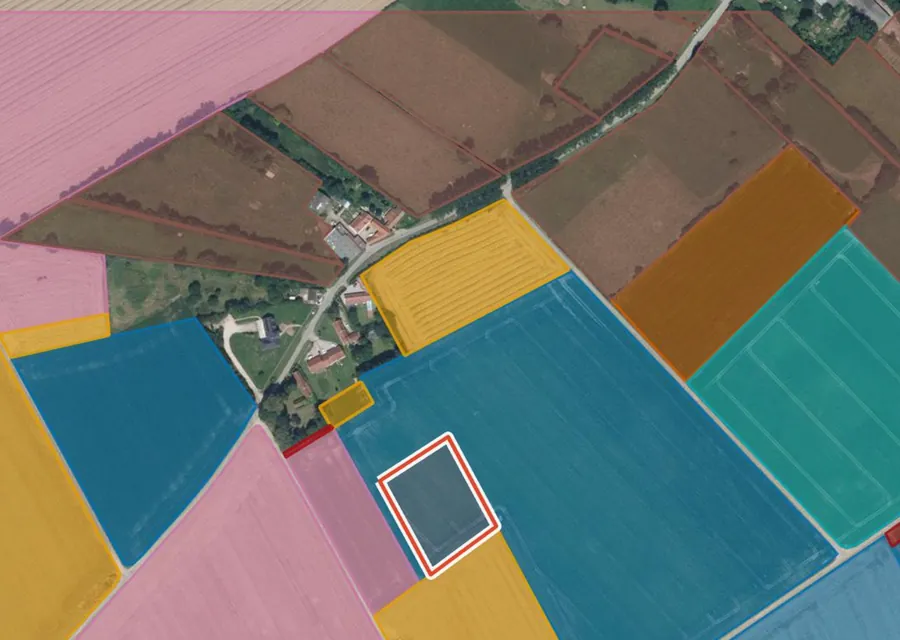
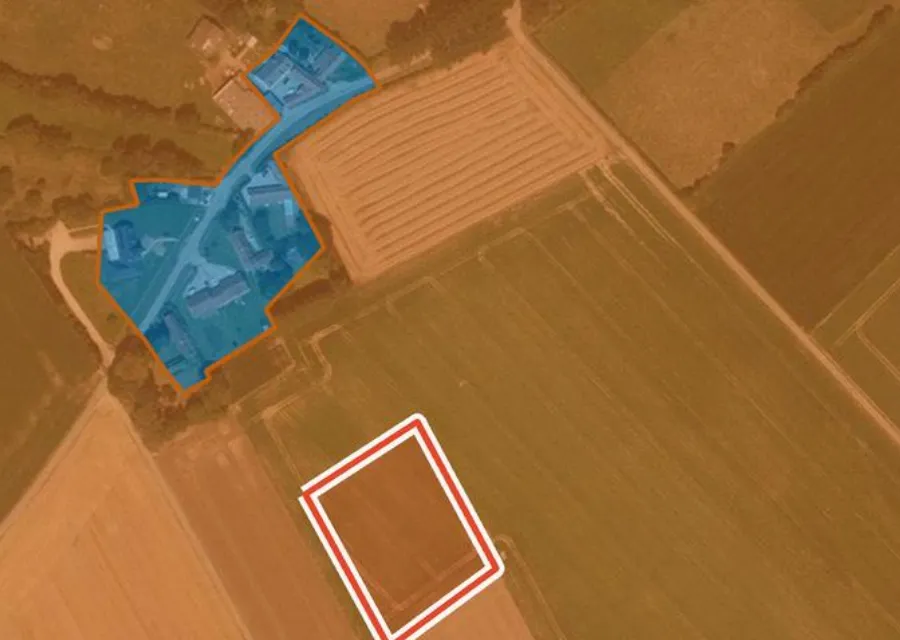
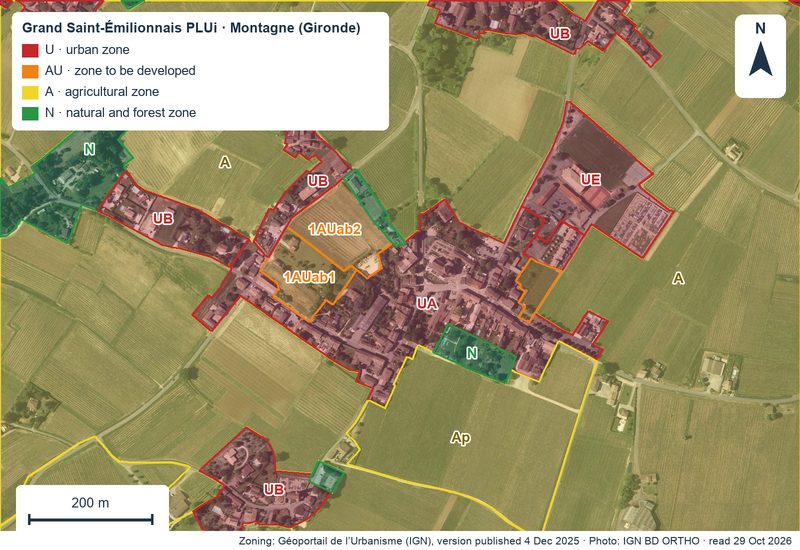
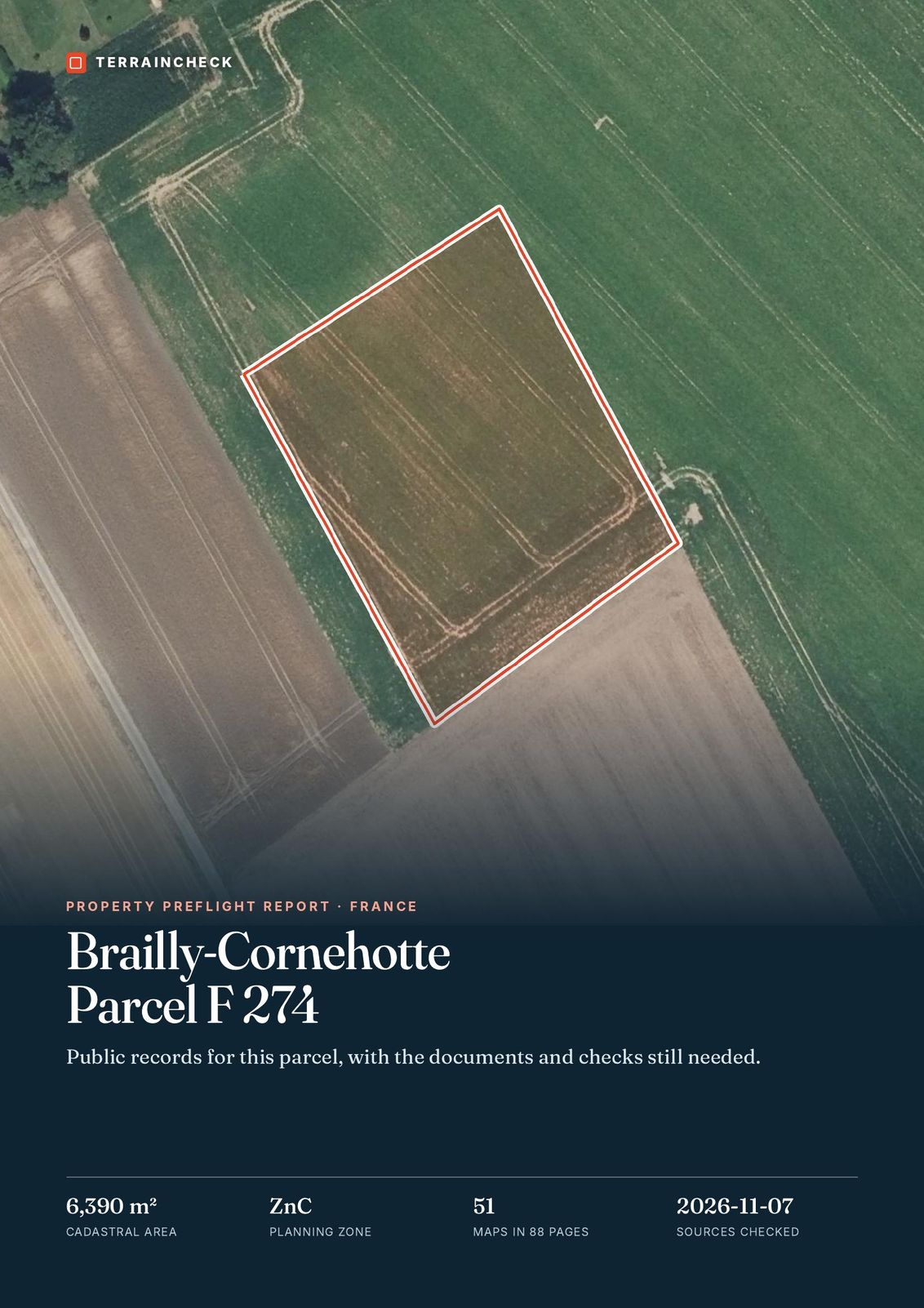
See what the public records say about the parcel
Pick the parcel on the map. The report shows the land cover around it, its planning zone, natural hazards and cadastral area, each with its source and date and explained in English. Free preview, PDF report for €29 (€39 in French and English).