Pillar: Buying building land in France
Conditions precedent in a French land purchase: loan, building permit, soil study
In France, a loan condition applies by law, for at least one month, when the compromis de vente (the binding sale agreement signed before the final deed) for land intended for a home states that the purchase will be financed by a loan; a building permit, its clearance and a soil study protect you only if they are written into that agreement. First step: agree with the notaire (the public official who records the sale) on a permit filing date and a deed date that allow 2 months of processing and the 3-month withdrawal window after the decision.
In brief
- Loan: if the compromis states that the purchase of land intended for a home will be financed by a loan, the condition applies by law and runs for at least one month; if it fails, money paid is refunded at once and in full (Consumer Code, art. L313-41).
- Permit: 2 months of processing for a single-family house from a complete file, extensions possible; a “cleared permit” condition adds at least 3 months after the decision (the window for withdrawing an unlawful permit).
- Soil study: in areas of medium or high clay shrink-swell exposure, the seller of a building plot attaches a preliminary geotechnical study, except where planning rules rule out single-family houses; an extra study is a condition only if you write it in, with a figure.
- A condition counts as met if you prevented it (Civil Code, art. 1304-3): apply for the loan described in the contract, file the permit by the agreed date, keep the proof.
On this page
How a condition precedent works
French law calls an obligation conditional when it “depends on a future and uncertain event” (Civil Code, art. 1304). If it happens, the obligation becomes unconditional; if it does not happen in time, the obligation is deemed never to have existed (art. 1304-6).
Two rules in the same chapter matter to a buyer. A condition is treated as fulfilled if the party who stood to gain from it prevented it (art. 1304-3): a permit you never applied for does not release you. And a party may waive a condition stipulated solely in their own interest, as long as it has neither been met nor failed (art. 1304-4): completing before the appeal period ends, for instance.
The loan condition: the law, then your figures
The contract must state whether the price will be paid, even in part, with or without a loan (Consumer Code, art. L313-40). These rules cover credit that finances land intended for building a home or a mixed home-and-work building (art. L313-1). If a loan is stated, the sale is made subject to obtaining it, for a period that “cannot be less than one month” from signature, or from registration where a private contract must be registered to be valid (art. L313-41).
If the condition fails, any sum paid in advance must be repaid at once and in full, with no deduction or fee. If you state that you will pay without a loan, you write a sentence in your own hand acknowledging that, should you borrow anyway, you cannot rely on these rules (art. L313-42). For land not intended for a home, only the written clause protects you.
What you write in: amount, term, maximum rate
The contract supplies the figures: amount, maximum term, maximum rate excluding insurance. ANIL, the national housing information agency, suggests covering the loans applied for “not only for buying the land but also for the construction”. Those figures are the yardstick: according to ANIL’s summary of a Cour de cassation ruling of 8 December 1999 (former article 1178 of the Civil Code), one application matching the stated terms that is turned down shows the buyer did not prevent the condition. See our house-building contract guide.
The lender must hold its offer for at least thirty days after you receive it, and you may accept it only ten days after receipt (art. L313-34). The offer falls away if the purchase is not concluded within four months of acceptance, unless a longer period is agreed (art. L313-36). No text cited sets how long the bank may take over the file: ask, and give the condition a period that covers it.
The average rate went from 2.05% in December 2022 to 3.04% in June 2023, up 0.99 point in six months. The maximum rate in the contract marks the point beyond which an offer no longer matches the condition, so take it from a recent quote by your own bank.
The building permit: from filing to clearance
The application may be filed by a person “stating that they are authorised” by the owner to carry out the works (Planning Code, art. R423-1), so have that authorisation written into the compromis, with a deadline for filing a complete application.
Processing takes two months for a single-family house and three months for other building permits (art. R423-23), counted from the day the mairie (town hall) receives a complete file (art. R423-19). If documents are missing, the mairie asks for them within a month of filing; you have three months to supply them, and the clock restarts when they arrive (art. R423-38 and R423-39). The period is extended by a month in several cases, including land near a listed historic monument (art. R423-24). More detail: building permit processing times.
Permit granted or permit cleared: two different conditions
A “permit granted” condition is met on the day of the decision. Yet a third party can still challenge the permit for two months from the first day of continuous display on the site (art. R600-2), and the authority can withdraw an unlawful permit within three months of its date (art. L424-5). ANIL suggests discussing with the notaire a condition on obtaining a permit “cleared of all appeals”.
On this fast track the permit can be cleared six months after signing at the earliest, and only if no appeal has been lodged against it and it has not been withdrawn. An appeal filed in time does not lapse because the months go by. Before treating the condition as met, check that the permit was displayed without a break for the two months (dated photos or a bailiff’s report), then ask the registry of the administrative court for the certificate provided for in art. R600-7: it states that no court appeal has been filed, or gives the date one was registered. Also ask the mairie whether it has received an administrative appeal or started a withdrawal.
Service-Public says the contract, as a rule, allows three or four months up to the deed: with a clearance condition, set a later date; the contract may provide for “an automatic extension if the initial period is too short”.
In Moselle, Bas-Rhin and Haut-Rhin, the compromis must be followed by the final deed within 6 months, and the parties cannot agree on a longer period (Service-Public). Proof of display and the court certificate: third-party appeals against a permit.
Soil study, access, easements, pollution
In areas of medium or high exposure to clay shrink-swell (order of 22 July 2020), the seller of undeveloped building land supplies a preliminary geotechnical study, attached to the promise of sale or the compromis (or, failing that, to the final deed) (Construction and Housing Code, art. L132-4 and L132-5). Sales in sectors where planning rules do not allow single-family houses are outside this rule. The seller owes this study; it is not a condition. What each study covers: geotechnical studies G1, G2, G5.
A more detailed study, designed for your house, can become a condition. ANIL suggests stating “the maximum extra cost (for example, the need for special foundations)” the buyer is prepared to bear, and adds that “the same approach can be taken for pollution”. Write down who orders and pays for the study, when it is due, and the figure, based on a quote, that releases you.
Access, utilities and easements (servitudes) are drafted the same way: a fact that can be checked, the document that proves it, a date. See finding easements before you buy and serviced or unserviced plot.
| Condition | Legal basis | Proof | Time to allow |
|---|---|---|---|
| Loan, land for a home | L313-41 Consumer Code | Written refusals for an application matching the contract | At least 1 month, plus the bank’s review and 10 days before accepting the offer |
| Permit granted | Clause; R423-23 Planning Code | Filing receipt, permit or refusal decision | 2 months (single-family house) from a complete file, extensions possible |
| Permit cleared | Clause; R600-2, L424-5 | Proof of 2 months of continuous display and the court registry certificate that no court appeal was filed (R600-7), requested once the periods have run | At least 3 months after the decision, with no appeal and no withdrawal |
| Extra soil study | Clause (ANIL advice) | Study report and foundation quote | Date in the contract; none in law |
| Access, utilities, easements | Clause | Easement deed, written replies from network operators | Date in the contract |
Each condition with its legal basis, the document that shows it was met or failed, and the minimum time to allow. Sources: Consumer Code, art. L313-40 to L313-45; Planning Code, art. R423-23; Planning Code, art. R600-2; Planning Code, art. L424-5; Planning Code, art. R600-7; ANIL: buying the plot (preliminary contract, conditions). Accessed 13 November 2026.
From signing to lifting the conditions
- Before signing, at the bank: a recent quote and how long the file review takes. Cost: nothing. Time: no period set by the texts cited.
- In the compromis, at the notaire’s or the estate agent’s: each condition with figures and a date, the authorisation to file for the permit, the deed date. Cost: depends on who drafts it. Other clauses: the preliminary sale agreement.
- Loan application matching the contract. Cost: the bank’s application fee. Time: offer held for 30 days, acceptance 10 days after receipt at the earliest.
- Permit application at the mairie, by hand or by recorded-delivery letter. Cost: plans and file, on quote. Time: 2 months for a single-family house from a complete file.
- Before each deadline, a recorded-delivery letter to the seller and the notaire: condition met or failed. Cost: the postage. If a date will not hold, an amendment signed before it expires.
In the report: what to ask the seller
Before signing: six checks on the conditions
- Loan: amount, maximum term, maximum rate and construction loan written in; condition period agreed with the bank.
- Permit: authorisation to file, deadline for a complete application, choice between granted and cleared.
- Deed date after clearance, with an extension provided for (6 months at most in Alsace-Moselle).
- Preliminary geotechnical study attached where the clay zone requires it; extra study with a figure.
- Access, utilities and easements: expected document and date for each.
- For each condition: who notifies whom, in what form, by what date.
Next: the order of checks before signing.
Common questions
Can the seller refuse a “cleared permit” condition?
Yes: conditions on a permit, its clearance, a soil study or an easement are negotiated. Only the loan condition is imposed by law, when the contract states that land intended for a home will be bought with a loan (Consumer Code, art. L313-41).
What happens if a condition’s deadline passes?
It depends on how the clause is drafted. To avoid the question, extend it by an amendment signed by both parties before it expires, or provide in the compromis for an automatic extension, as Service-Public mentions.
Can I waive the loan condition to complete sooner?
A party may waive a condition stipulated solely in their own interest as long as it has neither been met nor failed (Civil Code, art. 1304-4). If you know at signing that you will pay without a loan, the contract carries a handwritten statement by you (art. L313-42).
The seller provides a soil study: do I still need a condition?
The preliminary geotechnical study the seller attaches in clay areas does not replace a study of your own project. If foundation costs could sink the project, write in a condition with a maximum extra cost.
Keep reading
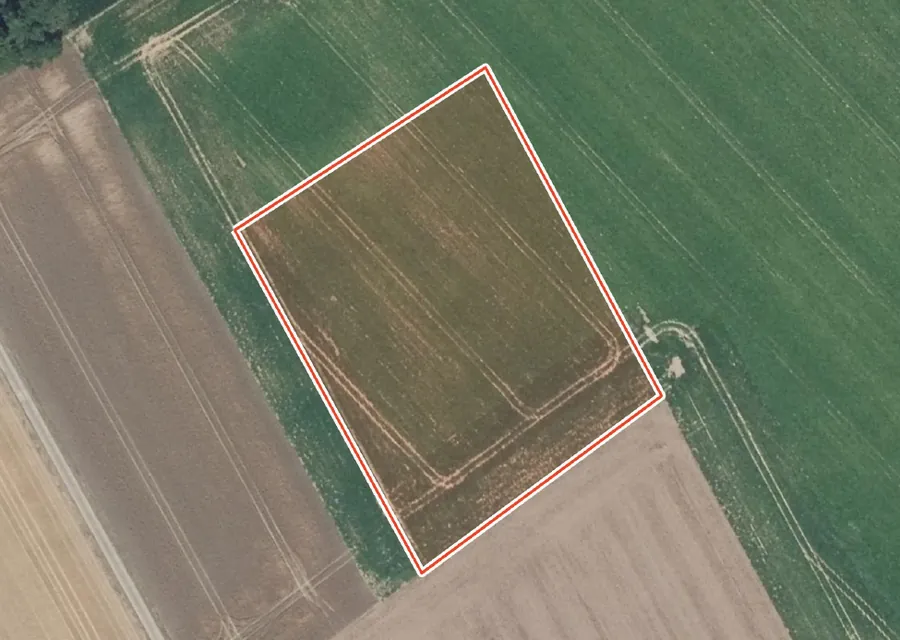
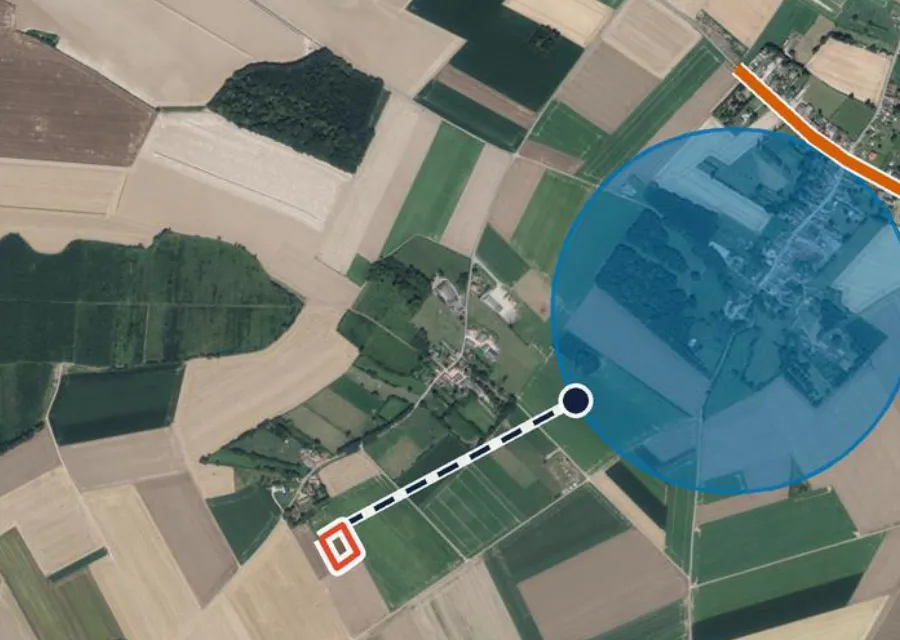
Before you draft the conditions, see what the public maps show
Pick the parcel on the map. The report brings together the planning zone, clay exposure, natural hazards, Natura 2000 and nearby sales, each with its source and date and explained in English, and lists the papers to ask the seller for. It does not say whether a permit will be granted and does not replace a notaire. Free check, PDF report for €29 (€39 in French and English).