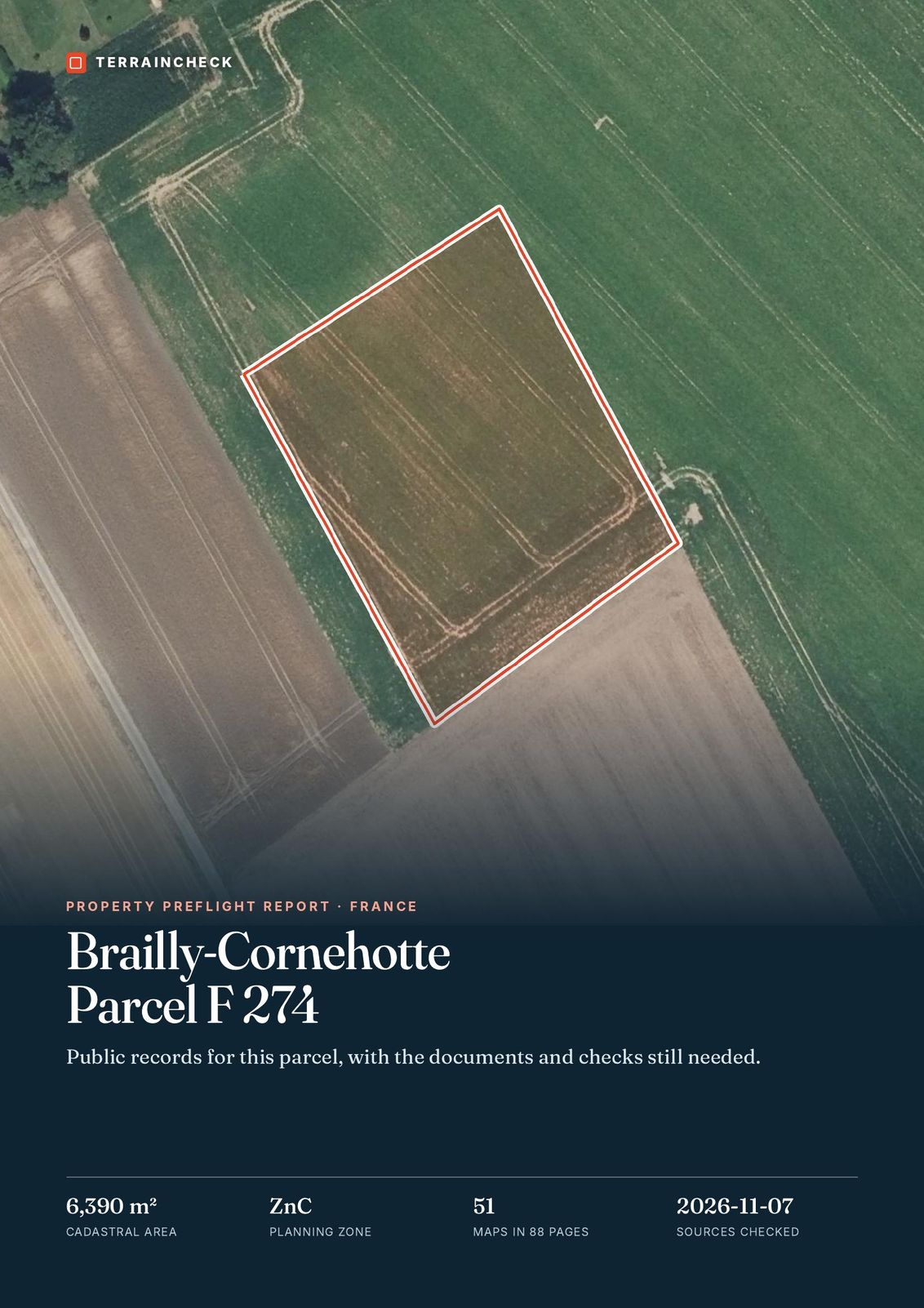
Pillar: Buying building land in France
Building on non-buildable land in France: what the law still allows
In France, on land in zone A or N of a local plan (PLU), in a non-buildable sector of a carte communale or outside the built-up part of a commune with no plan, a new house with no farming link is possible only in narrow cases. The Planning Code does allow, under conditions, extensions and outbuildings for an existing home, a change of use for some buildings, and buildings needed for a farm. First step: find the zone on the Géoportail de l’urbanisme, read its rules, then get the project confirmed in writing by the planning department of the town hall.
In brief
- Zone A (farmland) or N (natural areas) of a PLU, the local land-use plan: an existing home can be extended or given outbuildings only if the zone rules provide for it, with their limits on siting, height, footprint and density (article L151-12).
- Barns and other old buildings: in zone A or N, outside STECAL sectors, a change of use is open only to buildings listed in the zone rules, if it harms neither farming nor the landscape of the site, with a binding opinion from a departmental commission (CDPENAF for farmland, CDNPS for natural areas). In a STECAL, the sector’s own rules set what is allowed.
- Communes with a carte communale (a simple zoning map) or with no local plan at all (the national rules, RNU) have their own lists of exceptions, articles L161-4 and L111-4, wider for existing buildings.
- Building without permission: a criminal fine from €1,200 up to €6,000 per m² of floor area, possible demolition, plus a fine of up to €30,000 and up to €1,000 a day from the permit authority.
On this page
“Non-buildable” means one of three regimes
French planning law has no single category called “non-buildable land”. What you may still build depends on the planning document of the commune (the municipality).
Under a plan local d’urbanisme (PLU), it means zone A (agricultural) and zone N (natural and forest): R151-23 and R151-25 list what “may be authorised”, and each zone’s rules pick from that list, up to a full ban on building (L151-9).
Under a carte communale, non-buildable sectors follow article L161-4. With neither, the national planning rules (RNU) limit building to the built-up parts of the commune (L111-3), with the exceptions in L111-4. The lists do not mix: L111-3 to L111-5 do not apply where a PLU or a carte communale is in force (L111-1).
A green cell does not override other rules: the coastal law, the mountain law, a natural-hazard plan or a feature drawn on the PLU map.
Which regime applies to your commune?
According to the Géoportail de l’urbanisme, the national planning portal (statistics of 13 November 2026), 6,613 of France’s 35,011 communes fall under the RNU and 2,615 have a published carte communale; most of the others have a PLU, municipal or intercommunal (drawn up for a group of communes).
There is already a building: extend it, add an outbuilding, change its use
In zone A or N of a PLU
Article L151-12 allows existing dwellings to be extended and given outbuildings (annexes), outside STECAL sectors, provided this harms neither farming nor the landscape. The zone rules set where they may stand and their height, footprint and density, after an opinion from the departmental farmland commission, the CDPENAF.
The article sets no figures: size and distance are in each zone’s rules. In the Dordogne, for example, the CDPENAF recommends to plan-makers outbuildings within 20 m of the house (25 m for a pool), 50 m² of footprint in total excluding the pool, never more than the main building’s footprint, and three outbuildings at most. That is a recommendation, not the rule for your plot.
A barn or workshop falls outside L151-12. It can change use if the zone rules list it and the change harms neither farming nor the landscape (L151-11, I, 2°), with a binding opinion from the CDPENAF in zone A, or from the commission for nature, landscapes and sites (CDNPS) in zone N.
This listing only works outside STECAL sectors. In a STECAL, the sector’s own rules set what may be built and on what conditions (L151-13): read them.
Under a carte communale
Article L161-4 covers all existing buildings, not only homes: adaptation, change of use, repair and extension, plus outbuildings “close to an existing building”. As the RNU applies throughout France (L111-1), its other rules also govern these projects.
In an RNU commune, outside the built-up area
Article L111-4 allows adaptation, change of use, repair and extension of existing buildings, and new dwellings inside the cluster of buildings of a former farm, in keeping with local building traditions (CDPENAF opinion, L111-5). Outbuildings are not named separately: get the commune’s position in writing.
An old building put up without permission
Once a building has been finished for more than ten years, a permit or prior declaration cannot be refused because it was originally unlawful (L421-9). There are seven exceptions, including: built with no permit when one was required, in a national park, a classified site or on public land, or already subject to a demolition claim.
Building something new: farming, public facilities, STECAL
In zone A, buildings needed for a farm business, or for the machinery of approved farm cooperatives (CUMA), may be authorised (R151-23); in zone N, for farming and forestry or those same cooperatives (R151-25). For a farmer’s own house, see a house on agricultural land.
The rules may also allow, in agricultural or forest zones, buildings needed for processing, packing and selling farm produce where this continues the act of production, on two conditions: no conflict with farming, grazing or forestry on the land, and no harm to natural areas and landscapes; the application goes to the CDPENAF for an opinion (L151-11, II). Public facilities in zones A and N may be allowed on the same two conditions (L151-11, I, 1°).
A STECAL (a small sector with limited size and capacity) is drawn “on an exceptional basis” by the PLU rules, after the CDPENAF’s opinion. It may take buildings, sites and family plots for Travellers, or demountable homes used as a permanent residence (L151-13). A permit cannot create a STECAL.
In an RNU commune, the council can allow building outside the built-up area by a reasoned council resolution, where the commune’s interest justifies it, in particular to stop the population from falling, provided it harms neither natural areas and landscapes nor public health and safety and adds no significant public spending, among other conditions (L111-4, 4°). Binding CDPENAF opinion, deemed favourable after one month (L111-5).
| Project | Article | Opinion required |
|---|---|---|
| Extension or outbuilding, zone A or N | L151-12 | CDPENAF consulted on the PLU rules |
| Change of use of a listed building, zone A, outside STECAL | L151-11, I, 2° | Binding CDPENAF opinion |
| Change of use of a listed building, zone N, outside STECAL | L151-11, I, 2° | Binding CDNPS opinion |
| Processing, packing and selling farm produce, agricultural or forest zone, on the two L151-11, II conditions above | L151-11, II | CDPENAF opinion on the application |
| Farm or CUMA building, carte communale | L161-4, 2°, b and d | CDPENAF opinion |
| New building (1°) or project reducing farmland (2°, 3°), RNU | L111-5 | CDPENAF opinion |
| Building under a council resolution, RNU | L111-4, 4°; L111-5 | Binding CDPENAF opinion, deemed favourable after one month |
Which commission is consulted. Where the CDPENAF must give an opinion, the standard processing period is extended by one month (R423-24, d). Sources: Planning Code, art. L151-12; Planning Code, art. L151-11; Planning Code, art. L161-4; Planning Code, art. L111-4; Planning Code, art. L111-5; Planning Code, art. R423-24. Accessed 13 November 2026.
Before you buy: get the project checked
- Find the document and the zone on the Géoportail de l’urbanisme, open to everyone, in French. Time: about 15 minutes (TerrainCheck estimate). The portal is for information only: the documents held by the authorities are authoritative.
- Read the zone rules: extensions and outbuildings (distance, footprint, height), listed buildings, features drawn on the map. Time: one to two hours (TerrainCheck estimate). How: reading the PLU.
- Write to the planning department of the mairie (town hall), describing the project (size, position, use). The texts cited here set no reply deadline for an ordinary letter; for an answer that binds the authority, apply for an operational planning certificate.
- File the prior declaration or permit application at the town hall or online. Time from a complete file: 1 month (declaration), 2 months (permit for a single-family house or its outbuildings), 3 months (other permits), one month more with a CDPENAF opinion (R*423-23, R423-24); the town hall may notify a different period within a month of filing (details). Cost: development tax may be due.
- Tie the purchase to the answer: discuss the project with the notaire (the public notary handling the sale) before the compromis, the binding preliminary contract. Time: one conversation before signing. Cost: nothing beyond the conveyancing fees.
Building without permission: the penalties
Carrying out works without the required permission, or in breach of planning rules, is punishable by a fine of at least €1,200. The ceiling is €6,000 per m² of floor area built, or €300,000 in other cases; a repeat offence can add six months in prison (L480-4). The court rules on bringing the works into line or on demolition (L480-5).
Worked example: a room with 20 m² of floor area added without a permit carries a fine between €1,200 and 20 × €6,000 = €120,000.
Once an official report has been drawn up, the authority that issues permits can also impose a fine of up to €30,000 and order the owner to regularise, with a daily penalty of up to €1,000, capped at €100,000 (L481-1, in force since 28 November 2025).
In the report: planning features around F 274
Before you sign: six checks
- The commune’s document identified: PLU, carte communale or RNU.
- The plot’s zone or sector noted, with the date of the document.
- Zone rules read for extensions, outbuildings and changes of use.
- Building you want to convert: listed or not in the PLU rules, or allowed by the STECAL’s rules.
- Permits and declarations for existing buildings supplied by the seller.
- Written answer from the planning department, or a planning certificate for the project.
To check first whether a plot is buildable: is my land buildable? For the rules of each document: carte communale and RNU communes.
Common questions
Can I extend a house in zone N?
Yes, if the zone N rules provide for it: article L151-12 allows existing dwellings to be extended outside STECAL sectors, within the limits on siting, height, footprint and density set by the rules, as long as farming and the landscape are not harmed.
Can a barn in zone A become a house?
Under a PLU, outside STECAL sectors, only if the zone rules list it for a change of use and the change harms neither farming nor the landscape, with a binding opinion from the CDPENAF (L151-11). In a STECAL, read the sector’s own rules (L151-13). Under a carte communale or the RNU, change of use of existing buildings is one of the exceptions (L161-4, L111-4), subject to the other rules that apply.
Who issues the permit on non-buildable land?
The mayor, on behalf of the commune, if it has a PLU or a carte communale. In an RNU commune, the mayor on behalf of the State or, in certain cases, the prefect (L422-1).
What happens if I build without a permit?
A criminal fine from €1,200 up to €6,000 per m² of floor area, possible demolition or compliance orders (L480-4, L480-5), and from the permit authority a fine of up to €30,000 plus up to €1,000 a day, capped at €100,000 (L481-1).
Keep reading
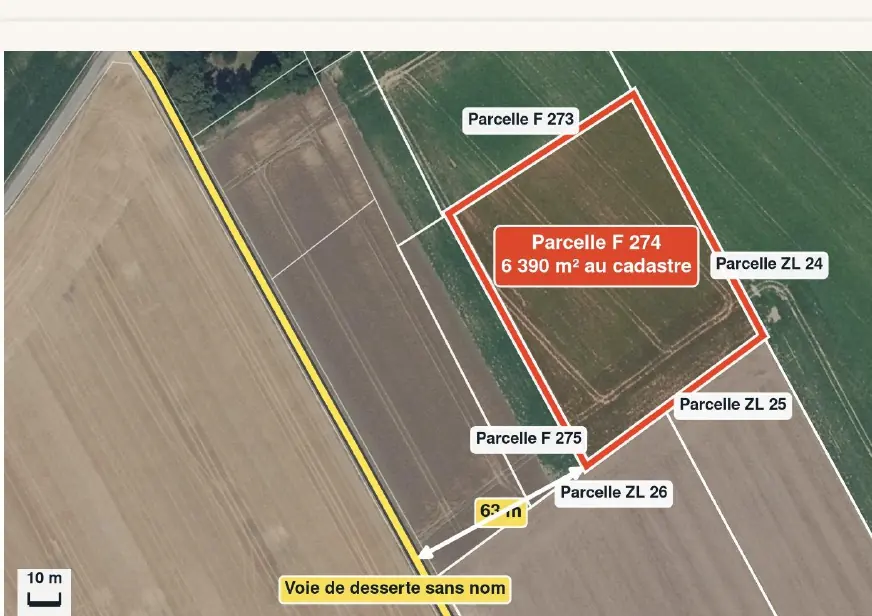
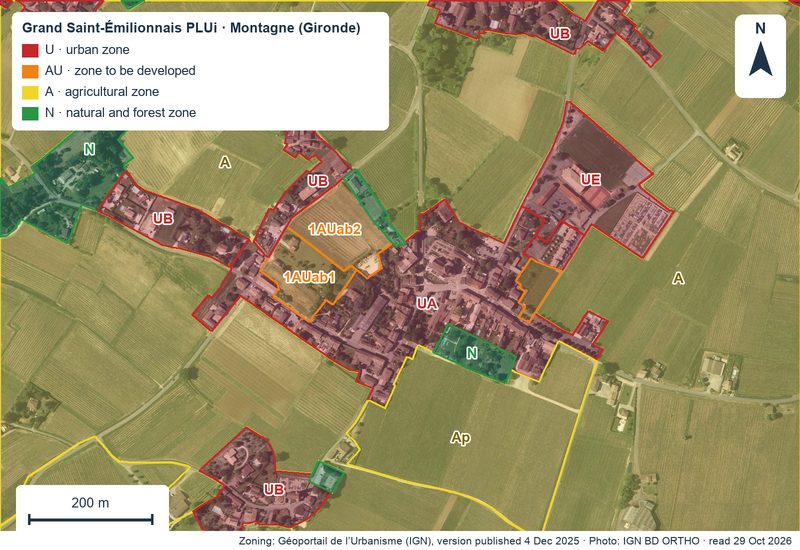
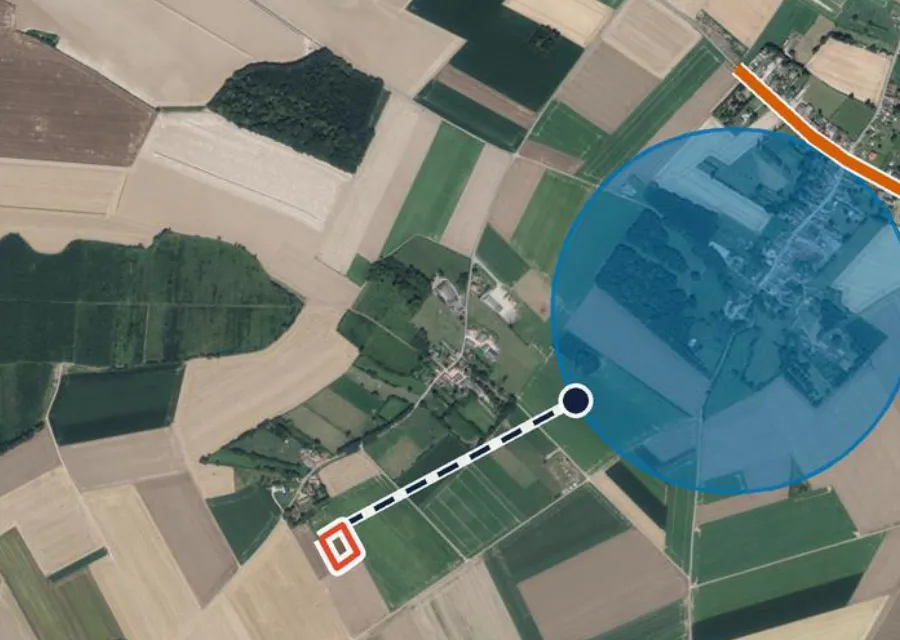
A project on a plot outside the buildable zone? Start with its zone
Pick the parcel on the map. The report shows the planning document and zone that cover it, the planning features published nearby, easements, natural hazards and recent sales, each with its source and date, explained in English. It does not replace the town hall’s answer on your project. Free check, PDF report for €29 (€39 in French and English).