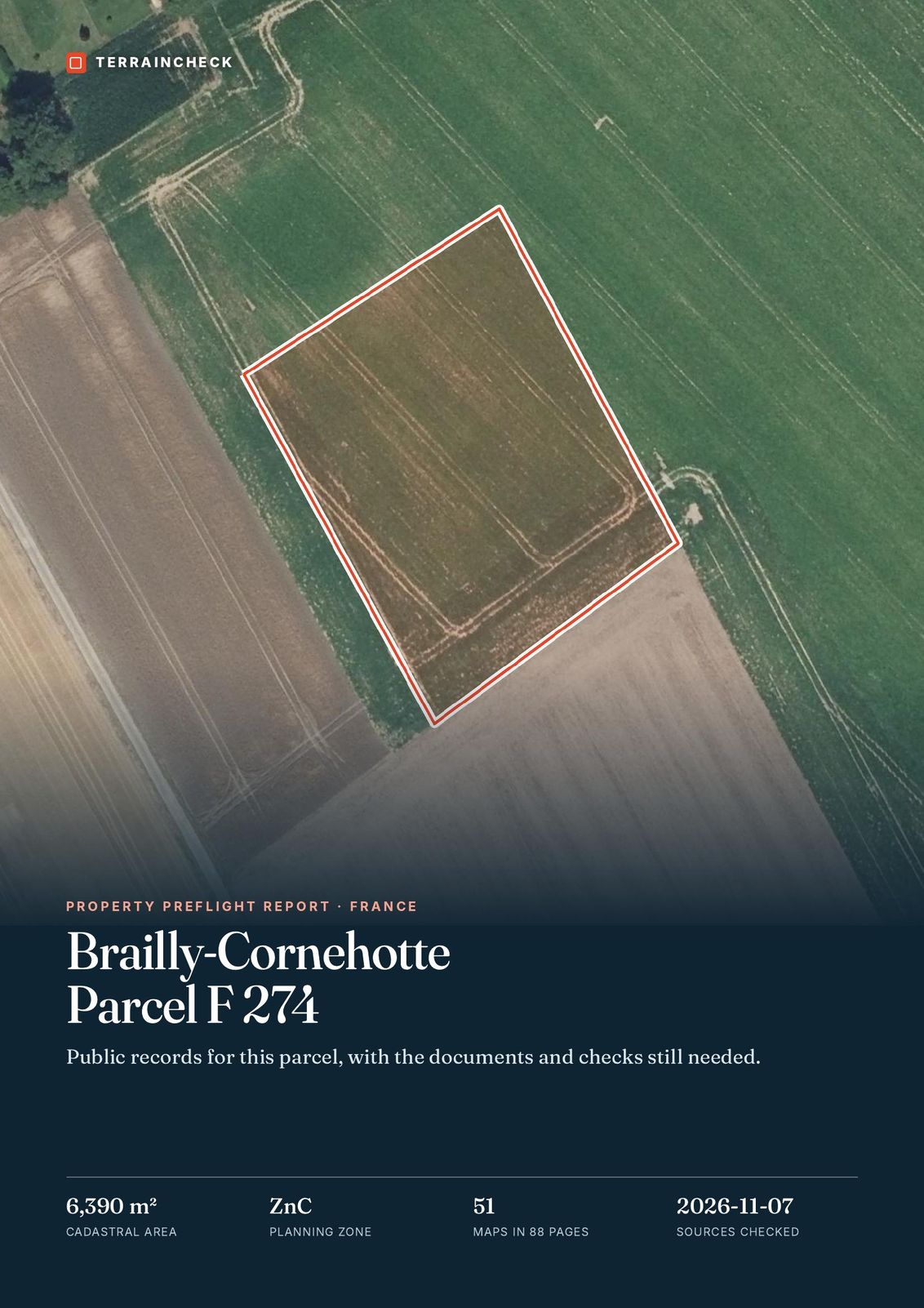
Pillar: Buying building land in France
Buying land in France as a foreigner or non-resident: the rules and the steps
In metropolitan France, yes: according to the Ministry of Justice, no law bars the sale of property to a foreign national as a general rule, and the Civil Code sets no residence condition; some people, such as an agent instructed to sell the property, are barred from buying it. First step: get the cadastral reference of the plot from the seller, then choose a notaire (the public officer who handles the sale) practising in France and ask them to check your position. This guide does not cover the overseas territories, some of which have their own regime.
In brief
- Who may buy: anyone whom the law does not forbid (Civil Code, art. 1594); whether your stay in France is lawful makes no difference (Ministry of Justice, 2025). Overseas, other regimes apply: in French Polynesia, non-EU nationals need prior authorisation to acquire property.
- Notaire: to be registered, the sale must be made by a notarial deed (acte authentique) drawn up by a notaire practising in France (Civil Code, art. 710-1). In Moselle, Bas-Rhin and Haut-Rhin a separate register, the Livre foncier, takes the place of the land registration service.
- Without travelling: a power of attorney (procuration) given by video link before a notaire (decree no. 71-941, art. 20-1) or drawn up abroad; a foreign public document must be legalised, unless an apostille or an exemption under an international agreement applies.
- Money and tax: payment by bank transfer to the notaire once the transaction exceeds €3,000, however many instalments; land tax assessed in the name of whoever owns the plot on 1 January, unless an exemption applies.
On this page
Can a foreigner buy land in France?
Since 1804 the Civil Code has said that anyone whom the law does not forbid may buy or sell (“Tous ceux auxquels la loi ne l’interdit pas peuvent acheter ou vendre”), with no line drawn by nationality or country of residence. Asked by a senator, the Ministry of Justice replied on 21 August 2025 that no statutory provision prohibits, as a general rule, the sale of property located in France to a person of foreign nationality, and that whether the buyer’s stay in France is lawful currently makes no difference.
“As a general rule” matters. The same answer notes that articles 1596 and 1597 of the Civil Code bar some people from buying, such as the owner’s agent or representative, and that a right of pre-emption can put another buyer ahead of you (for farmland, see the Safer and the sitting tenant). Ask the notaire to check your own position at the first contact. Owning land gives no right to build: see how to check whether land is buildable.
This guide covers metropolitan France only. Some overseas territories have their own regime: in French Polynesia, an individual who is a national of a non-EU country needs prior authorisation from the local Council of Ministers to acquire property or property rights, and the economic affairs department (DGAE) states that breaching these rules makes the transactions void.
Sources: Légifrance: Civil Code, article 1594 (who may buy or sell); French Senate: written question no. 03618, Ministry of Justice answer (21 August 2025); DGAE, French Polynesia: foreign investment. Accessed 12 November 2026.
The steps when you buy from abroad
- Identify the parcel and check what you may do with it. Ask the seller for the cadastral reference, then check the zoning, hazards and easements online and through a planning certificate requested from the mairie (town hall). The order to follow: buying building land in France.
- Sign the preliminary contract (a compromis or a promesse de vente) at the notaire’s office or through the estate agent. For a building plot outside a lotissement (planned subdivision), Service-Public, the government’s information site, says the deed generally follows three months after the promesse. The clauses to negotiate: our guide to the compromis.
- Give a power of attorney if you will not come to sign (two routes, set out below). Cost: the notaire’s quote; €60 to legalise a foreign document, apart from special rates. Time: that of the office, or of the consulate and the translator.
- Transfer the funds to the notaire’s account. Cost: your bank’s charges. Time: that of an international transfer; ask your bank.
- Sign the deed of sale at the notaire’s office, in person or through your attorney. The duties and fees to budget for: notary fees when buying land. Outside Alsace-Moselle, the combined formality (tax registration and land registration in one step) must then be requested within a month of the deed.
An example: on the usual timing given by Service-Public, a promesse signed on 2 March 2027 leads to a deed in early June 2027. The 2027 land tax is assessed on the seller, the owner on 1 January 2027; the 2028 tax is the first in your name.
Signing without coming to France: the procuration
A procuration appoints someone to sign for you. Its form (private document or notarial deed) depends on the deed to be signed: ask the notaire’s office what it requires before arranging anything at home.
Before a notaire, by video link
Since 1 October 2025, article 20-1 of the decree of 26 November 1971 provides that a notaire may draw up a power of attorney in electronic form when one or more parties are not present before them. The notaire takes the party’s consent through a video-conference system, then their signature by means of a qualified electronic signature. Ask whether the office offers this.
Drawn up abroad
A power of attorney drawn up by a notary in your country is a foreign public document. Service-Public states that such a document, when it is to be produced in France, must be legalised. International agreements exempt some documents, and in some cases an apostille is enough. The rule for your country is in the table that Service-Public links to; the French embassy or consulate will confirm it.
Legalising a foreign document costs €60 (€30 for a French citizen on the register of French nationals abroad), and a specific rate may apply to nationals of certain countries. A document in another language must come with a French translation by an authorised translator, made before legalisation; ask for a quote.
Paying: bank transfer and identity checks
Payments made or received by a notaire on behalf of the parties to a notarial deed that goes to land registration must be made by bank transfer; the threshold is set at €3,000 (CMF, art. L112-6-1 and R112-5). According to Service-Public, once the transaction exceeds €3,000, payments go by transfer; the Paris Chamber of Notaires adds that the total amount counts, however many instalments there are.
For example, on a plot priced at €40,000, a €2,000 deposit paid to the notaire also goes by transfer, like the €38,000 balance, because the transaction exceeds €3,000.
The transfer carries your name, the name of the payee and a reference stating the purpose of the payment and identifying the deed. Notaires are bound by the anti-money-laundering rules (CMF, art. L561-2 and L561-3): before the transaction they identify their client, verify the identity against a written document of probative value and collect information on the purpose of the transaction.
| What the rule requires | Rule | From abroad |
|---|---|---|
| Notarial deed drawn up by a notaire practising in France | Civil Code, art. 710-1 | A deed signed before a notary in your country can serve as a power of attorney, not as the deed of sale. |
| Identity verified against a written document of probative value | CMF, art. L561-2 (13°) and L561-5 | Send your identity document to the office at first contact. |
| Bank transfer once the transaction exceeds €3,000 | CMF, art. L112-6-1 and R112-5 | Send the funds early enough, with the reference requested. |
| Foreign public document legalised, unless apostille or exemption | Service-Public | €60 at the French embassy or consulate, apart from special rates. |
Four requirements and what each means for a buyer who does not live in France. Sources: Légifrance: Civil Code, article 710-1 (authentic deed and land registration); Légifrance: Monetary and Financial Code, articles L561-2 and L561-5-1 (who is covered, information collected); Légifrance: Monetary and Financial Code, article L561-5 (client identification); Légifrance: Monetary and Financial Code, article L112-6-1 (payments through a notaire by bank transfer); Légifrance: Monetary and Financial Code, article R112-5 (€3,000 threshold); Service-Public: cash payment limits (property transactions); Paris Chamber of Notaires: transfer above 3,000 euros; Service-Public: legalisation of a foreign public document. Accessed 12 November 2026.
After the purchase: land tax and which tax office
The taxe foncière sur les propriétés non bâties, the yearly land tax on unbuilt property, is assessed for the whole year on the facts as they stand on 1 January (General Tax Code, art. 1415), in the name of the owner or the usufructuary. It is due even if the land brings in no income; permanent and temporary exemptions exist. To know the amount, ask the seller for the latest tax notice.
According to impots.gouv.fr, a non-resident’s local taxes stay with the service des impôts des particuliers (SIP, the personal tax office) for the place where the property lies: questions, payments and claims go there, not to the non-residents’ office (SIPNR), which deals with the income tax of non-residents with French-source income taxable in France.
If you later sell as a non-resident, the capital gain is declared, calculated and taxed under different rules: see the page Plus-values immobilières on impots.gouv.fr (in French).
Sources: Légifrance: General Tax Code, article 1415 (land taxes, position on 1 January); Service-Public: land tax on unbuilt property (business fact sheet); impots.gouv.fr: whom to contact if you are a non-resident; impots.gouv.fr: do I come under the non-residents’ tax office?; impots.gouv.fr: non-residents, taxes payable in France; impots.gouv.fr: property capital gains of non-residents. Accessed 12 November 2026.
In the report: locating the plot remotely
Before you transfer any money
- The cadastral reference is in writing; the zoning and the planning certificate have been checked against your project.
- The notaire’s office has said which form of power of attorney it accepts, and whether it can take it by video link.
- The consulate has confirmed legalisation, apostille or exemption for your country.
- You have the draft deed, translated if need be, and have read it before signing.
- Someone has seen the land and its access on the ground.
Common questions
Can a foreigner buy land in France without living there?
In metropolitan France, yes. No statutory provision prohibits, as a general rule, the sale of property to a person of foreign nationality (Ministry of Justice, answer to the Senate of 21 August 2025), and article 1594 of the Civil Code sets no residence condition. Some people are barred from buying (Civil Code, art. 1596 and 1597): ask the notaire to check your case. Overseas territories are not covered here.
Do I have to travel to France to sign the deed?
No, if you give a power of attorney: drawn up electronically by a notaire by video link (decree no. 71-941, art. 20-1), or notarised abroad and then legalised, unless an apostille or an exemption under an international agreement applies (Service-Public).
Does a non-resident pay French land tax on a plot?
Yes, unless an exemption applies: the land tax on unbuilt property is assessed in the name of the owner on the position on 1 January (General Tax Code, art. 1415). It is paid to the personal tax office for the place where the plot lies, not to the non-residents’ office (impots.gouv.fr).
Keep reading
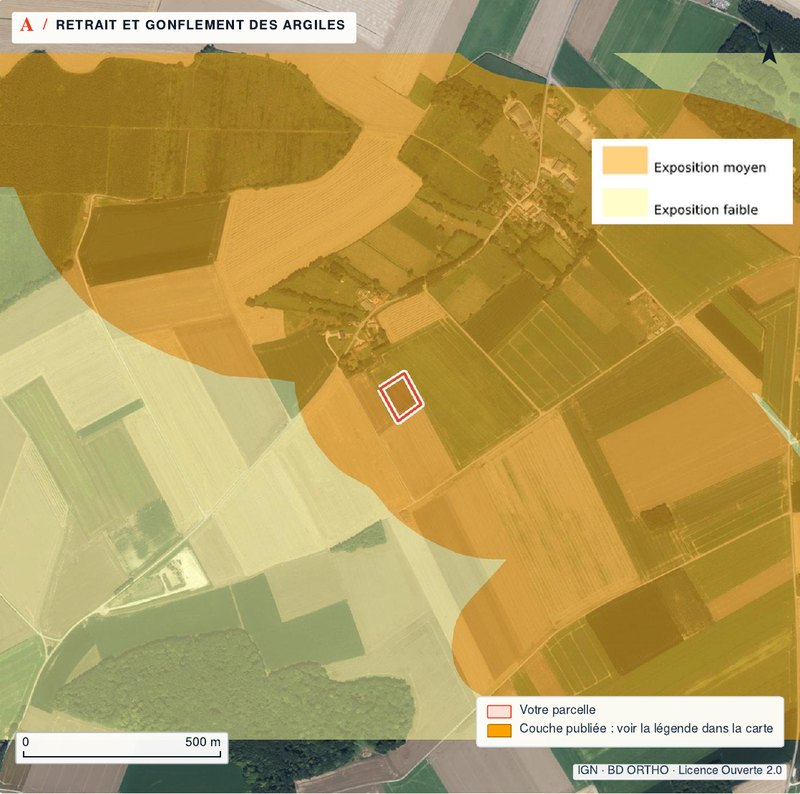
Buying building land in France: checks before the compromis
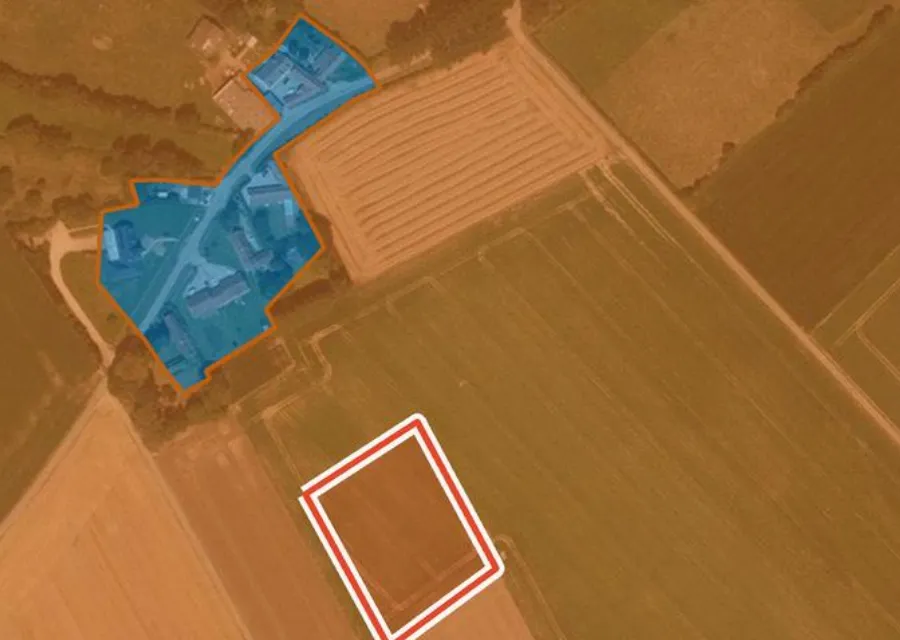
Is a plot buildable in France? How to check the zone, utilities, easements and the official answer
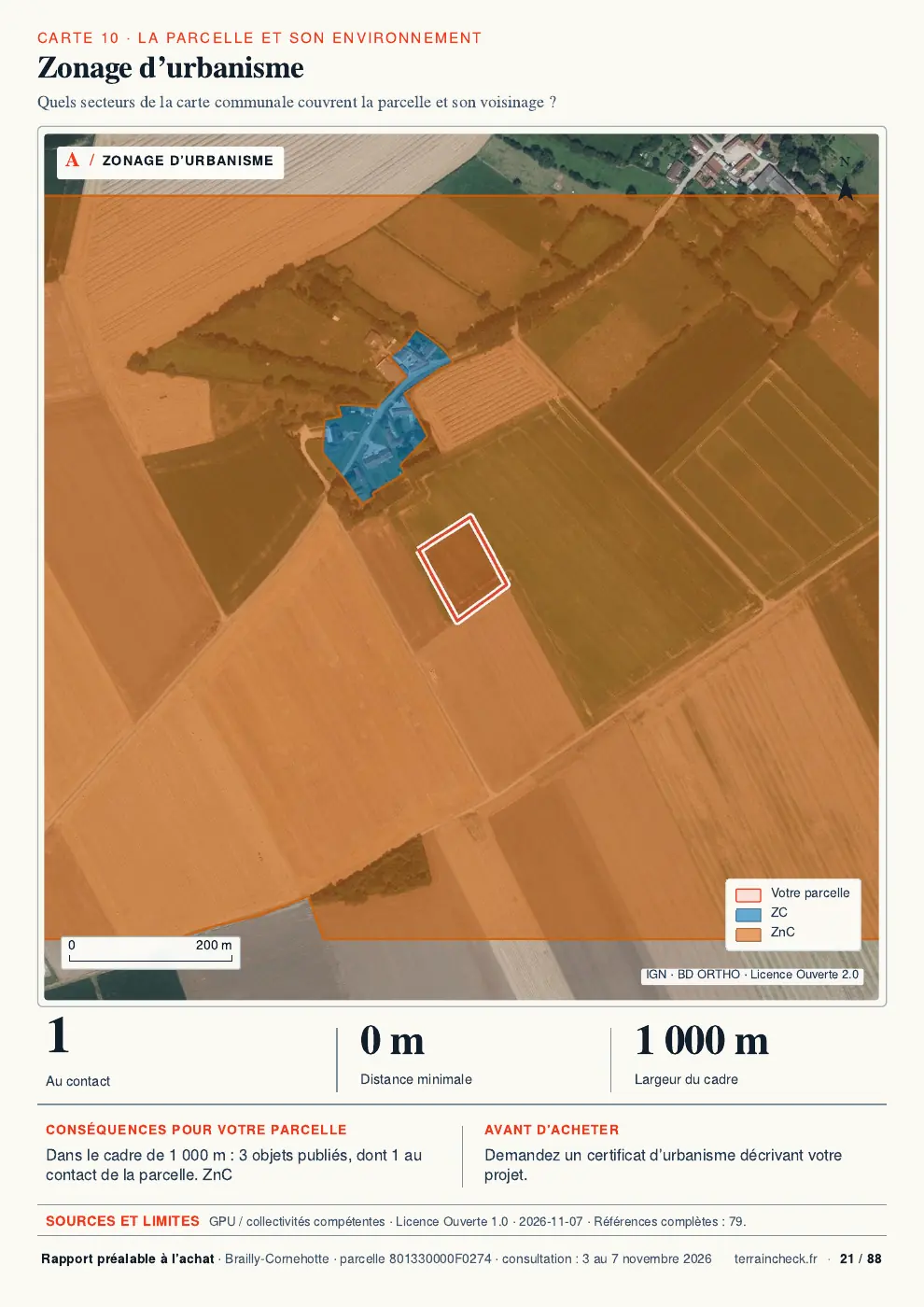
French planning certificates: information or operational CU before buying land
Buying land with others in France: co-ownership or an SCI, and what happens if you disagree
Far from the plot? Start with what the public records say
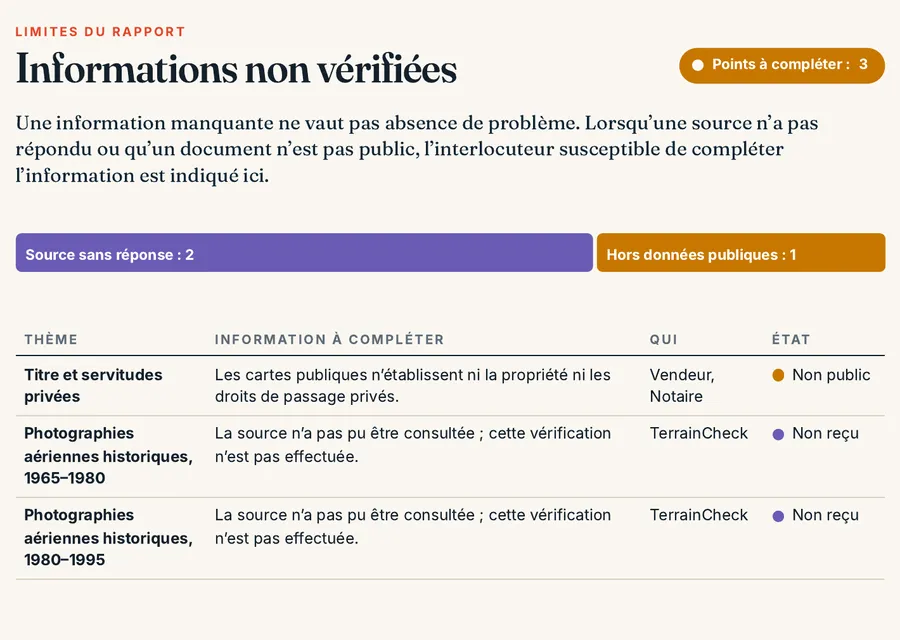
Pick the parcel on the map. The report places it on the aerial photograph and sets out the zone in the local plan (PLU), the hazards, the published public-interest easements and recent sales nearby, each with its source and date, in English, plus what still has to be confirmed on the ground. Private easements, such as a right of way, are checked with the notaire, and the report does not replace a visit. Free check, PDF report for €29 (€39 in French and English).