Pillar: Buying building land in France
Airport noise exposure plan (PEB) in France: zones A to D, what you can build and what the seller must disclose
Near an airfield with a plan d’exposition au bruit (PEB, noise exposure plan), a new home is banned in zones A, B and C save for limited exceptions (article L112-10 of the Planning Code) and allowed in zone D with sound insulation. First step: find the parcel’s zone on the free DGAC map on Géoportail.
In brief
- A plan d’exposition au bruit (PEB, aircraft noise exposure plan) is drawn up for each airfield listed in article L112-5 of the Planning Code: airfields in categories A, B and C, civil or military airfields on a state list, and a new airfield built to replace one of them. The DGAC (civil aviation authority) layer on Géoportail lists 224 plans (read on 13 November 2026).
- Zones are drawn with the Lden index, which weighs evening and night flights more heavily: zone A inside the 70 contour, zone B out to 62 (between 65 and 62 for an airfield opened before 28 April 2002), zone C out to a value chosen between 57 and 55, zone D out to 50. Some airfields use other ranges.
- If buildable land lies in a zone, the seller provides an aircraft noise statement (état des nuisances sonores aériennes), annexed to the preliminary contract or, if there is none, to the final deed. Without it, the buyer can ask the court to set the sale aside or cut the price.
- The certificat d’urbanisme (planning certificate) has to mention the noise zone and the duty to insulate against noise. Applying is free; the mairie (town hall) has 1 month to issue an information certificate.
On this page
The four zones and their limits
The plan is a state document approved by order of the préfet, the government’s representative in the département. It consists of an explanatory report and a 1:25,000 map dividing the land around the airfield into zones A and B (high noise), C (moderate noise) and D. It is drawn from forecasts of traffic growth, planned extensions of the airfield and air traffic procedures.
Lden is a yearly average sound level in decibels in which evening flights (6 pm to 10 pm) count 5 dB louder and night flights (10 pm to 6 am) 10 dB louder. It is not a one-off reading like a sound meter during a viewing.
Limits vary from plan to plan. For an airfield with no more than 10,000 commercial movements a year and strong seasonal swings, zone C may extend to a contour chosen between 57 and 52. For military airfields on a list set by ministerial order, zone B ends between 68 and 62 and zone C between 64 and 55. The value chosen is printed on the plan.
Zone D is optional, except at the airports covered by article L6360-1 of the Transport Code. Conversely, at an airport whose slots are capped across all opening hours, the plan has only zones A and B; part of the zone C rules still applies inside the former zone C as it stood on 19 February 2009.
What can be built in each zone
Article L112-10 sets the principle: inside the zones, further urban development and new or larger public facilities are banned where they would expose new populations to the noise. The exceptions depend on the zone.
| Zone | New home | Existing house | Public facility |
|---|---|---|---|
| A | Banned, except homes needed for or linked to aviation. In already built-up parts of zone A: staff housing for a permitted industrial or commercial activity, buildings linked to farming. | Renovation, refurbishment, improvement, a limited extension or rebuilding, without adding room for more residents. | Only if needed for aviation or essential to the people already living there. |
| B | Banned, except homes linked to aviation, staff housing for a permitted industrial or commercial activity, buildings linked to farming. | As in zone A. | As in zone A. |
| C | As in zone B, plus: a stand-alone individual house in an area already built up and served by public utilities, adding only slightly to the number of residents; rebuilding after a demolition in zone A or B, with no rise in population, to insulation standards, at the builder’s sole cost. | As in zone A; urban renewal sectors possible where designated. | Banned if it exposes additional people to the noise. |
| D | Allowed, with sound insulation. | Allowed, with sound insulation. | Allowed, with sound insulation. |
What may be built in each zone under article L112-10 of the Planning Code. Anything built in a zone must be insulated against noise (article L112-12). Sources: Planning Code, art. L112-10 (what may be built in each zone); Planning Code, art. L112-12 (sound insulation); Law no. 2014-366 of 24 March 2014 (ALUR), art. 166. Accessed 13 November 2026.
In zone C the plan may also mark urban renewal sectors, where existing districts or villages can be refurbished and reorganised as long as the exposed population does not grow. The article makes one exception: operations included in a Grand Paris territorial development contract (contrat de développement territorial) under article 166 of the ALUR Act of 24 March 2014, which may increase the exposed population, though not significantly, if the contract was signed or revised to include them no later than one year after the Act was promulgated. The state can add such sectors after the plan is published, at the request of the commune or the inter-municipal body in charge of the PLU, after a public inquiry. Ask at the town hall whether the plot is in one.
The plan comes on top of the PLU (plan local d’urbanisme, the local zoning plan); it does not replace it. Land zoned for building in the PLU can still be closed to housing if it lies in zone A or B. For the general method, see how to check whether land is buildable.
Where to look up the plan for a plot
- Open the “DGAC Plan d’exposition au bruit (PEB)” map on Géoportail, the state’s map site (in French). Search for the address or commune (municipality) and see which zone the parcel falls in. Cost: nothing. Time: about ten minutes (TerrainCheck estimate). If the parcel touches a boundary, note both zones.
- Read the approval order. The DGAC “documents d’approbation” layer links each airfield it lists to its approved document; the order and the map can also be inspected at the town hall and the prefecture. Note the date and the Lden values used for zones B and C. Cost: nothing. No time limit set by the texts cited.
- Open the annexes of the PLU. The plan has to be annexed to the PLU, to a conservation area plan or to the carte communale (simplified local map). The PLU can be read at the town hall and on the Géoportail de l’urbanisme, the national planning portal to which communes send their documents. Ask too whether a revision of the noise plan has started.
- Apply for an information planning certificate. It has to mention the noise zone and the duty to comply with sound insulation rules. Free, at the town hall, which has 1 month from the acknowledgement of receipt. More detail: information or operational planning certificate.
A plan stays in force until the approval of its revision has been published. Plans drawn up under the former national planning directive count as noise exposure plans until they are revised. In the Somme, the layer links Amiens-Glisy to a decision of 1 December 1982. The ministry says the Lden index was adopted in 2002 and plans are still being revised: going by the date in their file names, 70 of the 224 documents predate 2002.
What the seller must give you
Article L112-11 covers the sale or letting of homes and mixed home-and-business premises, and the sale of buildable undeveloped land, inside a noise zone of a plan. The seller provides a document that states the zone clearly, gives the address of the online service where the plan can be viewed and says it can be inspected at the town hall of the commune.
For undeveloped land, this document is annexed to the preliminary contract or, if there is none, to the acte authentique (the final deed signed before a notaire, the public notary who handles the sale); it is also annexed to the final deed. The ministry publishes a form, the état des nuisances sonores aériennes (June 2020), which the seller fills in personally. If the property straddles two zones, the guidance note says to enter the noisier one.
The document is for information only: the buyer cannot rely on its content against the seller. If it is not annexed, the buyer can seek to have the contract set aside or ask the court to reduce the price. The article creates no cooling-off period. The other documents attached to a sale are covered in mandatory diagnostics for bare land.
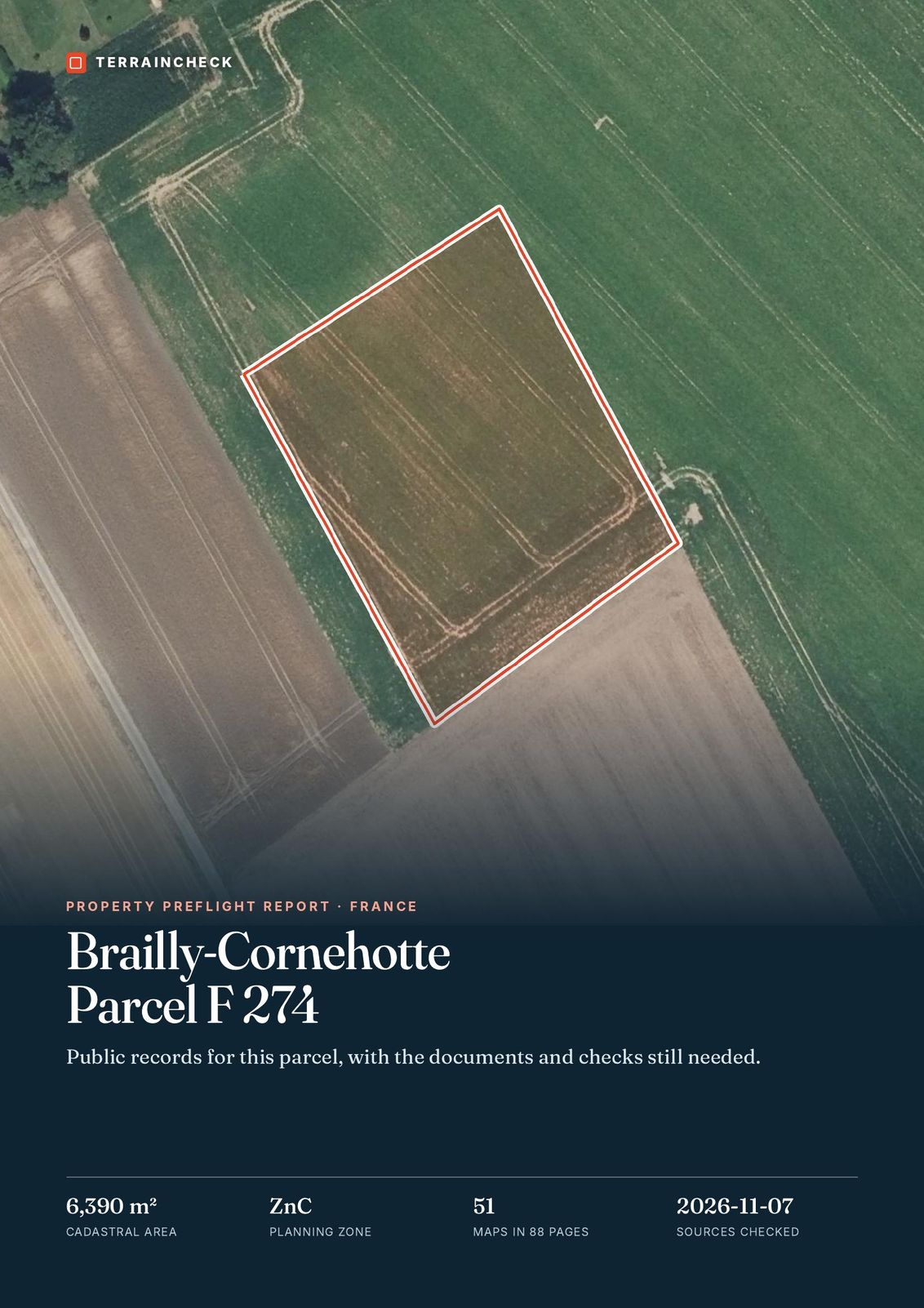
In the report: airfields around F 274
Before the compromis: five checks
- Zone of the parcel noted from the DGAC map, both zones if it touches a boundary.
- Date of the plan’s approval order and the Lden values of zones B and C noted; town hall asked about a revision.
- In zone C: built-up, serviced area and a stand-alone house; in zone A or B: an exception that fits the project.
- Planning certificate applied for, with the noise zone stated.
- Aircraft noise statement annexed to the preliminary contract or the deed.
Next: read the PLU for the parcel, check the risk and pollution statement and go through the clauses of the compromis.
Common questions
Can I build a house in zone C?
Yes, on conditions: a stand-alone individual house in an area already built up and served by public utilities, adding only slightly to the number of residents exposed. It must be insulated against noise, and the PLU must allow it too.
Can I extend a house in zone A or B?
Renovation, refurbishment, improvement, a limited extension or rebuilding may be allowed if they do not add room for more residents exposed to the noise.
Does the seller have to tell me the land is in a noise zone?
Yes, for buildable land inside a zone of a plan: the aircraft noise statement is annexed to the preliminary contract or the deed. If it is missing, the buyer can seek to set the sale aside or have the price reduced.
Does every airfield have a noise exposure plan?
No. A plan is drawn up for the airfields covered by article L112-5; the DGAC layer lists 224. Near a small airfield without a plan, ask the town hall whether one is being drawn up, as rules can then apply early.
Keep reading
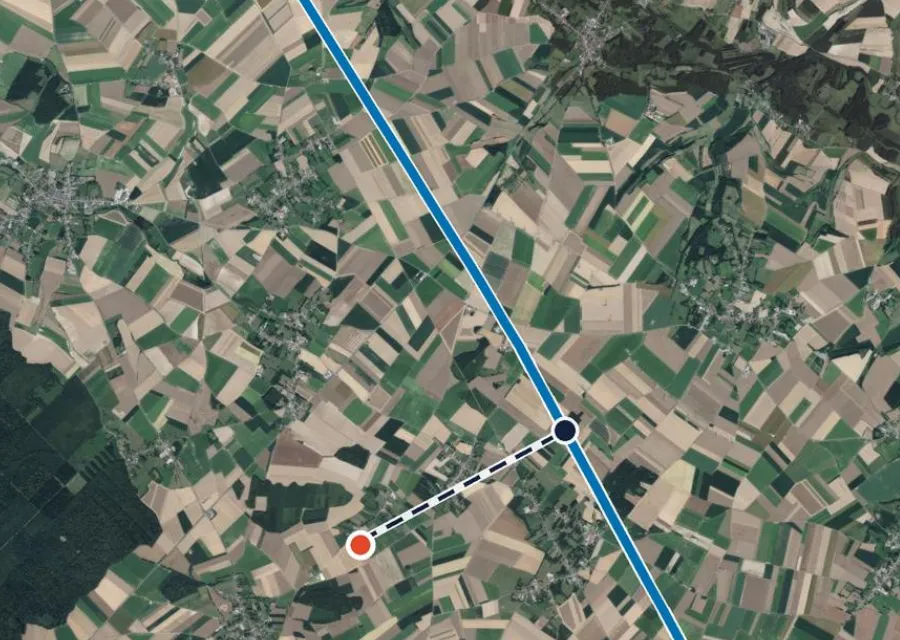
Land near a high-voltage line or transformer in France: easements, distances, fields
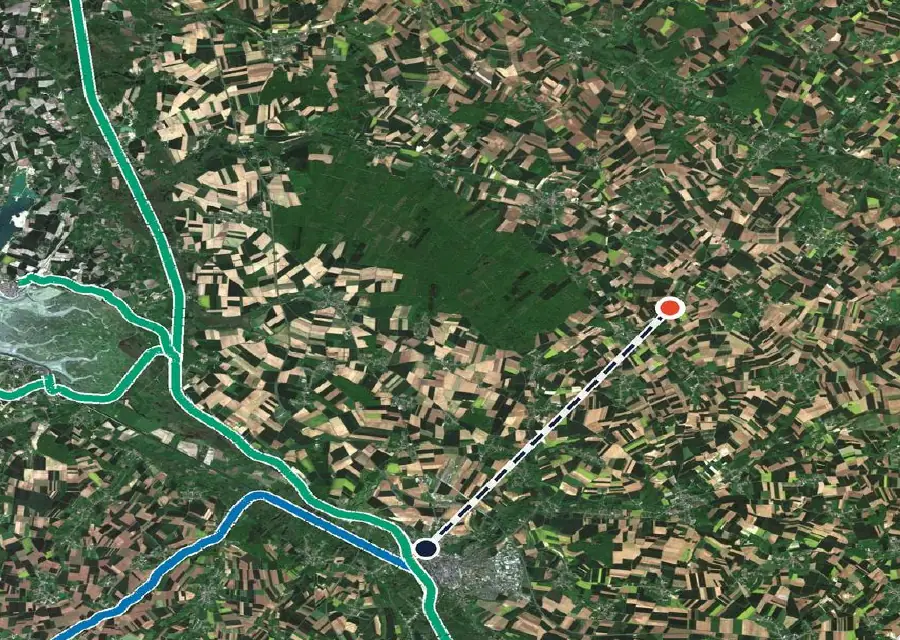
Road and rail noise classification: what it means for a plot in France
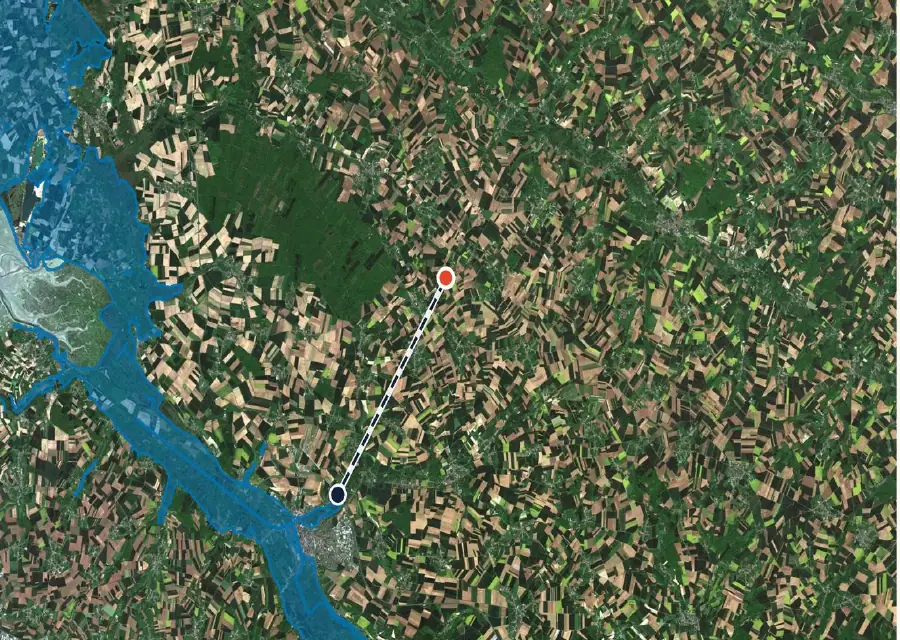
France’s risk statement (ERP) for land: what the seller must give you, the six-month rule and what it leaves out
French planning certificates: information or operational CU before buying land
See the airfields mapped around a plot
Pick the parcel on the map. The report shows the airfields published by IGN within a 50 km frame and the distance to the nearest, alongside the PLU zone and natural hazards, each with its source and date and explained in English. It does not settle the noise zone; it tells you where to check it. Free check, PDF report for €29 (€39 in French and English).