Pillar: Buying building land in France
Holding buildable land without building in France: land tax, rezoning and resale
Yes: French civil law lets an owner use land within the limits of laws and regulations, and none of the texts cited here requires you to build. The main cost of waiting is the annual land tax: if the commune (municipality) has voted for it, €0 to €3 per buildable m² is added to the rental value the tax is worked out on, that base is then cut by 20%, and the increase only affects the commune’s share of the tax (and that of some joint municipal bodies). Ask the town hall whether it has voted this before you sign the compromis (preliminary contract).
In brief
- Land tax: every year you pay the taxe foncière sur les propriétés non bâties (land tax on undeveloped property). If the town council has voted for it, the tax base is increased by €0 to €3 per buildable m², less 200 m² (unless the council has removed this) counted once for all adjoining buildable plots of the same owner.
- A building permit, a development permit or a subdivision approval held on 31 December, or the sale of the land by that date, lets you claim back the increase for that year. It is charged again retroactively if the permit lapses.
- The local plan (PLU, or carte communale in small communes) can change. Land rezoned as unbuildable gives no right to compensation, unless acquired rights are affected or the previous state of the site is altered, causing direct, material and certain loss.
- On resale by a private seller resident in France: 19% income tax and 17.2% social charges on the gain, with an allowance from year 6; no income tax after 22 years, no social charges after 30.
On this page
Keeping land empty: what the law says
The French Civil Code defines ownership as the right to enjoy and dispose of things “in the most absolute manner”, provided the use is not prohibited by laws or regulations. Leaving a plot unbuilt is a lawful use.
A duty to build within a set time can, however, be written into the documents of the sale: the deed, or the cahier des charges (rules) of a lotissement (planned subdivision) or a development zone. Ask the notaire, the public lawyer who handles every French property sale, to point out any such clause before the compromis de vente (the binding preliminary contract). That is the easiest time to negotiate it, before you are committed.
| Item | When | Rule | Where to check |
|---|---|---|---|
| Land tax on undeveloped land | Every year | Based on cadastral rental value less 20% | Tax notice |
| Buildable-land increase | Every year, if voted | €0 to €3 per m² added to rental value | Town hall |
| Rezoning | Revision or amendment of the PLU | No compensation, except under L105-1 | Town hall, public inquiry |
| Upkeep | All year | Clean-up ordered by the mayor in residential zones or within 50 m of the owner’s own buildings | Municipal orders |
| Capital gain | On resale | 19% + 17.2%, allowances from year 6 | Notaire |
| Taxes on land made buildable | First sale after rezoning | 10% (commune); 5 or 10% (State) | Notaire, town hall |
What weighs on buildable land kept empty, from the most common to the rarest. Sources: Civil Code, article 544; General Tax Code, article 1396; Planning Code, article L105-1; Local Authorities Code, article L2213-25; Service-Public: capital gains on property; General Tax Code, article 1529; General Tax Code, article 1605 nonies. Accessed 12 November 2026.
Land tax on a buildable plot
Empty land pays the taxe foncière sur les propriétés non bâties (TFPNB). Its base is the cadastral rental value, an administrative figure, less 20%. Being buildable does not change that base unless the commune decides so.
The increase voted by the commune
The town council of the commune (the French municipality) may add a flat amount of €0 to €3 per square metre to the rental value of buildable land, capped at 3% of an average land value set by decree for each zone. The area counted is reduced by 200 m², unless the commune has removed this, once for all adjoining buildable plots of the same owner, not per cadastral number. The decision must be taken before 1 October to apply from the following year. Only the commune’s share of the tax is affected, along with that of joint municipal bodies without their own tax powers.
The land must lie in an urban or development zone of a PLU, or in a building sector of a carte communale, with roads and networks of sufficient capacity. Among the exclusions: land rezoned less than a year ago, plots carrying a building subject to land tax on built property, and land used by a farmer covered by the farmers’ social security scheme.
The tax authority gives this example: an increase of €0.30 per m², a 1,500 m² garden with a gross rental value of €12.20, taken here as the owner’s only buildable plot, with no adjoining one. Area counted: 1,500 − 200 = 1,300 m². Increased value: 12.20 + 1,300 × 0.30 = €402.20. Taxable base: 402.20 × 80% = €321.76, against €9.76 without the increase. If the commune removes the 200 m² deduction, the base becomes €369.76. The commune’s voted rate is then applied to that base.
Two situations let you claim back the part due to the increase: a building permit, development permit or subdivision approval held on 31 December of the tax year, or the sale of the land by that date. If the permit lapses, the increase is charged again retroactively.
The rate can move too
Between 2025 and 2026, the commune’s rate went up for 6.7% of the population, and for 13.4% of people living in communes of under 500 inhabitants, where many plots in the countryside lie. The study compares rates, not bills: taxes raised by joint municipal bodies and changes in the base can also move the amount you pay.
The risk of rezoning
Land that is buildable today can lose that status when the PLU or carte communale is revised or amended. The Planning Code sets the rule: planning restrictions, including a ban on building in certain zones, give no right to compensation. Compensation is due only where acquired rights are affected or the previous state of the site is altered, causing direct, material and certain loss; failing agreement, the administrative court sets it.
The draft plan, including during a revision, goes to a public inquiry or, by reasoned decision, to an online public consultation. That is when you can file a written comment about your plot. What protects a project during a revision (planning certificate, deferral of decisions) is covered in our guide to land that may become unbuildable.
Looking after the land
Where an undeveloped plot in a residential zone, or within 50 metres of homes, outbuildings, building sites, workshops or factories belonging to its owner, is not maintained, the mayor can, on environmental grounds and after formal notice, order clean-up work at the owner’s expense and then have it carried out by the commune.
In areas exposed to forest fires under the Forestry Code, land in an urban zone of a PLU and less than 200 metres from woods and forests must be cleared of brush and kept clear. The cost falls on the owner of the land. If you live abroad, arrange for someone local to do it; the mairie will tell you whether the commune is concerned, though the texts cited set no deadline for that answer.
Selling later: tax on the gain
For a private seller resident in France, the gain is taxed at 19% income tax plus 17.2% social charges, after an allowance for the years held that starts in year 6. The surcharge on gains above €50,000 does not apply to building land. Non-resident sellers follow different rules, sometimes set by a tax treaty; ask the notaire early, as the tax is settled out of the sale price.
Service-Public’s example: after 10 years, a €10,000 gain gets a 30% allowance for income tax (€7,000 taxed) and 8.25% for social charges (€9,175 taxed). Before six years of ownership, there is no allowance at all.
Taxes on land that has become buildable
Two taxes apply to the first sale for value after the land was rezoned as buildable, and the seller pays them. If you buy land that has already been sold once since its rezoning, your own resale is outside them.
| Local tax (CGI 1529) | National tax (CGI 1605 nonies) | |
|---|---|---|
| Applies if | The commune or its grouping has introduced it | Rezoned after 13 January 2010 |
| Base | Sale price less purchase price adjusted for inflation; failing that, 2/3 of the price | Sale price less adjusted purchase price, cut by a tenth a year beyond year 8 after rezoning |
| Rate | 10% | Depends on the ratio of sale price to inflation-adjusted purchase price: above 10 and up to 30, 5%; above 30, 5% on the part of the gain up to 30 times the adjusted purchase price and 10% on the rest |
| Not due if | Rezoned more than 18 years ago; price below purchase price plus 200% | Price below €15,000; ratio below 10 (Code) or not above 10 (tax guidance): see below |
The two taxes can be charged together and on top of capital gains tax. The list of communes that charge the local tax is published on collectivites-locales.gouv.fr. Sources: General Tax Code, article 1529; BOFiP, BOI-RFPI-TDC-10-10; General Tax Code, article 1605 nonies; BOFiP, BOI-RFPI-TDC-20-10, para. 340 (exemption where the ratio does not exceed 10); BOFiP, BOI-RFPI-TDC-20-20. Accessed 12 November 2026.
For the national tax, the ratio uses the purchase price (or market value) adjusted by the consumer price index excluding tobacco. At the limits the Code and the tax guidance differ: Article 1605 nonies exempts a ratio “below 10” and taxes at 5% a ratio “above 10 and below 30”; BOFiP exempts a ratio “below or equal to 10” (BOI-RFPI-TDC-20-10, para. 340) and applies 5% up to 30 inclusive (BOI-RFPI-TDC-20-20, para. 100). If the sale price is close to ten or thirty times the adjusted purchase price, have the notaire check the calculation.
Before you sign: what to check
- Notaire: ask for a list of clauses in the deed or any cahier des charges that set a time limit for building. Cost: part of preparing the contract. Time: when you read the draft (TerrainCheck estimate: a few days).
- Mairie: ask whether the council has voted the land-tax increase on buildable land, whether the local tax on land made buildable exists, and whether the PLU is being revised. Cost: free. Time: no deadline set by the texts cited.
- Planning certificate (certificat d’urbanisme): the application is free and the mairie has 1 month to issue an information certificate. For 18 months, a permit application is judged under the rules stated in it, except public safety and health rules. See the planning certificate.
- No clause setting a time limit for building in the deed or any rules, or one you accept knowingly.
- Land-tax increase voted by the commune or not; base estimated.
- Revision or amendment of the PLU under way: yes or no, and its aims.
- Brush-clearing or upkeep duties that apply to the area.
- Date the land became buildable, for the resale taxes.
- Planned holding period compared with the allowance scale (6, 22 and 30 years).
To check the plot’s zoning first: how to tell if land is buildable and reading the PLU before buying.
Common questions
Does every commune charge the land-tax increase on buildable land?
No. It exists only where the town council has voted it, at €0 to €3 per m², and only for buildable land in an equipped urban or development zone, or a building sector of a carte communale, with exclusions (rezoned under a year ago, plot carrying a building taxed as built property, land farmed by a farmer).
Can buildable land become unbuildable after I buy it?
Yes, when the PLU or carte communale is revised or amended. This gives no right to compensation, except where acquired rights are affected or the previous state of the site is altered, causing direct, material and certain loss.
How long must I keep land to pay no tax on the gain?
For a seller resident in France, more than 22 years for income tax and more than 30 years for social charges. Before six years, there is no allowance. Non-residents should check the rules that apply to them with the notaire.
Keep reading
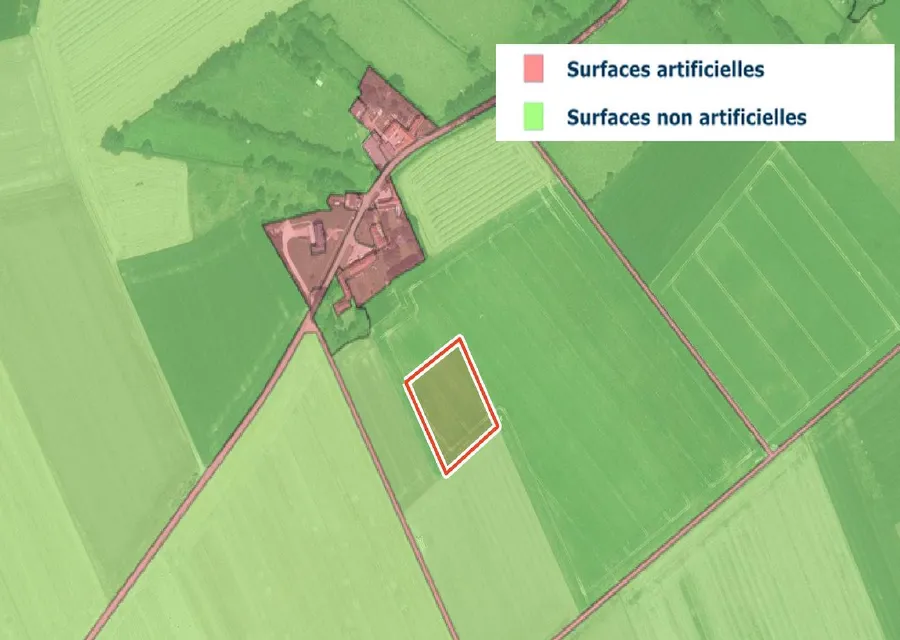
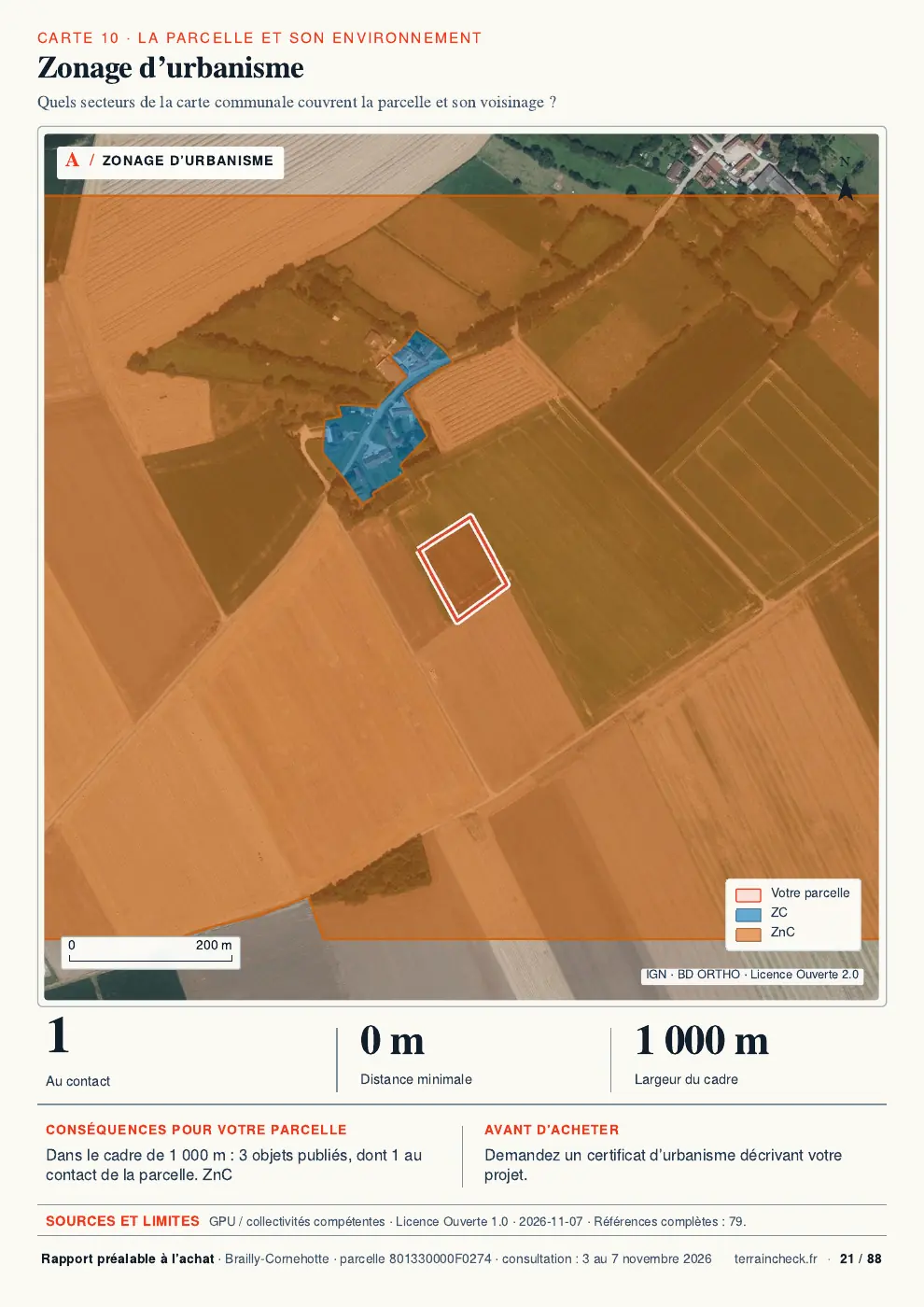
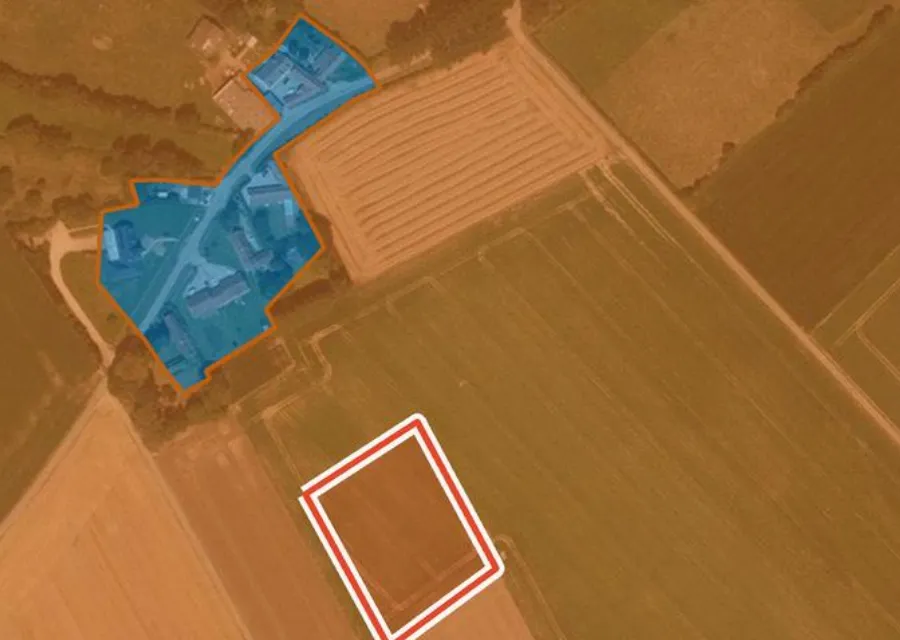
Buying to build later? Start with the plot’s zoning
Pick the parcel on the map. The report gives the PLU zone or carte communale sector on the day the data were read, then natural hazards, clay soils, easements and recent sales nearby, each with its source and date and explained in English. It cannot guarantee future zoning. Free check, PDF report for €29 (€39 in French and English).